AutoQuiz is edited by Joel Don, ISA's social media community manager.
This automation industry quiz question comes from the ISA Certified Control Systems Technician (CCST) program . Certified Control System Technicians calibrate, document, troubleshoot, and repair/replace instrumentation for systems that measure and control level, temperature, pressure, flow, and other process variables. Click this link for more information about the CCST program.
RTDs (resistance temperature detectors) are used to measure temperature in a process stream because they have many distinct advantages over thermocouples, including higher resolution of measurement, are more stable, are more repeatable, and give a more linear measurement response. However, RTDs have some distinct disadvantages as compared to thermocouples. All of the following are disadvantages of RTDs as compared to thermocouples, except:
a) require a temperature transmitter to function b) must have equal length and same type and gauge of lead wires c) are not self-powered d) are more expensive than thermocouples e) none of the above
Answer B is not the correct choice; equal length and same type and gauge of lead wires is a distinct disadvantage of using RTDs, especially if the lead wires must be extended to the temperature measurement point. RTDs are resistance devices whose measurement can be influenced by variations in lead length and thickness (gauge). Thermocouples do not have this limitation (they are voltage devices).
Answer C is not the correct choice. RTDs are not self-powered (thermocouples generate their own mV signal based on the sample temperature as compared to the reference temperature). An RTD requires a power source, usually a 24VDC supply.
Answer D is not the correct choice. RTDs are much more expensive than thermocouples. The materials from which RTDs are manufactured (platinum and rhodium, among others) are more expensive than copper, iron, or tungsten, common thermocouple materials.
Also, RTDs are more expensive to manufacture (e.g., RTD leads are often wound around an insulating core). Common RTD assemblies (3-wire) are typically 2-3 times the cost of comparable thermocouple assemblies measuring the same temperature range.
The correct answer is A, require a temperature transmitter to function. This is not a disadvantage of an RTD, since its function does not require a temperature transmitter to be installed. RTDs do require a power source and a measurement junction, but this can be done with any Wheatstone bridge circuit.
Reference
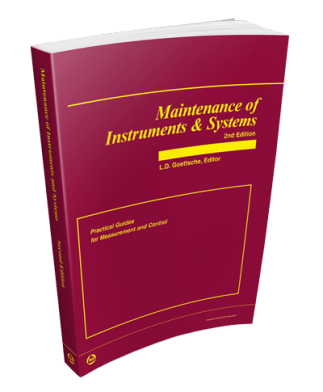
: Maintenance of Instruments and Systems, 2nd Edition, Goettsche, L.D.
About the Editor
Joel Don is the community manager for ISA and is an independent content marketing, social media and public relations consultant. Prior to his work in marketing and PR, Joel served as an editor for regional newspapers and national magazines throughout the U.S. He earned a master's degree from the Medill School at Northwestern University with a focus on science, engineering and biomedical marketing communications, and a bachelor of science degree from UC San Diego .
Connect with Joel