AutoQuiz is edited by Joel Don, ISA's social media community manager.
This automation industry quiz question comes from the ISA Certified Control Systems Technician (CCST) program . Certified Control System Technicians calibrate, document, troubleshoot, and repair/replace instrumentation for systems that measure and control level, temperature, pressure, flow, and other process variables. Click this link for more information about the CCST program.
Thermal level elements infer level by measuring:
a) temperature b) capacitance c) thermal conductivity d) displacement e) none of the above
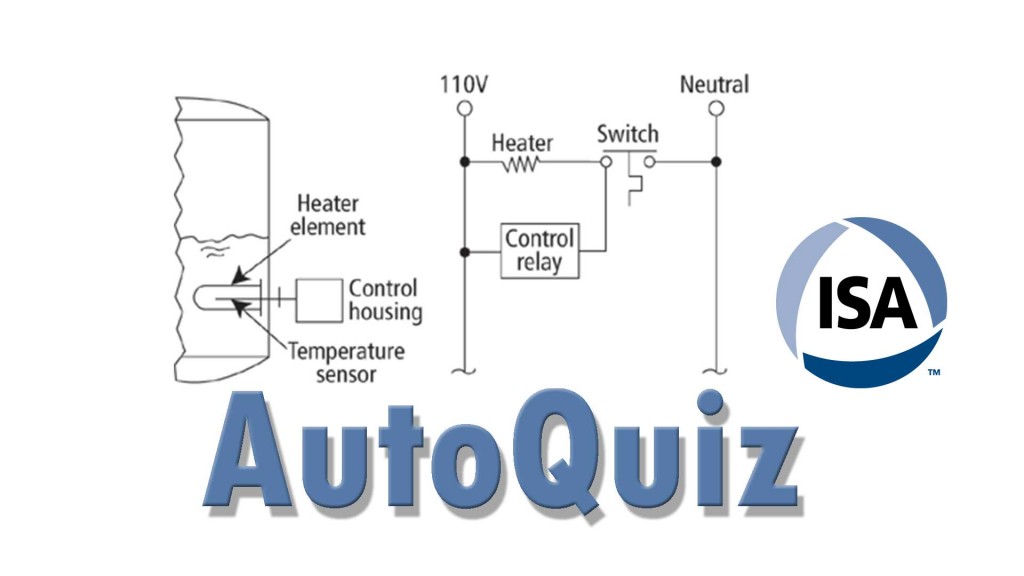
The Instrument Engineers Handbook (IEH) explains thermal level measurement. The simplest of these designs is where the sensor detects low level. The probe contains a resistance heater element that has a current flowing through it. A switch monitors the temperature of the probe. If the probe is submerged, the heat generated by the heater element transfers to the liquid, and the element temperature will not rise much over the liquid temperature.
If the level of the liquid falls below the probe, the probe temperature will begin to rise because the air and vapor above the liquid have a much lower thermal conductivity than does the liquid. The temperature switch detects this rise and an associated mechanism interrupts the power supply to the probe. The opening of this same relay contact can initiate a level alarm or shutdown sequence.
The answer according to the CCST study guide is A .
About the Editor
Joel Don is the community manager for ISA and is an independent content marketing, social media and public relations consultant. Prior to his work in marketing and PR, Joel served as an editor for regional newspapers and national magazines throughout the U.S. He earned a master's degree from the Medill School at Northwestern University with a focus on science, engineering and biomedical marketing communications, and a bachelor of science degree from UC San Diego .
Connect with Joel


AutoQuiz is edited by Joel Don, ISA's community manager.
 Today's automation industry quiz question comes from the ISA Certified Control Systems Technician (CCST) program . Certified Control System Technicians calibrate, document, troubleshoot, and repair/replace instrumentation for systems that measure and control level, temperature, pressure, flow, and other process variables. Click this link for information about the CCST program. This question is from the Level I study guide, Domain 1, Calibration. Level I represents a professional who has a five-year total of education, training, and/or experience.
Thermal level elements infer level by measuring:
a) temperature b) capacitance c) thermal conductivity d) displacement e) none of the above
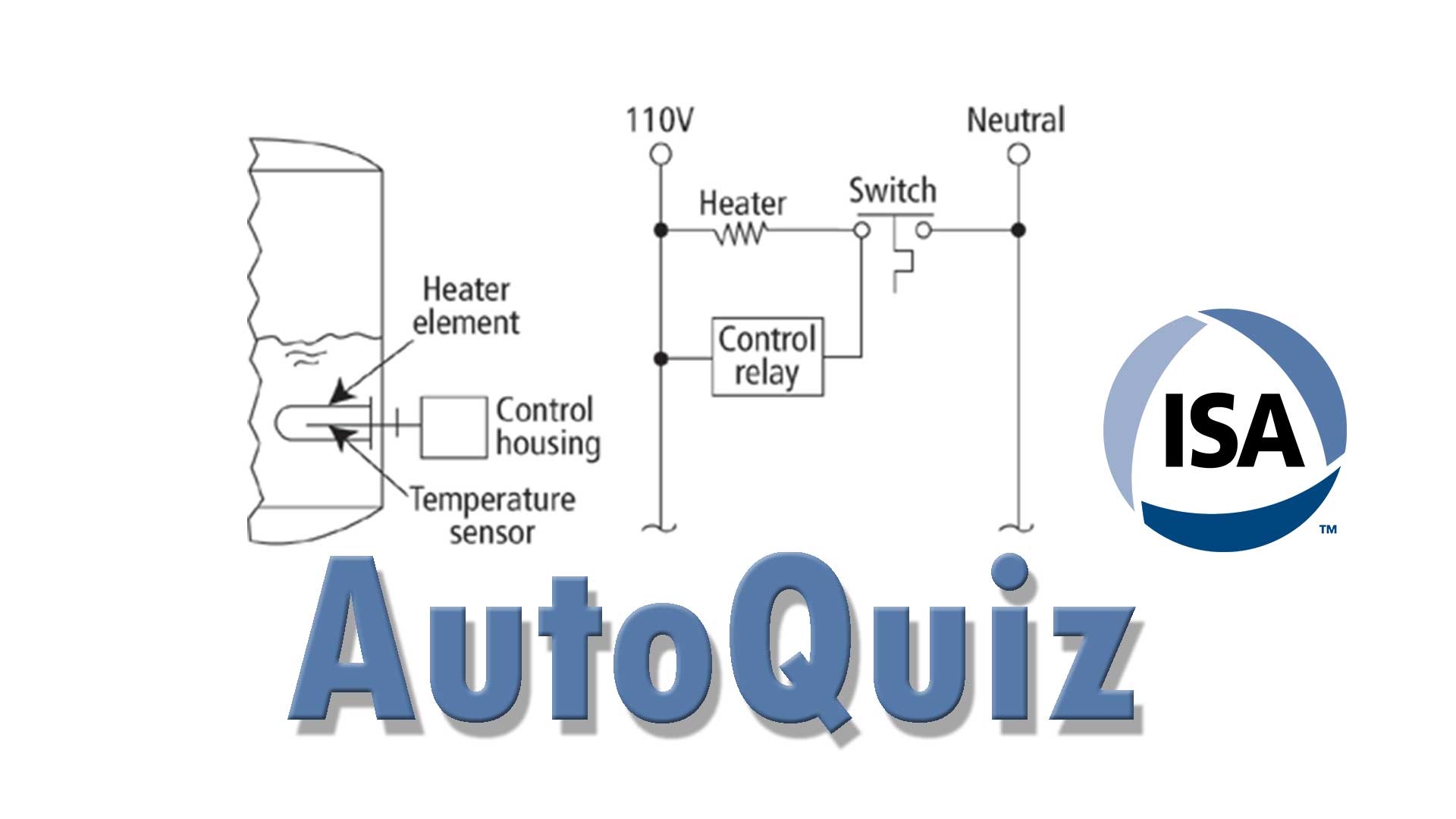
The Instrument Engineers Handbook (IEH) explains thermal level measurement. The simplest of these designs is where the sensor detects low level. The probe contains a resistance heater element that has a current flowing through it. A switch monitors the temperature of the probe. If the probe is submerged, the heat generated by the heater element transfers to the liquid, and the element temperature will not rise much over the liquid temperature.
If the level of the liquid falls below the probe, the probe temperature will begin to rise because the air and vapor above the liquid have a much lower thermal conductivity than does the liquid. The temperature switch detects this rise and an associated mechanism interrupts the power supply to the probe. The opening of this same relay contact can initiate a level alarm or shutdown sequence.
The answer according to the CCST study guide is A .