AutoQuiz is edited by Joel Don, ISA's social media community manager.
This automation industry quiz question comes from the ISA Certified Control Systems Technician (CCST) program . Certified Control System Technicians calibrate, document, troubleshoot, and repair/replace instrumentation for systems that measure and control level, temperature, pressure, flow, and other process variables. Click this link for more information about the CCST program.
You have a standard pneumatic instrument loop with a span of 200 units. What is the steady state gain?
a) 0.06 psig/unit b) 0.07 psig/unit c) 0.08 psig/unit d) 0.12 psig/unit e) none of the above
The correct answer is A
, 0.06 psig/unit.
Gain is defined in control theory as the change in input divided by the change in output. In this case, the gain can be calculated as follows:
Gain = (full range change in input) / (full range change in output)
= (15 psig - 3 psig, for a pneumatic loop) / 200 units of change
= (15 - 3) / 200
= 12 / 200
= 0.06 psig/unit
Reference
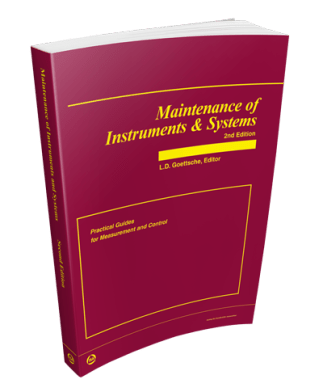
: Goettsche, L.D. (Editor), Maintenance of Instruments and Systems, 2nd Edition
About the Editor
Joel Don is the community manager for ISA and is an independent content marketing, social media and public relations consultant. Prior to his work in marketing and PR, Joel served as an editor for regional newspapers and national magazines throughout the U.S. He earned a master's degree from the Medill School at Northwestern University with a focus on science, engineering and biomedical marketing communications, and a bachelor of science degree from UC San Diego .
Connect with Joel