In automation, up-to-date assets—whether hardware or software—are obviously important. Equally important is the personnel who operate and maintain automated systems. Management insists on ever-increasing overall equipment effectiveness (OEE) and key performance indicators (KPIs). However, information is not effective or valuable if it is constantly overlooked.
Importance of visibility
The most expensive problems often arise, not from equipment breakdowns, but from critical information failing to reach the appropriate people when needed. “I learned this early in my career as an instrument asset specialist working inside some of North America’s largest industrial plants,” said Rob Gray, vice president of Sales at BlueMarvel AI. “My role was to predict and prevent failures before they happened. We had world-class diagnostic tools such as digital valve controllers, asset health monitoring systems and real-time alarm logs. And yet, when things went wrong, those tools didn’t always stop the chaos.”
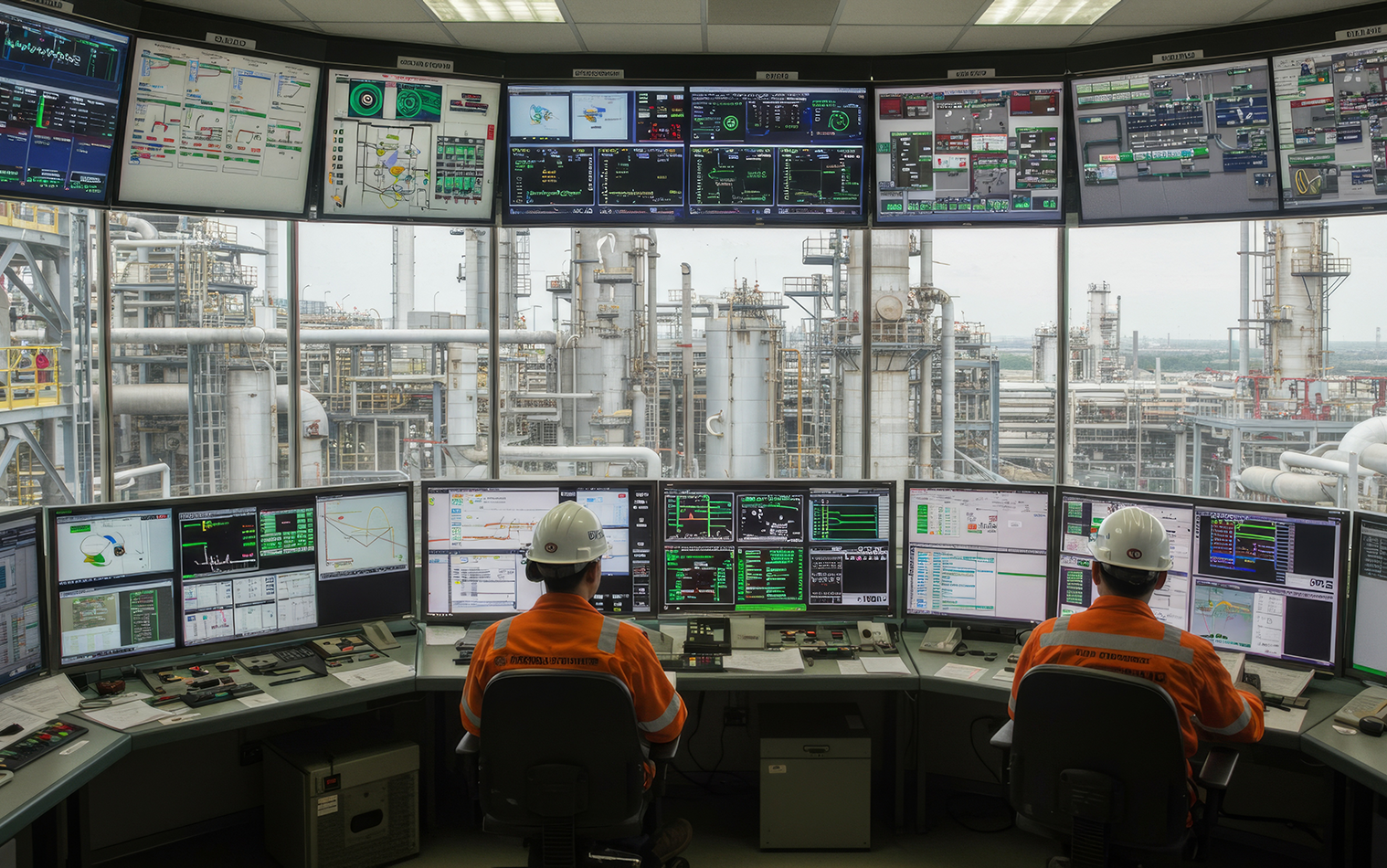
Gray cited a case of limited visibility. He asked an operator if anything was in active bypass. The operator responded that only the high-high alarm was bypassed, and it had been that way for years. “It doesn’t work right, so we just leave it bypassed,” the operator explained.
Gray explained that the device in question was a coated-tuning-fork level switch that was triggering false alarms on a critical vessel. Once identified, this issue was quickly corrected by swapping it for a probe designed for coating-prone applications.
Bypassing a level switch removed redundancy on a safety-critical system. Failure could mean more than $50 million in potential losses. Control room personnel knew about the bypass, but management did not.
Gray discovered that bypassing that level switch removed redundancy on a safety-critical system. If a failure were to occur at the wrong time, the company could have been exposed to more than $50 million in potential losses. The control room personnel knew about the bypass, but management did not.
“This wasn’t a lack of technology,” Gray explained. “It was a visibility gap. The data that could have prevented the issue was already in the system, but only a few specialists could access it, and even fewer knew how to interpret it.”
Operational data often lives in silos, regardless of the industry. Whether in manufacturing, energy or process industries, operators typically focus on what’s on the control system human-machine interface (HMI).
Maintenance and reliability teams focus on the asset management system. Engineers typically see performance and project data. Corporate executives tend to focus on KPI dashboards—often weeks or months later.
“Each group sees a piece of the puzzle” Gray said. “Almost no one sees the full operational picture in real time. When a failure happens, senior managers gather, technicians scramble for connection cables, weekend post-mortems happen and Monday brings a PowerPoint on ‘how to prevent it next time.’ Still, the cycle repeats.”
Making data everyone’s business
The company that Gray works for now provides tools to break that cycle. BlueMarvel turns complex industrial data into actionable insights by breaking down data silos so every team—from the control room to the boardroom—can see the same clear picture. It’s a solution that doesn’t always require new sensors or a massive controls upgrade. Sometimes, it starts with integrating the views that already exist, said Gray.
“We began asking, ‘What if everyone from the plant floor to the boardroom could see the same operational truth in real time?’ Instead of building more tools for specialists, we surface existing insights, alarm states, bypass histories, operator actions, device diagnostics and loop performance into a single, accessible view,” he explained.
“At one customer site, we went from two people having this visibility to more than 90 people across operations, reliability, engineering and leadership,” Gray said. “Toolbox meetings changed overnight. Priorities stopped being based on hunches. Bypasses were resolved faster. Safety risks were spotted earlier.” Connected intelligence brings data together to turn noise into insight and insight into action. The result in seamless collaboration, smarter decisions and a more efficient, unified operation.
The role of AI and conversational interfaces
Once a shared operational view is in place, AI can make it even more powerful, said Gray. By layering large-language models on top of control and asset data, users can move from searching to simply asking:
- "Which control loops are drifting out of spec?"
- 'What’s the longest-running bypass in the plant?"
- "Where have operator interventions spiked this week?"
“The system understands the context, pulls from multiple data sources and delivers actionable answers. The result isn’t replacing people—it’s removing the friction between insight and action,” said Gray.
Why it matters
Industrial operations are under increasing pressure due to aging assets, a shrinking skilled workforce, tighter safety regulations and rising downtime costs. Leaders and managers can’t afford blind spots caused by inaccessible or fragmented operational data. Gray said that users don’t need a five-year digital transformation project to start. “The tools exist today to audit who has access to key operational insights and who doesn’t, break down silos by creating a shared operational view across disciplines and pilot conversational AI tools on a high-value case such as bypass management, for example, to prove ROI quickly,” he said.
The next big leap in industrial automation isn’t only about expanding involvement in the Industrial Internet of Things (IIoT) or bigger data lakes; “it’s about making data universally accessible and actionable,” added Gray. “When the right person sees the right information at the right time, million-dollar problems can be prevented before they start.”
That’s the kind of quiet revolution that changes plants for good.
This feature appears in the November/December 2025 issue of Automation.com Monthly.