




The largest oil refinery and petrochemical producer in Israel produces more than 197,000 barrels of oil per day. The company produces a wide range of petroleum distillation products including gasoline, diesel and jet fuel, as well as petrochemicals used in various industries. The company is the cornerstone of Isreal’s industry.
The refinery’s operational goals include optimizing output, streamlining maintenance costs and increasing profit margins. To achieve this objective, it needed an asset performance management solution to drive near-term improvements as well as long-term outcomes through year-over-year results.
The challenge: Curb maintenance costs
This refinery uses a complex array of machinery to process crude oil into various petrochemical products. Ensuring the reliability and ongoing maintenance of this intricate system is critical for sustaining continuous and efficient production. Elevated maintenance expenses were affecting operational budgets, while equipment issues were contributing to increased downtime and heightened safety and environmental concerns.
Historically, the refinery had used a combination of route-based, preventive and run-to-failure maintenance strategies, which were supported by portable data collectors and manual analysis tools. This approach resulted in inconsistent machine data, delayed repairs and recurring unplanned or prolonged outages. The team recognized that it was necessary to revise its maintenance strategy. It realized that real-time access to machine data would significantly reduce costs and improve operational efficiency.
The solution: Asset monitoring, root-cause data analysis
The petrochemical producer needed a solution that could monitor heavy industrial equipment and reliably collect data across its most important assets. It wanted insights with root-cause analysis that could recommend maintenance actions. This meant finding a technology partner that could deliver highly accurate diagnostics at scale across a variety of machine types.
In 2021, the refinery piloted the Machine Health solution from Augury to gain both immediate and long-term value. Developed for maintenance and reliability teams by maintenance and reliability professionals, Machine Health provides the technology and resources required to prevent machine failures and improve overall efficiency (see sidebar “Baker Hughes, Augury Alliance Targets Enhanced APM”).
Machine Health’s functionality includes monitoring using sensors that continually capture and transmit data to Augury’s platform. The functionality also provides artificial intelligence (AI)-driven diagnostics that explain why an issue occurred and prescribes courses of action. The Augury platform, AI insights and expert support enable users to prioritize and plan. This combined functionality allows users to collaborate and act on Machine Health’s guidance to improve the health and performance of their machines and processes.
The refinery team deployed the solution across a specific set of redundant assets (Figure 1) that included blowers, chillers, compressors, cooling towers, fans, heat exchangers, pumps, separators, steam traps and turbines. After a two-week baseline period, the team began to see huge potential; real-time insights into the health of their equipment exposed many issues. With access to prescriptive alerts that identified the issues and recommended courses of action, the team could plan and execute repairs. This created early buy-in and adoption from site-level teams. 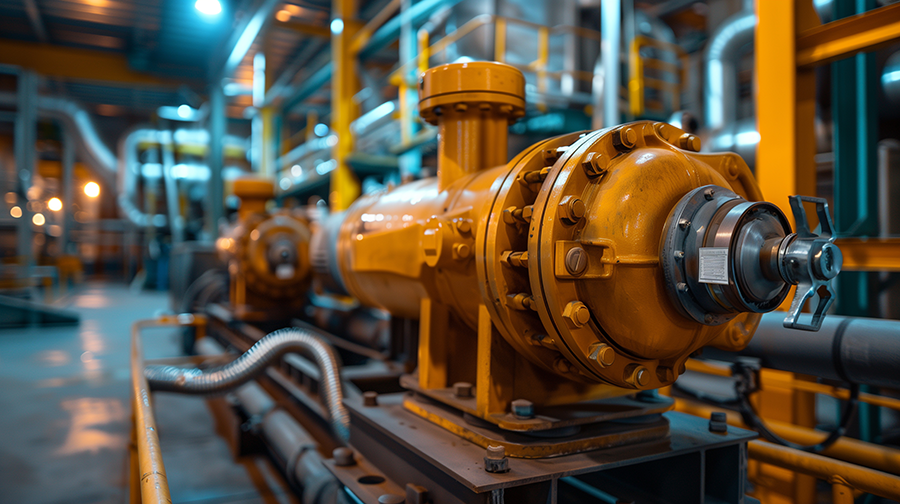 Figure 1: This liquid transfer pump with an asynchronous electric motor is a typical “monitored asset” of modern industrial equipment in oil refineries and petrochemical plants.
Positive results
After the initial deployment of Augury’s Machine Health, the overall health of the refinery’s equipment has improved exponentially. A financial analysis conducted on a set of machines monitored by Augury from the 2021 pilot to the end of 2023 showed increased reliability and lowered maintenance expenses year after year. Within six months of deployment, the refinery realized a fourfold return on investment. In the initial deployment (2021 to 2022), the reduction in maintenance cost was more than 9%. After the first full year (2022 to 2023), the reduction in maintenance cost was more than 65%. After the second full year (2021 versus 2023) the reduction in maintenance cost was 72%.
To be more specific, after an alert prompted repairs on a fan, the refinery saved $120,000 and avoided 288 hours of machine downtime. After an imbalance was detected on a compressor, the company avoided $300,000 loss and 240 hours of machine downtime. Other examples include more than $100 saved after mechanical looseness was flagged on the motor of a tank farm cluster, and more than $38,000 was saved after an alert prompted repairs on a pump in the power plant.
The financial impact of Machine Health for the refinery extends beyond maintenance costs. Since most of the assets are redundant, catastrophic failures typically do not disrupt production. However, machine failures can expose teams to hazardous conditions and derail workdays with unplanned maintenance demands. Since 2021, based on recorded repairs, the company has avoided more than 1,800 hours of machine downtime, which means reduced production expenses and risk.
Since 2021, based on recorded repairs, the company has avoided more than 1,800 hours of machine downtime, which means reduced production expenses and risk.
Ultimately, the solution has improved morale and the day-to-day experience of the site-level teams. It has enabled them to change how they do maintenance while increasing overall productivity. With access to steady and reliable data, they are no longer firefighting or acting on outdated information. Now they prioritize maintenance tasks and work as a connected team.
Benefits continue to accrue
Over three years, the refinery’s leadership expanded Machine Health to cover the majority of critical assets, leading to richer details and insights and even more optimized workflows for their teams. Year after year, their program becomes increasingly proactive and data-driven. As a result, their cost savings continue to increase as unplanned downtime, costly repairs, unnecessary machine rebuilds and preventive tasks become rare occurrences.
Baker Hughes, Augury Alliance Targets Enhanced APM
In 2021, Houston based Baker Hughes announced a multiyear alliance with machine health solution provider Augury to deliver asset performance capabilities by providing connected data, analytics and insights into energy and industrial assets. Baker Hughes provides products and services to the oil and gas industry for exploration and production. Augury provides machine health and process health solutions.
The alliance builds on Baker Hughes’ existing asset performance management (APM) capabilities and domain expertise in critical industrial assets. Through the alliance, end users benefit from end-to-end visibility into the health and performance of their critical assets to balance of plant (BOP) machines to reduce downtime, increase availability and lower maintenance costs. Extending Baker Hughes’ APM solutions with Augury’s machine health capabilities is important to Baker Hughes’ efforts to accelerate digital transformation and decarbonization in the energy and industrial sectors.
APM solutions are said to improve the reliability and availability of physical assets in some of the world’s most demanding industrial sectors, where APM software can deliver up to a 30% reduction in maintenance costs and up to a 45% reduction in unplanned downtime. By adding Augury’s advanced sensor technology and machine health solutions to Baker Hughes’ APM offering increases predictive capabilities and can also help lower energy consumption and emissions in the industrial space.
This case study is part of the November/December 2025 issue of Automation.com Monthly.