This post is an excerpt from the journal ISA Transactions. All ISA Transactions articles are free to ISA members, or can be purchased from Elsevier Press.
Abstract:
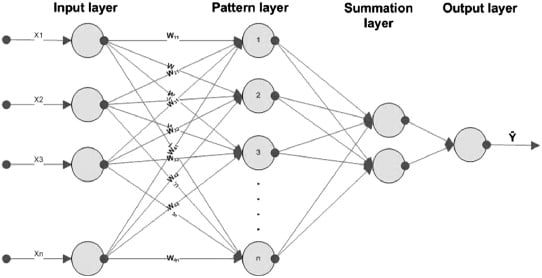
The online estimation of process outputs mostly related to quality, as opposed to their belated measurement by means of hardware measuring devices and laboratory analysis, represents the most valuable feature of soft sensors. As of now there have been very few attempts for soft sensing of cement clinker quality 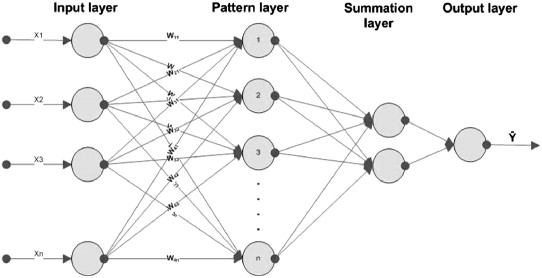 which is mostly done by offline laboratory analysis resulting at times in low quality clinker. In the present work three different neural network based soft sensors have been developed for online estimation of cement clinker properties. Different input and output data for a rotary cement kiln were collected from a cement plant producing 10,000 tons of clinker per day. The raw data were pre-processed to remove the outliers and the resulting missing data were imputed.
The processed data were then used to develop a back propagation neural network model, a radial basis network model and a regression network model to estimate the clinker quality online. A comparison of the estimation capabilities of the three models has been done by simulation of the developed models. It was observed that radial basis network model produced better estimation capabilities than the back propagation and regression network models.
Free Bonus! To read the full version of this ISA Transactions article, click here.
Join ISA and get free access to all ISA Transactions articles as well as a wealth of other technical content, plus discounts on events, webinars, training & education courses, and professional certification.
Click here to join ... learn, advance, succeed!
2006 Elsevier Science Ltd. All rights reserved.