The promise of a totally digitally integrated plant has been espoused for decades as an integral part of larger digital transformation efforts, with companies worldwide recognizing the need for these types of projects. Plants of the future would have local or remote operators donning virtual reality headsets, then virtually walking through the facility touching or pointing to equipment, with instant access to current process data, as well as engineering design specifications and maintenance records. Meanwhile, artificial intelligence programs would monitor the facility, helping operators optimize the process and calling attention to developing issues by predicting impending failures.
Amazingly, these technologies exist today, and any or all those capabilities could be implemented immediately save for one fundamental issue—access to accurate and contextualized data. This article focuses on ways to address this final impediment, discussing how data can be captured and structured to facilitate all the promises of a digitally integrated facility. The effort is not insurmountable, but it does take strategic upfront planning, the right tools, and an ongoing effort to build and maintain the required data infrastructure.
The trouble with data
Virtually no process manufacturing facility lacks data. In any given facility, there are thousands of drawings, spreadsheets, databases and documents in dozens of formats scattered across the site. Data may exist as paper copies buried in file cabinets, CAD and 3D model files, and/or hundreds of .PDF, .DOC and .XLS electronic documents scattered across a sea of network drives and computers (Figure 1).
 Figure 1: A typical facility is awash in data, but the broad array of formats and incompatible software tools make it nearly unusable. Figure courtesy of Octave.
Of course, the problem with such a system is a lack of data access. No one person knows where all the data is stored, and there may be multiple revisions of the same information scattered through the system, with no easy way to discern which version is accurate. Worse, the data is stored in many different formats, including paper-based, making it impossible to access from a single interface, and keeping it from being fully utilized.
This presents a problem because a digitally integrated plant must be built on a carefully crafted foundation of data access. Even though electronic information is typically stored in multiple formats, it would ideally be fully accessible through one interface, with the most recent and older revisions fully defined. This information would also be integrated and contextualized, so related data could be instantly accessed and processed.
Unfortunately, the typical plant lacks that foundation of accessibility and context, making it impossible to implement the latest digital tools or reap the benefits of such a system. The solution is typically a herculean and sustained effort by a specialized team to convert and aggregate the information into a unified system. Benefits can ultimately be attained, but they are only won through many hours of dedicated effort by highly skilled personnel.
To avoid this problem, one needs to understand how and why data disparity occurred in the first place. With this awareness, teams can avoid data dilemmas on future projects.
A typical journey to inaccessible data
Most large facility projects use an engineering, procurement, and construction (EPC) firm and other contractors (hereafter collectively referred to as the contractors) to perform detailed engineering, specify and purchase equipment, and supervise or perform construction (Figure 2). For many projects, other firms are engaged directly by the owner/operator. These include providers of large items of equipment—such as compressors, extruders, and turbines—and providers of the process skids and other modules frequently used in many industries. For the purposes of this article, these firms will also be referred to as contractors.
 Figure 2: Contractors frequently use a wide variety of tools to design complex facilities. Figure courtesy of Octave.
During the design phase, some of the contractors may use a collection of proprietary tools to create 3D site models, perform equipment and pipe stress analysis, design piping and electrical networks, and perform other tasks. Ultimately, these resulting designs are used to specify and procure all the materials and equipment, all of which are brought to site and installed to create the new facility. At this point, commissioning teams check and test each item of equipment using their own checklists and validation documents, eventually transferring control to the owner/operator for final startup. The whole process is largely focused on contractor speed and efficiency, with little thought often given to the data being generated as the project progresses.
At the end of the project, the enormous collection of disparate design and commissioning information is handed over. The data may take the form of paper documents, flat PDF files, modeling databases in various software formats and myriads of spreadsheets and Word document files. Not all the information may be available because some contractors may consider certain items proprietary and for internal use only. In short, the owner/operator inherits the data nightmare previously discussed and is now faced with the task of aggregating this mountain of information into something that allows the plant to be operated, maintained, and possibly upgraded at some later date.
A path to success
The solution to this problem is to rethink the entire project process from the start. Requests for quotes (RFQs) generated by the owner/operator for bids by the contractors, and eventually the final signed contracts, should clearly specify what data must ultimately be transferred and in what formats. The project should also be executed using software that has been specifically developed to be integrated together. 3D models, laser scans, CAD files, and other data should be compatible, all design documents should be capable of interfacing with a common database, and that database should include data relationships and context so information can be associated with various plant equipment entities. The entire suite of commissioning documents must also be included and integrated, utilizing a data structure that is built to eventually include process and maintenance information as well (Figure 3).
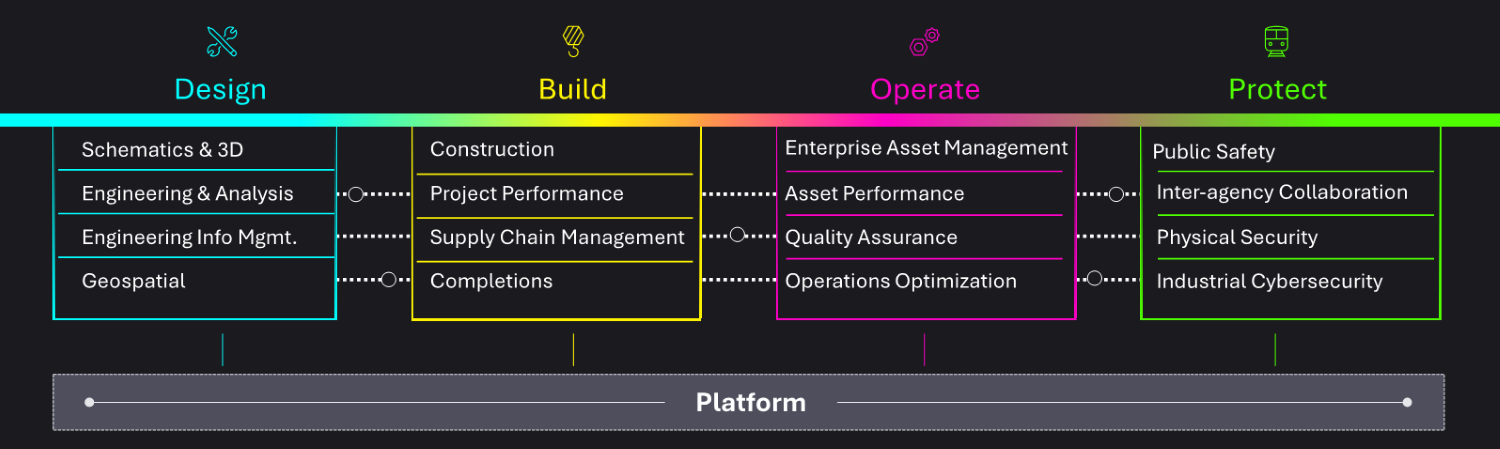 Figure 3: The right platform provides the data structure and foundation needed at every stage of a project, and for ongoing operation. Figure courtesy of Octave.
Ultimately, all agreements with contractors must specify that the owner/operator owns the data at project completion. These agreements must also specify that the information provided fits into a foundational database, providing efficient data access for the owner/operator by their staff and digital analysis tools. While such a solution sounds straightforward, it may not be so easy to pursue. If the right design tools are not the ones currently used by the contractors, they will typically use their own tools and try to adapt their resulting information and databases to fit the format required by the owner/operator. This will almost always result in increased costs and it will pose significant integration problems as inevitable errors will be discovered at some later juncture.
One solution is requiring the contractors to use design tools specified by the owner/operator, but this mandate may be resisted because some of the contractors may be more familiar with their internal tools, with the additional time and effort to use standardized tools cost-prohibitive. Fortunately, that situation has changed.
Fully integrated data is now a reality
Decades of software development have produced a broad suite of software tools and database structures that finally make the promise of full data integration a reality. Well-established and widely familiar engineering design tools provide fully capable development libraries to create smart P&IDs, 3D CAD models, laser scans, full mechanical and electrical CAD drawings, advanced piping and controls network analysis, stress and vibration analysis, and much more. Other tools aid in material tracking, commissioning, and validation. Each of these tools utilize compatible and consistent interfaces that mesh with a carefully constructed overarching core database that integrates the information together into one easily accessible source of truth (Figure 4).
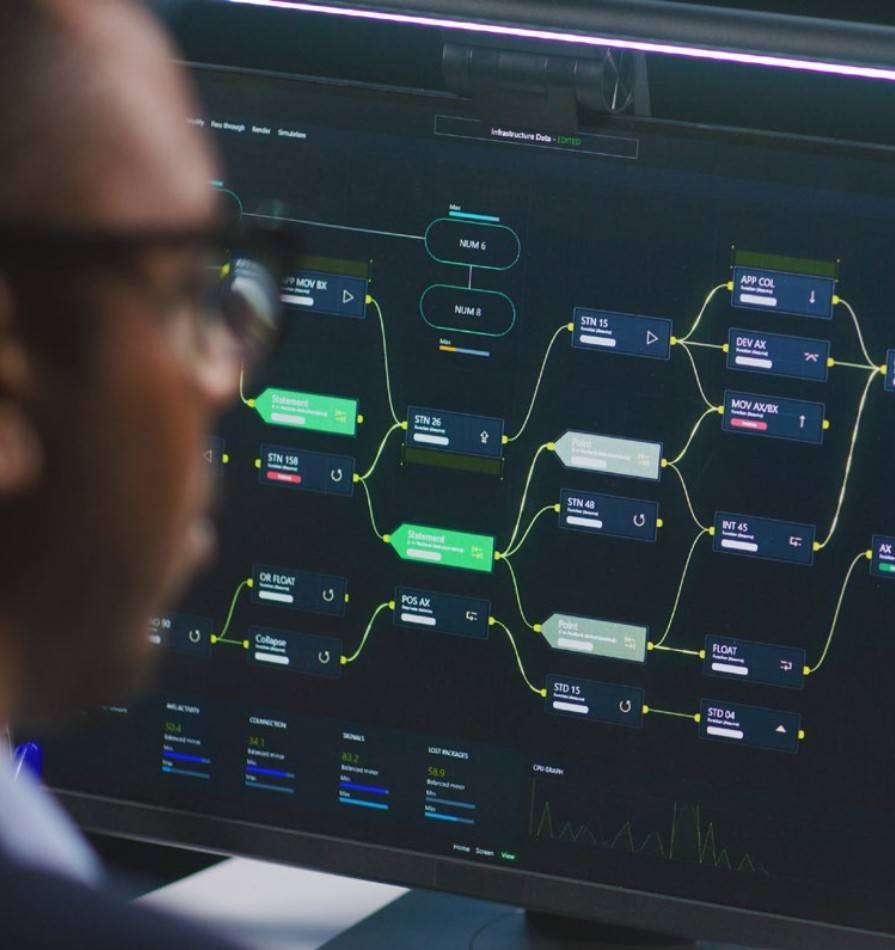 Figure 4: When data with full context and all relevant relationships is readily accessible, potential improvements to operations become a reality. Figure courtesy of Octave.
The core interface database is the key to success because it not only seamlessly integrates the information but also provides a means to establish data context. This allows users to instantly understand the relationship among original design data, current process information, and historical commissioning and maintenance records. This core interface database is also the springboard for advanced artificial intelligence (AI) and machine learning (ML) tools, since the relevant information needed by these tools is now accurate, consistent, and universally accessible. Because the tools are both universal and powerful, many contractors are already using them, largely eliminating resistance to adoption. If the initial contractor project agreements are clear and specific, the project will not only be successful, but the resulting project data will be transferred in a form and format that is well suited for both plant equipment life cycle management and future AI and ML optimization endeavors.
Note that it is possible to achieve a digitally integrated plant while starting with the typical collection of disparate information sources first described. However, this pathway takes a great deal more time, labor, and money to convert the data into a format and database structure suited for full integration. It can be done, but it is certainly far easier and less expensive to properly integrate the data as part of the original project execution than try to do it afterwards.
Real-world implementation and case studies
Several firms have successfully implemented these systems and are reaping the benefits. One large company was building liquified natural gas (LNG) terminals worldwide. Previous projects had been designed and built using proprietary internal contractor tools. As a result, the site documentation turnover was an enormous data dump of varying formats, all of it ill-suited for life cycle management or data integration. After several such projects, the firm pursued a different strategy. On the next major project, the owner/operator contractually defined the specific data and formats required, and the suite of tools to be used in the project, by the contractors. Since the tools were already being used by the contractors, the additional cost was relatively minor, but the result at project turnover was dramatically improved.
The project design data was fully integrated into a common and consistent platform, setting up the location for successful long-term support, while providing the ability to leverage more advanced data analytics using the platform established during project execution. This strategy has become the company standard for all future capital projects.
The digital journey starts with a first step
The data format and foundation of a facility’s existing information may be less than optimal, but future information does not have to be that way. The ultimate benefits of digital transformation can be enormous, but they cannot begin until the plant data has been carefully structured into a consistent and organized format that provides secure and unfettered access. The core database must also contain the necessary relationship links to provide context, while enabling tools to seamlessly link design, production, quality, and maintenance information. The process starts with a strategic plan to establish ownership of the data by explicitly specifying the form and format of the information. For new projects, powerful software design tools can streamline plant design, procurement, and production. The resulting data models, calculations, and specifications will be automatically incorporated into a holistic system built to power next generation visualization, AI, and machine learning tools. Existing plants can be transitioned as well, either piecemeal through capital upgrade projects, or following a gradual path to migrate and convert data into a common architecture.
The longest journey begins with a single step, and taking ownership of your information is an excellent place to start on your digital transformation trek.