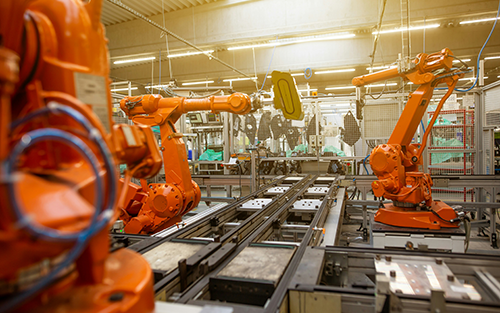
Walk onto a factory floor today and you’ll see plenty of automation: robots welding, conveyors moving, sensors blinking as they gather data. But according to Daniel Tan, head of Smart Manufacturing Solutions and the Robotics Solutions, Solutions and Services Group at Lenovo, the real transformation happening right now isn't about adding more machines. It's about making the machines already there — and the people working alongside them — genuinely smarter. “The future of manufacturing isn't purely about more automation,” Tan says. “It's about more intelligent systems, more responsive operations and more meaningful collaboration between people and technology.”
That shift has a name: Industry 5.0. And the technology making it possible is a one-two punch of artificial intelligence. Physical AI and agentic AI are two capabilities that, working together, are beginning to solve problems that have dogged automation professionals for decades: high implementation costs, poor-quality training data, safety trade-offs, and the sheer headache of scaling a solution across multiple plants and countries.
Two brains, one operation
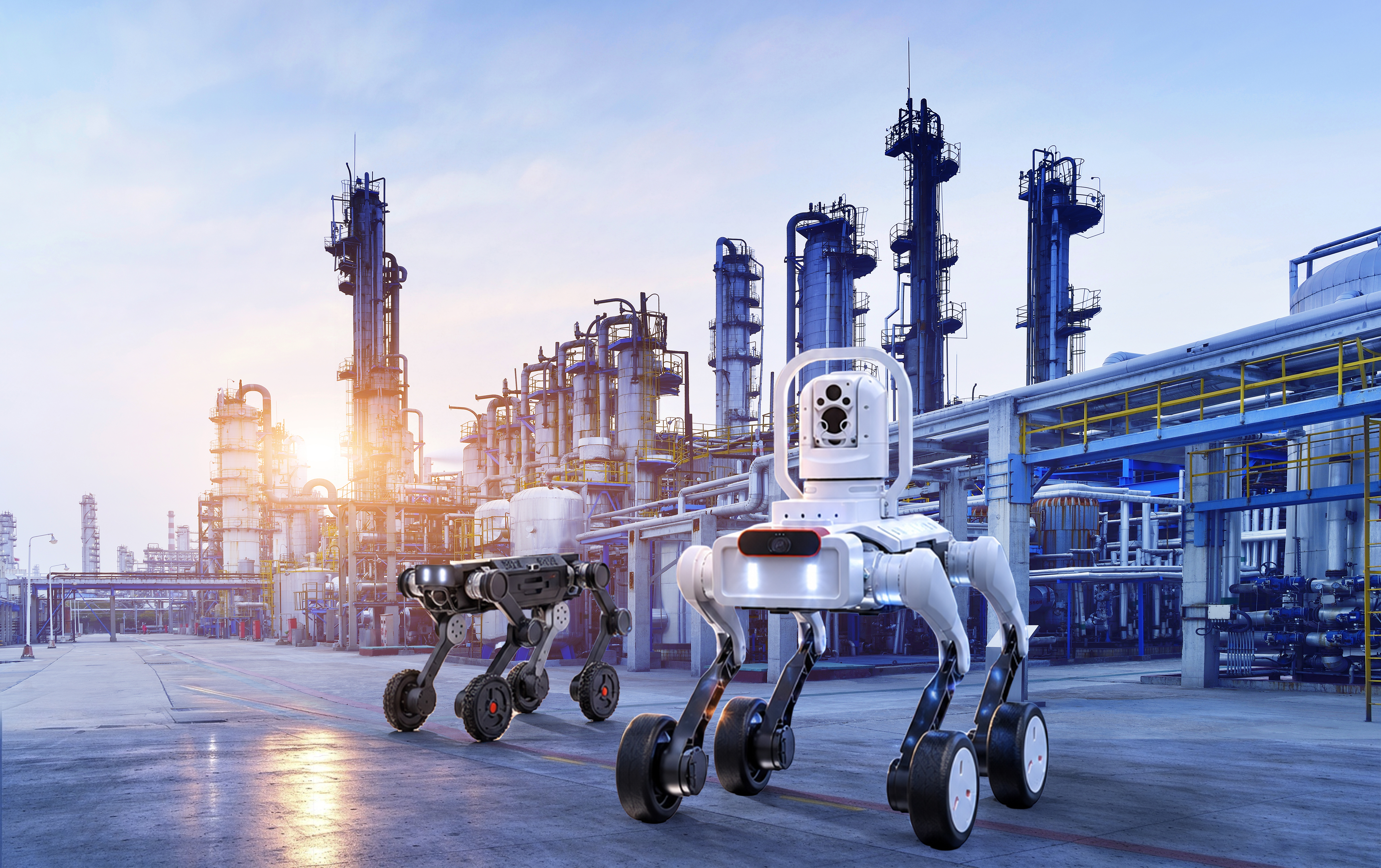
Physical AI acts as the senses and reflexes of an operation; agentic AI is the brain that coordinates. “Physical AI gives a system execution capability in the physical world, while agentic AI automates and coordinates the workflow across the operation,” Tan explains. “One is about intelligent action; the other is about intelligent orchestration.” A robotic dog autonomously inspecting hazardous environments like a power substation illustrates the point. “A centralized, AI-native orchestration layer acts as the 'super brain,' providing end-to-end visibility, coordination and security governance across the entire environment,” Tan says.
This pairing also enables multimodal perception, where AI fuses vision, force, audio and sensor data into context-aware decisions, as opposed to actions based on one incomplete signal. “The real advantage is not just that the system can sense more, but that it can turn that awareness into meaningful action,” he says — as seen in predictive maintenance, where fused sensor data produces a fault-warning level and estimated time of failure before a breakdown occurs.
Safety and productivity together
Traditional industrial safety meant separating people from machines. Physical AI is breaking that trade-off. “Machines can detect proximity, interpret movement, and adjust their behavior in response. They can slow down, change direction or modify a task when a worker enters their operating range,” Tan says. The payoff is visible in Order-to-Person warehouse models, where automated systems bring inventory to a stationary worker. Tan calls it “often one of the highest-ROI warehouse automation initiatives.” One Southeast Asian logistics provider using automated warehouse operations saw order processing speed up 40%, he said. The result is “a model where safety and productivity improve together, rather than being treated as trade-offs,” he added.
Agentic AI also reduces the coordination burden between teams and systems. Lenovo iChain is an example, says Tan. The platform “unifies systems, data, decisions and execution across planning and fulfillment, helping teams move from reactive coordination to predictive, structured execution.”
Solving cost and data barriers
Ask automation professionals why their AI pilots stall, and two answers come up constantly: it's too expensive, and there isn't enough good data to train the models. Tan doesn't dodge either issue.
“One of the main reasons AI projects struggle in industrial environments isn't a lack of ambition,” he says. “It's the challenge of fragmented systems, inconsistent data, limited training samples, and the cost and risk of deployment in live operations.”
On the data problem, Lenovo leans on simulation and synthetic data, which is especially valuable for quality inspection use cases where real defect samples are simply too rare to build a reliable model. “Simulated or AI-generated defect sample images can compensate for the lack of real-world defect samples and improve model training,” Tan says. Industrial large-language models (LLMs) pretrained on broad, industry-level knowledge give companies a faster starting point, which can then be fine-tuned with a company's own operational data rather than built from a blank slate. Lenovo enables enterprises to deploy production-ready, agentic AI solutions in as little as one week, eliminating the long development cycles that typically delay AI from reaching production. Delivered through the Lenovo AI Library as part of Lenovo Hybrid AI Advantage™, these agents let “organizations move directly from pilot to operational impact,” says Tan. “Lenovo uses the AI Library internally to develop and test AI agents derived from hundreds of real-world deployments. That means customers can start quicker and see faster return on investment.
Regarding cost and risk, edge computing keeps latency-sensitive processing close to where decisions actually need to be made, while simulation lets companies “train, test and validate AI models in a digital environment before deploying into production.” This reduces implementation risk, shortens deployment cycles and lowers the cost of trial-and-error.
Scaling across geographies
For manufacturers expanding into new regions, Tan says Lenovo's breadth as a genuine advantage. “Lenovo is like an insurance agent, as we are a one-stop total solutions provider,” he says, meaning companies don't need to stitch together vendors across every new market. When in-house AI expertise is lacking during rapid expansion, Tan notes: “Lenovo has a tribe of AI engineers that our customers can tap into,” giving manufacturers access to specialized talent on demand.
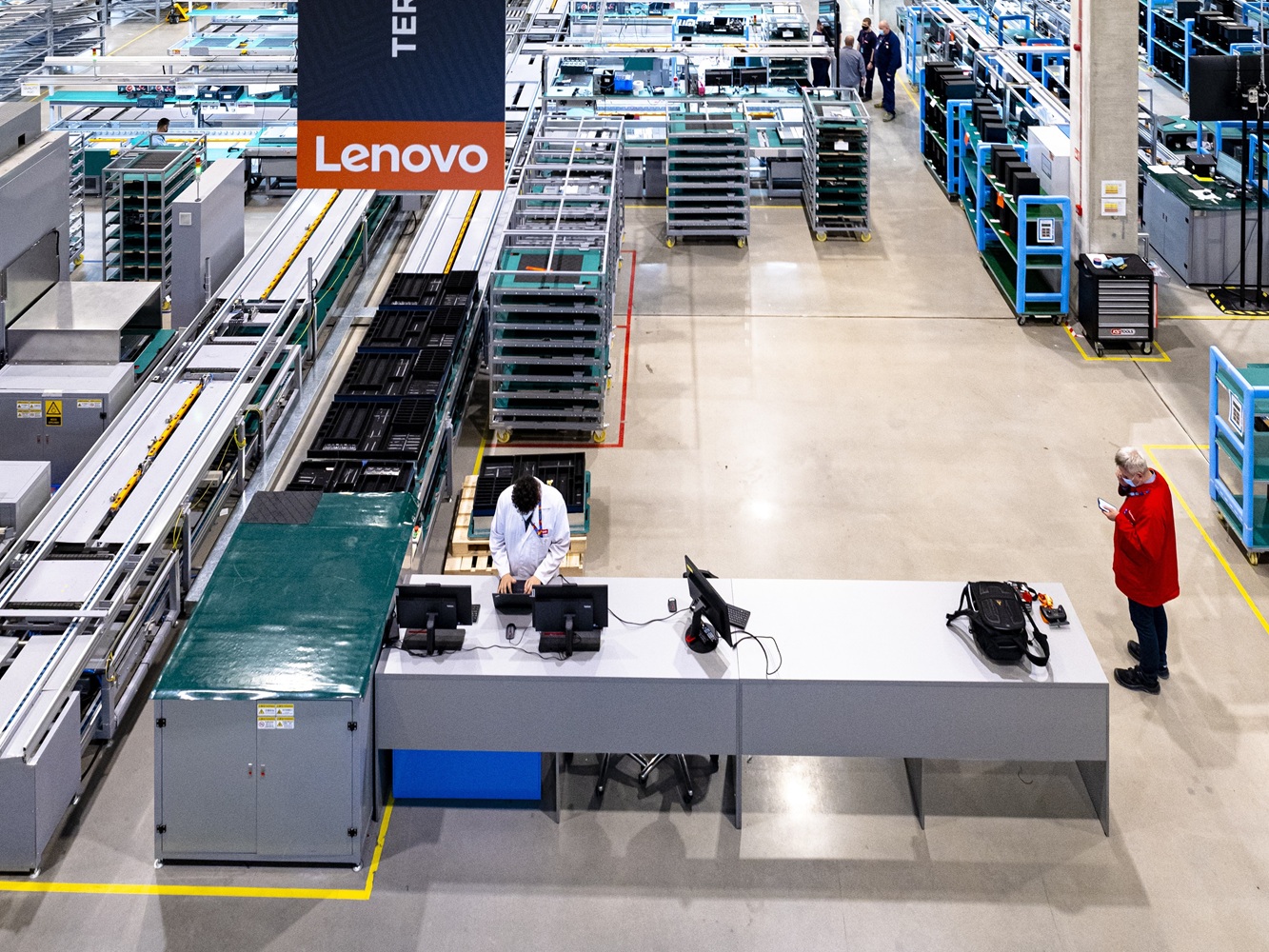
Lenovo’s global scale is reflected in its ability to serve more than 1 billion customers across 180 markets, supported by over 30 manufacturing sites, 49 logistics centers, and a vast ecosystem of more than 2,000 suppliers. This capability has been recognized in the Gartner Supply Chain Top 25 for 2026 and featured in a WTO case study.
The bigger picture
For Tan, Industry 5.0 represents a maturing of what “progress” even means in manufacturing. “For a long time, industrial progress was defined mainly by speed, scale, and efficiency,” he says. “Those things still matter, but they're no longer enough on their own.” Resilience, sustainability, and genuine human-machine collaboration now share the stage.
Lenovo's own CIO Playbook research backs up the urgency: 94% of organizations plan to increase AI investment in the coming year, with AI infrastructure and AI-driven applications topping the priority list.
“The organizations evolving to Industry 5.0,” Tan says, “will be those that connect intelligence, infrastructure, and people into a highly efficient operating model — embracing both physical and agentic AI to solve business problems.”
For automation professionals, that's the real headline: Industry 5.0 isn't a slogan to wait out. The tools to get there — and the partners who can help deploy them affordably, with better data, and at scale across every location that matters — are already on the floor.