



©2026 Automation.com, a subsidiary of the International Society of Automation.
-

 ISA provides technical resources and standards to help industrial automation professionals advance their careers and the field. We enable automation professionals worldwide to solve problems and enhance their skills by bringing people together to create new technologies and share best practices with future automation professionals.
-
ISA Resources
-
Upcoming Events
-
Industry Insights
-
Consortia
-

Author Profile

Gregory K. McMillan
270 Results Found
-
 Feature
Why You Should Test Every Communication Network Before DCS Start-up
Find a way to test any communication network prior to installation. About a week before every major DCS start-up, consider performing a “network startup.” -
 Feature
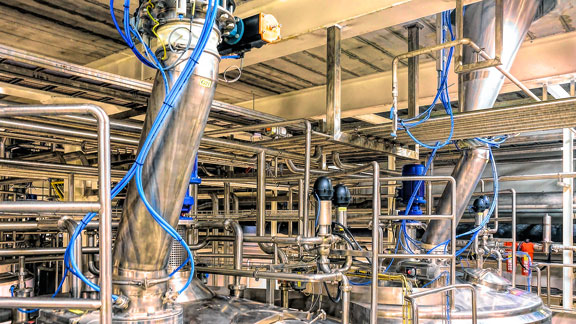
Benefits of Increasing PID Gain and Reset Time for Vessels and Columns
Temperature loops on mixed volumes, gas pressure loops, and level loops need much larger than expected controller gains and reset times. -
Feature
How to Reduce Development Time and Industrial Project Risk by Testing and Proving New Code
If a piece of code is to be replicated many times, always have two different people independently test it whenever possible. -
Feature
First Principles for a Deeper Understanding of Industrial Automation
Conceptual knowledge should be sought to see the commonality in seemingly different industrial application requirements. -
 Feature
Why You Should Insist on Documented Code for Every New Process Industry Project
Add comments through the software during programming. People will be very glad that you did. -
 Feature
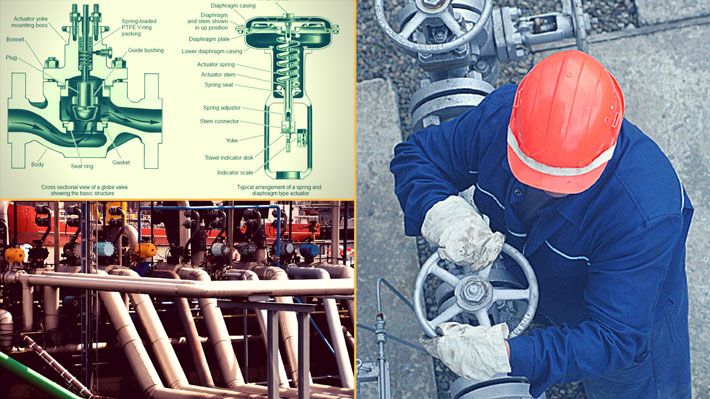
The Importance of Using Tuned Positioners on All Control Valves
Readback control of valve position compensates for a host of unknowns in connection with valve response but a positioner, like a controller, must be tuned. -
 Feature
If You Have to Tell Everyone How Smart You Are, You Probably Aren’t
If a person is extremely intelligent, it will be obvious to everyone after a casual conversation. -
 Feature
Why Automation Professionals Should Write and Present Technical Papers
As an engineer, your publications are as important for recognition of your expertise as publications of a supplier for recognition of a product’s capability. -
 Feature
A College Degree May Not Be a Reliable Indicator of an Engineer's Level of Knowledge
You must earn respect, and show respect to others. An engineering degree (or lack thereof) is a poor indicator of an individual’s knowledge level. -
 Feature
Why You Should Document the Benefits of Process Control Improvements
Capture and report trends of key process variables and metrics immediately before and after process control improvements. -
 Feature
Automation Industry Career Tip: Appearance Matters
From the clothes you wear, to the labels on a panel, to the layout and fonts on a graphic, to the look of your signature – appearance matters. There is a tremendous amount of wisdom in the expression, -
Feature
How to Advance Your Career in Industrial Automation
Making yourself marketable in the automation industry takes initiative, but it is beneficial to you and the company. -
 Feature
Industrial Career Advice: Pain Is Instructive
One of the more frustrating problems is the kind that can only be fixed by someone else. Find a way to have that person feel the same frustration as you. -
 Feature
The Best Process Control Technical Resources May Be Out of Print
The Best Process Control Technical Resources May Be Out of Print -
 Feature
Why Successful Automation Engineers Are Detail-Oriented
Engineering is by definition a detail-oriented profession, but the field of automation requires almost fanatical attention to detail. -
 Feature
The Benefits of Listening Skills for an Industrial Career
The knowledge of individuals can be openly shared environment at an industrial plant or facility is inquisitive and friendly and egos take a back seat. -
Feature
Benefits of Individually Fusing I/O with Indicating Fuse Blocks
The increased cost of using individual fuses will be quickly recovered by the reduced time to troubleshoot and resolve field wiring problems. One or two instances of bringing production back on line w -
Feature
Free Download: Checklists to Manage Instrumentation and Manufacturing Technology
Information needed to take advantage of the best industrial technology and address all of the considerations of an application is often difficult to find. -
 Feature
The Value of Messaging in Industrial Control Systems
If the information is detailed & useful, an operator will be able to run a control system much more independently & resolve problems without outside help. -
 Feature
Use Wireless Transmitters for Diagnostics, Improvements, and Metrics
Wireless transmitters can rapidly prototype, demonstrate, analyze and justify installations of online diagnostics, metrics and improvements.