



©2026 Automation.com, a subsidiary of the International Society of Automation.
-

 ISA provides technical resources and standards to help industrial automation professionals advance their careers and the field. We enable automation professionals worldwide to solve problems and enhance their skills by bringing people together to create new technologies and share best practices with future automation professionals.
-
ISA Resources
-
Upcoming Events
-
Industry Insights
-
Consortia
-

Author Profile

Gregory K. McMillan
270 Results Found
-
Feature
Webinar Recording: Temperature Measurement and Control
Temperature is the most important common measurement that is critical for process efficiency and capacity. -
 Feature
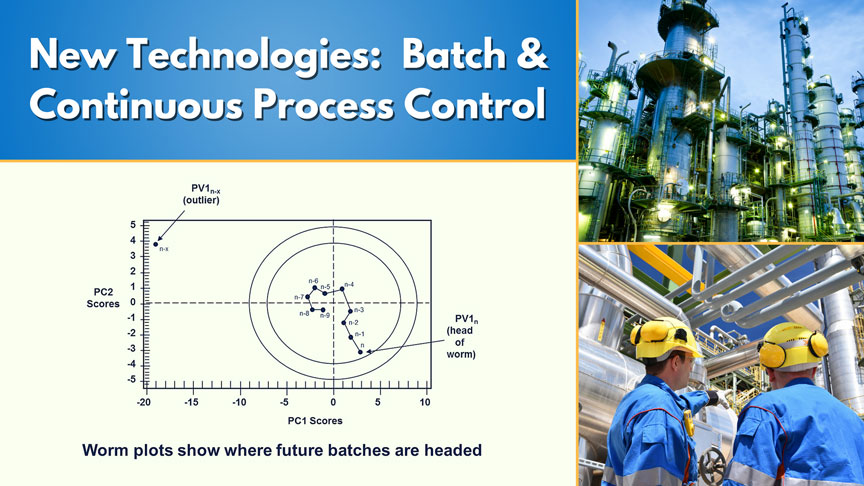
What are New Technologies and Approaches for Batch and Continuous Process Control?
For any type of analysis or prediction, whether using ANN or MSPC, you need to have inputs that show the variability in the process. -
 Feature
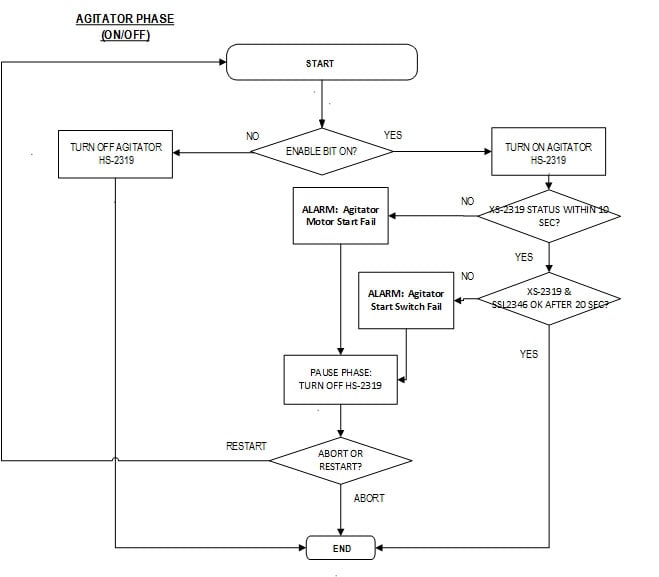
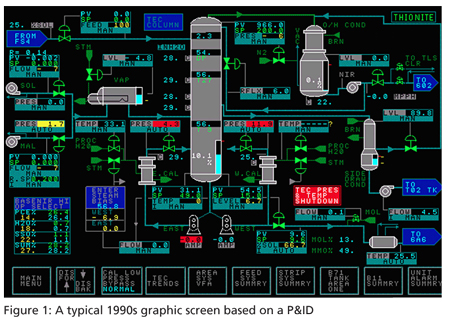
What Are Best Practices and Standards for Control Narratives?
When creating detailed control narratives for existing controls, use established standards and industry best practices. -
 Feature
When and How to Use Derivative Action in a PID Controller
The least frequently used mode in a PID controller, derivative is more useful when dead time is not pure dead time but is a series of small time constants. -
 Feature
How to Manage Pipeline Valve Positioner and PID Tuning
In general use the highest valve positioner gain that does not cause oscillation. For pipeline flow and pressure control, oscillations are not filtered. -
 Feature
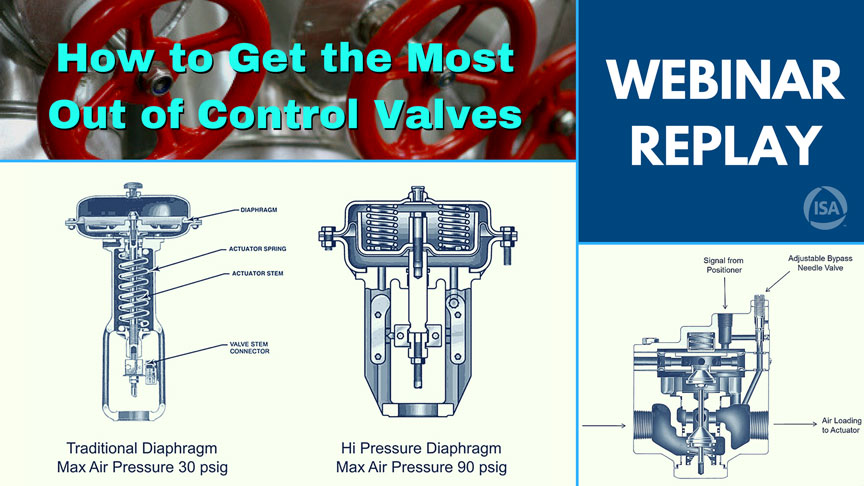
Webinar Recording: How to Get the Most Out of Control Valves
The data that is really needed when selecting and sizing a control valve is rarely understood and specified. -
 Feature
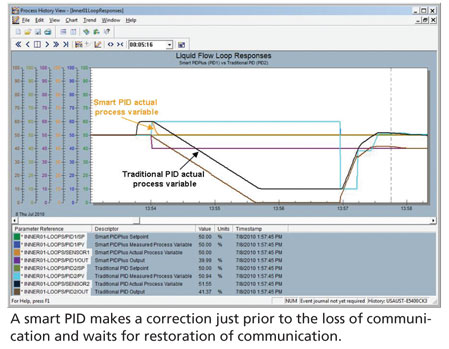
How to Overcome Challenges of PID Control and Analyzer Applications via Wireless Measurements
An enhanced PID controller simplifies tuning and improves loop stability and reliability for loops dominated by discontinuous measurement updates. -
 Feature
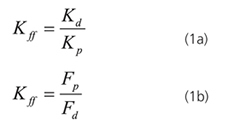
Feedforward Control Enables Flexible, Sustainable Manufacturing
Feedforward provides preemptive corrective action for production rate and grade changes enabling key PID controllers to provide consistent product quality. -
 Feature
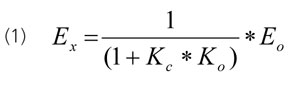
PID Controller Tuning Rules
Safety, equipment and environmental protection, process efficiency and capacity, product quality, and control system maintenance depend on PID tuning. -
 Feature
What Are Best Cutover Strategies for Upgrading an Industrial Plant?
When retrofitting an industrial plant, review budget, schedule, financial justification for the project, as well as all areas of concern such as shutdown. -
 Feature
How to Avoid Common Tuning Mistakes With PID Controllers
The success of advanced control depends on the basic control system foundation. The PID controller is the common key component of all control loops. -
 Feature
The Good, Bad, and Ugly of Thermal Mass Flowmeters
Thermal mass flowmeters can be a relatively inexpensive flowmeter that can handle extremely small and large flows -
Feature
PID Tuning for Near and True Integrating Processes
The most important loops on vessels and columns typically have a near or true integrating response. -
 Feature
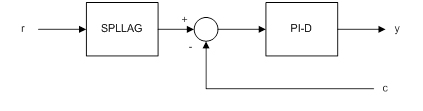
What are the Equivalent Methods to Eliminate Proportional Step and Derivative Kick?
There are several methods for eliminating or controlling the proportional step and derivative kick in a PID output resulting from a change of setpoint. -
 Feature
What Is the Definition of PID Bumpless Transfer?
Bumpless transfer and how a new operating point can be achieved quickly and smoothly after the PID is switched to automatic mode. -
Feature
How Do You Measure Control System Performance?
Seek a suite of practical metrics in terms of key performance indicators that can have an impact on plant control system performance. -
 Feature
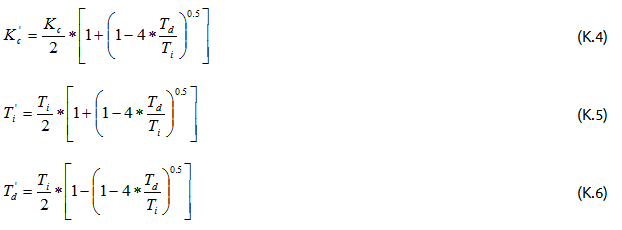
How Do You Convert Tuning Settings of an Independent PID?
Considerable confusion exists on how the PID Form affects tuning settings. Lack of understanding of Form & units of settings can lead to disastrous results. -
 Feature
How to Better Understand Integrating and Runaway Process Dynamics
Technical discussion on how to improve industrial automation operations by understanding integrating and runaway process dynamics -
 Feature
Better Process Control by Understanding Self-Regulating Process Dynamics
The three types of processes in the automation industry are self-regulating, integrating, and runaway. -
 Feature
Benefits of Good Tuning: Increased Production and Profitability, Reduced Variability
For control loop tuning, the first settings that must be right are the controller and valve actions. If these actions are not right, nothing else matters.