Across today’s rapidly shifting manufacturing and engineering landscape, one challenge stands out: The growing need for graduates who not only understand technology but can also apply it. Kettering University, a private, STEM-focused institution in Flint, Mich., known for its century-old model of experiential learning, recently set out to give students a deeper, real-time experience with modern automation systems in their lab work (Figure 1).
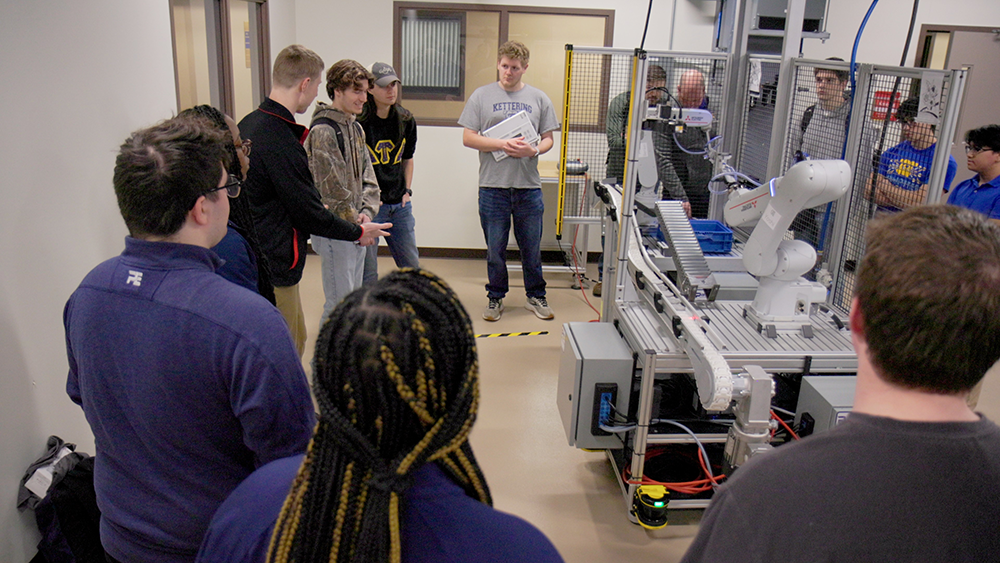 Figure 1: Kettering University students learn from Mitsubishi Electric business development manager, Tom Majeswki.
Its journey offers valuable insights for educators looking to strengthen hands-on learning in their own classrooms.
Why hands-on learning matters
Industries continue to adopt sophisticated automation technologies, and employers increasingly expect students to arrive with practical experience in logic programming, robotics, system integration, troubleshooting and more. Kettering recognized this trend early. The university is built around a cooperative education model in which students split their time between coursework and industry placements. Adding deeper lab-based automation experiences is the natural next step in the virtuous feedback loop that cycles with a student from the classroom to co-op and back again.
Andy Watchhorn, a Kettering lecturer said, “Our value add for our students is to make them job ready, and to have access to state-of-the-art equipment.” (Figure 2) Hands-on practice helps students move from theory to real problem solving, giving them a clearer sense of how mechanical, electrical and software systems come together in real-world operations even before they experience them in the field.
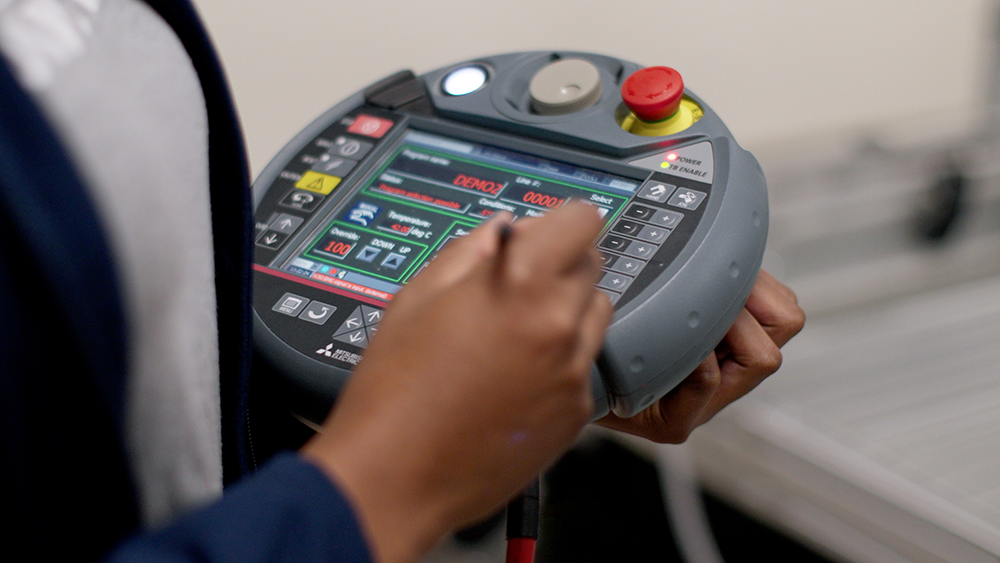 Figure 2: Kettering University student trains a robot using a robot teaching pendant from Mitsubishi Electric.
Building a real world automation cell inside the classroom
To strengthen student learning, Kettering collaborated with Patti Engineering and technology partners to design and build a two-station robotic cell (Figure 3) that mirrors the complexities of a modern manufacturing environment.
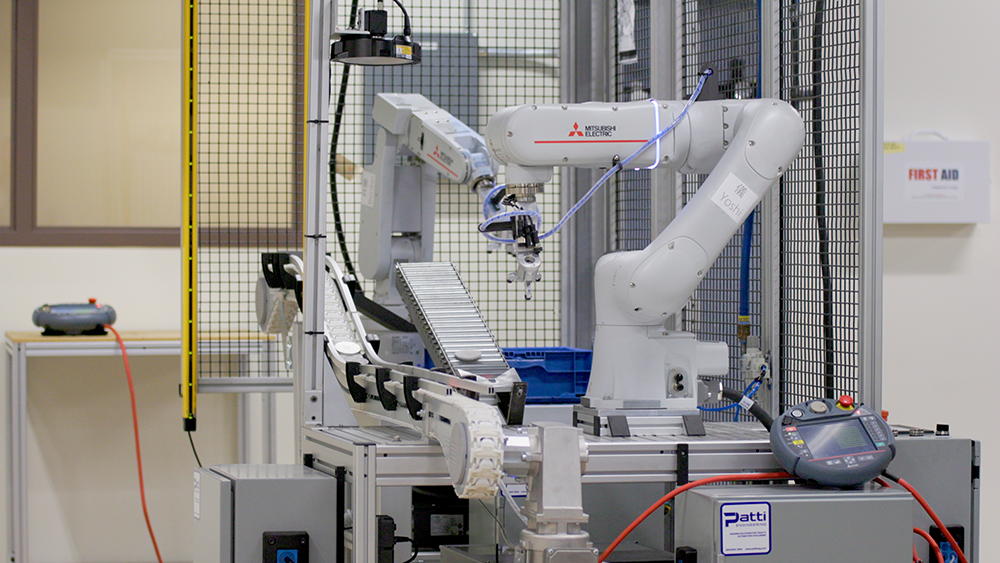 Figure 3: Industrial and collaborative robots from Mitsubishi Electric in the cell.
Rather than a static demo unit, the cell was intentionally designed to be:
- Modular and upgradable so students can work with components similar to those used in current industrial settings.
- Interactive and experiment-ready giving learners the freedom to adjust code, debug issues and see the effects in real time.
- Cross-disciplinary, combining robotics, PLCs, HMIs, vision systems, conveyor mechanics and collaborative robotics into a single, unified process.
The setup features two workstations with industrial and collaborative robots performing pick and place operations and automated inspections. Students get hands-on practice testing, iterating and building specifications for vision systems, motion control, programming logic and system integration—skills that directly reflect industry expectations.
Learning tool evolves with students
What makes Kettering’s approach especially compelling is the way the cell supports open-ended exploration. Students can rewrite or modify parts of the program, troubleshoot errors as they occur, observe cause and effect relationships between code and machine behavior and practice real debugging workflows that technicians and engineers face daily.
Terrance Brinkley, director of Michigan Operations at Patti Engineering, explained the design’s intent: “We designed the robotic cell to function as a lab for student experimentation, allowing them to modify and rewrite parts of the program.”
This autonomy enhances critical thinking, resilience and confidence—qualities that are difficult to teach through lectures alone.
Turning classroom experience into career momentum
For many students, experiences like this become pivotal. In one example, Electrical Engineering major ‘25, Scotty Grunwald, described working with the robotic cell as his first true end-to-end automation system challenge. He said that the difficulty is what made the project meaningful: “It was a lot harder than it looks on paper, but that’s what made it so valuable.” Hands-on learning doesn’t just prepare students technically; it also gives them a competitive edge in internships, co op positions and full-time roles. Employers see candidates who understand the realities of automation systems, can identify and solve problems independently, communicate more confidently about technical decisions and are ready to contribute on day one. These benefits ripple far beyond a single course or semester.
Getting started
You don’t need a full robotic cell to begin integrating hands-on automation into your curriculum. Here are the steps many schools take when they get started:
1. Begin with scalable building blocks. Even simple automation kits, simulation environments or introductory programmable logic controller (PLC) trainers give students direct interaction with control logic and system design.
2. Partner with local industry. Companies often look for opportunities to support workforce development. Many offer discounted equipment, training or access to experts, similar to how Kettering collaborated with engineering and technology partners.
3. Incorporate open-ended lab assignments. Let students explore different solutions rather than prescribing a single correct approach. Encourage debugging, testing and iteration.
4. Connect hands-on work to real career paths. Invite alumni, co op students or local professionals to share how these skills translate into actual roles and responsibilities.
5. Evolve over time. Start small, then expand capacity as your program grows, mirroring the modular approach used in Kettering’s cell.
Preparing tomorrow’s innovators
The Kettering University automation project demonstrates what’s possible when education and industry collaborate toward a shared goal: preparing students for meaningful, high-impact careers. Modern engineering demands more than textbook knowledge; it requires curiosity, adaptability and hands-on experience.
Whether you’re an educator designing your next lab module or a student exploring engineering pathways, hands-on learning opens the door to deeper understanding and career-ready skills.