


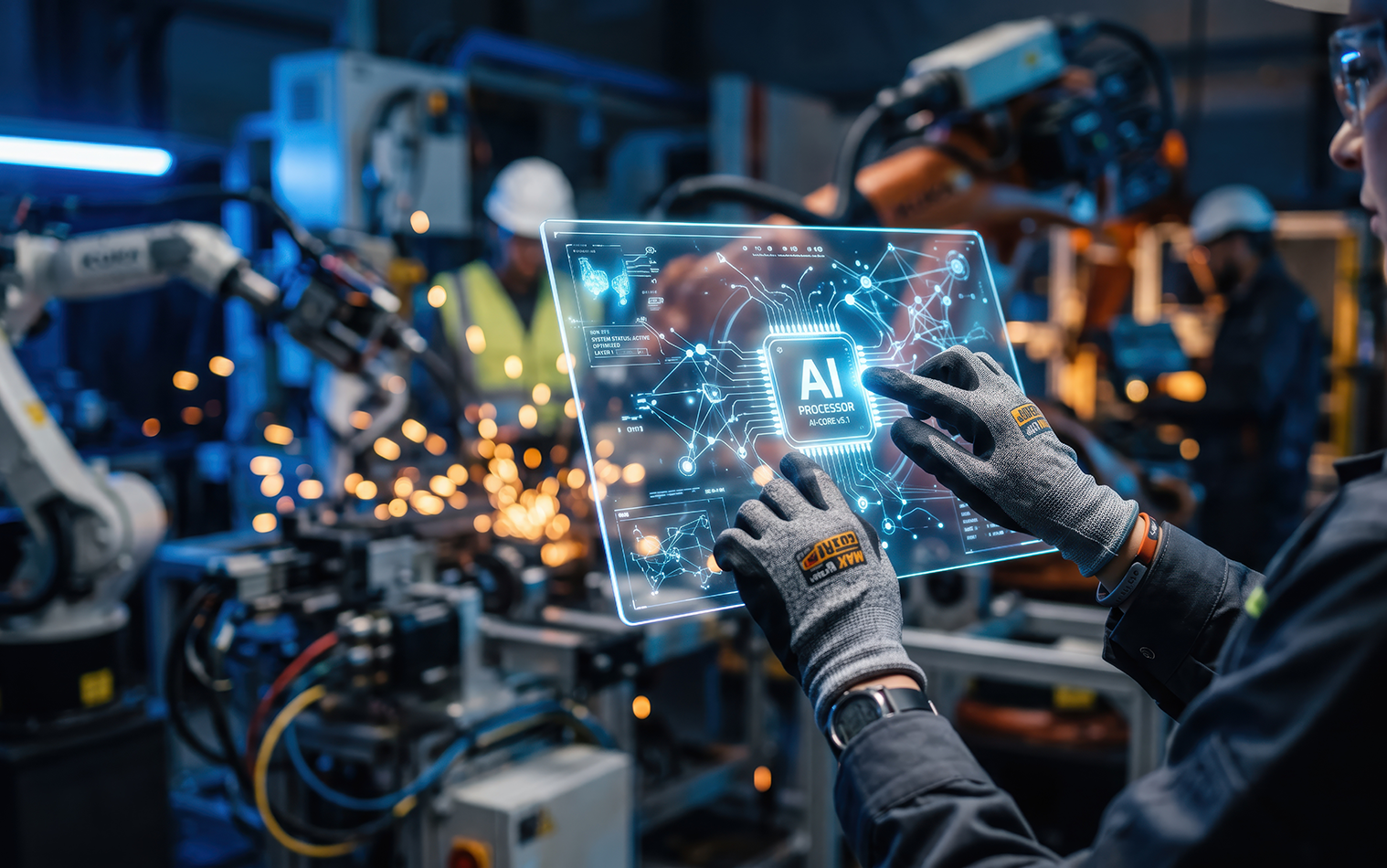
Much of the conversation around industrial AI has been focused on what the technology can do: detect anomalies, predict failures, optimize processes and help operators make better decisions. That conversation is evolving as AI moves closer to the point of execution and participates directly in industrial operations.
In a recent pilot with Honeywell Technologies, an AI agent autonomously identified and corrected abnormal situations with minimal operator oversight at Borouge’s Ruwais facility. The significance of that pilot goes beyond what the technology demonstrated it could do and raises a more consequential question: Now that AI is capable of taking action, how much authority are operators prepared to give it? How should we assure and govern it? What guardrails and interventions should we implement?
The future of industrial AI hinges as much on operator trust as technical capability.
Moving toward autonomy incrementally
Industrial facilities have spent decades engineering control strategies, safety systems and operating procedures around predictable behavior. AI enters an environment in which uncertainty carries real consequences. Therefore, the progression from automation to autonomy should begin with practical applications that support existing operating decisions and develop through progressively greater levels of responsibility.
At one end, AI can observe operations and provide operators with earlier warnings and better context. Honeywell Technologies’ Experion Operations Assistant, for example, provides actionable summaries and guided responses to operators. At TotalEnergies’ Port Arthur Refinery, it predicted potential alarm incidents up to 10 minutes in advance, giving operators more time to take corrective action. In a control room, that additional time makes a material difference to outcomes.
Applications like this provide important proving ground for the technology because operators can see whether it consistently identifies meaningful conditions and whether its recommendations reflect the reality of the process. From there, AI can assume greater responsibility within clearly defined operating boundaries.
The Borouge pilot represents the furthest step along this progression: from intelligence that informs an operator to intelligence that runs a closed-loop operation. Each step provides learnings and evidence for the next. Giving an AI system greater authority over a live process will require confidence built through these repeated performances and pilots under real conditions.
Operators set the boundaries
Trust depends on clarity. An operator needs to understand what an AI system is responsible for, the information it is using and the bounds of its capabilities. Just as importantly, the system needs clear limits on its authority. Those boundaries are especially important in process automation, where control strategies and safety systems have been engineered around predictable behavior. AI needs to work within that environment rather than introduce uncertainty into it.
Operational context becomes critical here, because a recommendation generated from isolated data can be technically correct while still being inappropriate for the actual conditions. AI can provide operators and engineers with that context, faster insight and practical next steps. Digital tools can shape how those decisions are made in operation. Digital twins can also give operators an environment to test engineering changes before those changes reach live operations. Operations teams can evaluate scenarios, explore ideas and gain more insight into likely consequences.
Cybersecurity must be treated with the same discipline. As AI becomes more connected to operational technology and potentially gains greater ability to influence facility behavior, organizations need to understand how those capabilities affect the cyber risk profile of the operation. New intelligence cannot come at the expense of system integrity or operational continuity.
Governance ties these elements together. Organizations need explicit rules for what AI may recommend, what it may execute and when people or existing automation systems take precedence. Organizations are developing AI governance protocols and structures; as agents start to support humans more and develop more capability, we need to think of them as less of a piece of software and hardware and more as a resource directly tied to business outcomes.
The real measure of trust is operational action
The industry has no shortage of AI-generated information. The challenge is turning this intelligence into insights operators are willing and able to use.
A system that produces another alert, dashboard or recommendation without improving the operation simply adds more information and clutter into a critical workspace. A trusted system helps an operator understand what is happening, why it matters and what action is appropriate. As organizations gain confidence in that performance, some of those actions can increasingly move into closed-loop execution. The industrial organizations that scale fastest will be those treating operator trust in AI systems as an engineering requirement and core to their process. That means establishing clear authority boundaries, connecting AI to the operational context in which decisions are made and proving performance incrementally before expanding the system’s role. Technical capability will only continue to advance. In many cases, AI may soon be able to assume more responsibility than an organization is willing to give it.
As industrial organizations move toward greater autonomy, the fundamentals of process operations remain the same — controls must be predictable, safety systems must remain dependable, cybersecurity must protect continuity and operators need clear, actionable information.
AI can become an essential part of that operating environment when its role is clearly defined. For industrial AI, progress toward autonomy will ultimately be measured less by what the technology can theoretically do, and more by how human operators engage with, understand and trust the technology as a critical tool and core part of the process infrastructure.