A few years back, I got a call from a Midwest municipal plant just after sunrise. One of its primary anaerobic digesters had overflowed overnight. Thick brown sludge rolled over the tank wall, crossed the containment curb and made its way into a storm channel that led to a small creek. By the end of the week, the plant was staring at roughly $350,000 in cleanup costs, environmental fines, contractor invoices and overtime. The part that stung the most was this: The overflow was preventable.
Anaerobic digesters are incredible assets when they’re under control. They stabilize sludge, knock down volatile solids and generate biogas that offsets energy bills. But they are living systems. Feed variability, foaming, poor mixing or stalled heating can shift internal conditions quickly. Sludge packs tighter than expected. Gas pockets form under crust. Pressure builds at the base while the surface looks calm.
Most plants still rely on a single level transmitter and operator rounds. That’s not enough anymore.
Industrial Internet of Things (IIoT) dual monitoring combines a high-accuracy sludge level sensor with a hydrostatic pressure sensor and streams both into an IIoT platform. Instead of reacting to visible overflow, users detect subtle divergences between level and pressure trends. In practice, this setup can provide 20 minutes or more of warning before a spill or forced shutdown.
That lead time protects your permit, your equipment and your sleep.
Digesters in the real world
On paper, a digester is simply a heated tank with mixing and gas collection. In reality it’s a layered, dynamic environment that changes by the hour.
The bottom zone is dense and heavy, often around 1.3 specific gravity depending on solids concentration. The middle layer can be more uniform and partially digested. The top is where trouble likes to brew. Foam accumulates. Gas bubbles get trapped. Crusts form if mixing is uneven.
When organic loading spikes, methane production increases quickly. Gas bubbles rise and carry solids upward. Foam thickens. Surface level readings can jump, even though the actual sludge mass distribution is changing in complex ways.
When temperature dips below 35 degrees C (95 degrees F) it slows biological activity. Mixing efficiency drops. Solids that should be breaking down start settling and compacting. That compaction shows up as increased base pressure before a dramatic level rise is detected.
Mechanical issues add another layer of uncertainty: a mixer bearing starts dragging, a feed pump partially plugs, a gas line restriction creates localized pressure zones. None of these are obvious during a quick visual check. And then there are gas pockets.
I’ve seen level sensors alone fooled by thick foam that reflected signals as if it were solid sludge. I’ve also seen pressure sensors alone mislead operators because a trapped gas cushion masked true compaction at the base. When you depend on one measurement point in a digester, you are always blind somewhere.
At one regional facility I worked with, they were averaging four minor overflows a year. Nothing catastrophic, but enough to trigger reporting and angry calls from downstream stakeholders. Once they implemented dual sensing tied into an IIoT anaerobic monitoring platform, those events stopped. The plant didn’t change biology, they changed visibility.
Level sensors get you halfway
Level measurement is the first piece of the puzzle. It tells you where the sludge surface or foam interface sits relative to tank capacity. But the choice of sensor matters.
Ultrasonic level sensors are common because they’re easy to install from the top. A quality unit can deliver 0.25% accuracy over a 10 meter range, which is more than sufficient for most municipal digesters. Look for IP68 protection so the housing can handle washdown, condensation and corrosive atmospheres.
In clean applications, ultrasonics perform beautifully. In digesters, they can struggle when foam is thick or vapor density fluctuates. Sound waves attenuate. Echo patterns get noisy. If they are not calibrated accurately, unexpected level fluctuations may occur. Radar level sensors are more forgiving in harsh digester environments. Modern high-frequency radar units can achieve around 3-mm resolution and are far less sensitive to vapor and biogas composition. They cut through foam more reliably and maintain stable readings during temperature swings. For plants that fight chronic foaming, radar is often the better top-mounted option.
Then there are submersible probes that are placed directly into the sludge column. These can achieve around 0.1% precision because they measure hydrostatic heads at the probe tip. They’re excellent for true liquid level measurement when installed correctly.
The downside to submersible probes is fouling. Rags, grease and fibrous solids can coat the sensing element. That’s why I prefer side port mounting with easy pull-out access and robust strain relief. Plan for periodic cleaning. No sensor in a digester is install-and-forget.
Set high-level alarms conservatively, typically around 80% of usable tank volume. That buffer gives you time to react. But remember, level alone only tells you surface position. It does not tell you how densely the sludge is packing below.
That’s where pressure sensing changes the equation.
Pressure sensors seal the deal
A hydrostatic pressure sensor installed near the base of the digester reads the total weight of the sludge column above it. This is not just about depth. It’s about density and compaction.
For most municipal digesters, a 0 to 50 psi range is appropriate, with a standard 4-20 mA output for easy integration. Choose units with 316 stainless steel bodies and PTFE-coated diaphragms. Hydrogen sulfide and acidic condensate will eat inferior materials over time.
When sludge compacts due to poor mixing or increased solids loading, base pressure rises even if surface level appears stable. A 2 psi increase with no significant level change is a serious warning sign. It often indicates that solids are packing tighter and gas is being trapped.
Flush-diaphragm designs help reduce clogging and buildup at the sensing face. Even so, routine inspection is essential. We often configure IIoT systems to perform daily zero checks during low activity periods. The platform compares readings against historical baselines and flags drift before it becomes a calibration problem. Pressure trends often move first.
I recall a plant where the level transmitter showed only a slow rise over 30 minutes. Meanwhile, the base pressure had climbed steadily. The dual sensor logic detected divergence and triggered a compaction alert. Operators increased mixing speed and reduced feed. The pressure curve flattened within minutes.
Without pressure data, they would have waited until the level alarm tripped, and by then they would have been dangerously close to overflow. That’s the core of effective digester pressure control. You’re not just watching how high the sludge is. You’re watching how heavy and how tightly packed it’s becoming.
How does dual sensing catch issues quickly?
This is the question I get most from peers. Dual sensing works because it correlates two independent physical phenomena. Level sensors measure surface position. Pressure sensors measure mass and density effects at the base.
When both rise together in a predictable pattern, the system behaves normally (Figure 1). When level rises rapidly but pressure lags, you’re likely dealing with foam expansion or gas pockets. When pressure rises sharply while level stays flat, compaction or mixing failure is likely. When both spike aggressively, you may be facing a feed surge combined with poor gas release.
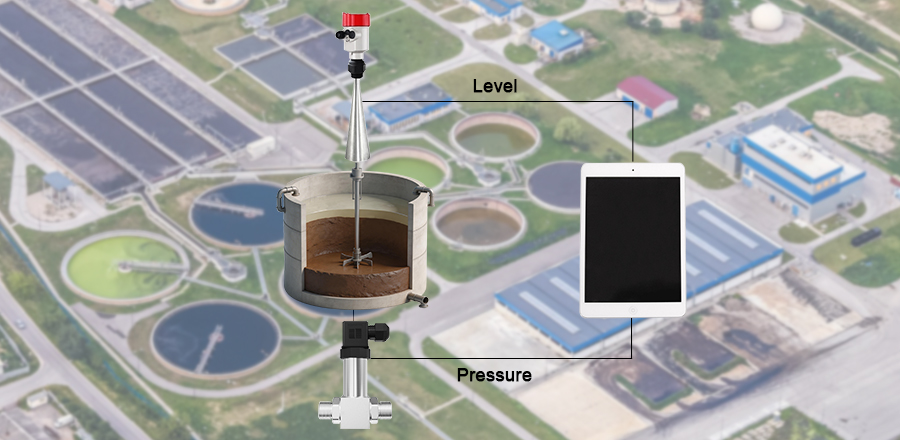 Figure 1: When both level and pressure rise together in a predictable pattern, the system behaves normally.
An IIoT anaerobic monitoring platform ingests both 4-20 mA signals through a gateway, digitizes them and applies edge logic. Rules are simple but powerful. For example, if pressure increases more than a defined rate while level change remains below a threshold, trigger a compaction warning. If level acceleration exceeds a set slope and pressure begins rising within a defined lag window, flag foam risk.
These correlations happen in seconds. Alerts can reach operators’ phones in under 15 seconds depending on network latency. That speed is what turns data into wastewater overflow prevention.
Full setup steps in the field
A typical retrofit on a 20 cubic meter digester is straightforward if you plan carefully. Start with sensor selection. Choose either an IP68 ultrasonic with 0.25% accuracy over 10 meters or a radar unit with 3-mm resolution for top measurement. Pair it with a 316 SS hydrostatic pressure sensor rated 0-50 psi with PTFE coating and 4-20 mA output.
Next, plan mounting points. The level sensor should be positioned to avoid obstructions like ladders or gas piping. The pressure sensor should be installed at the lowest practical point in the sludge zone using a sealed port and isolation valve where possible.
Cable routing must respect corrosive environments. Use proper conduit and sealed junction boxes rated for hazardous areas if biogas classification requires it.
Feed signals into an IIoT gateway, often via analog input modules. LoRaWAN or similar wireless backhaul can eliminate long cable runs across the plant. The gateway pushes data to a cloud or on-prem server.
Then comes configuration. Define alarm thresholds based on historical operating data. Then program the correlation logic. Validate with controlled tests by adjusting feed or mixing under supervision to see how sensors respond.
Finally, integrate with the programmable logic controller (PLC) if desired. When high-risk conditions are detected, automatically increase mixing, reduce feed or divert flow. Close the loop so alerts are not just informational but actionable.
Document everything. Operators need clear dashboards showing both level and pressure trends side by side.
Traps to avoid
The biggest mistake is assuming one sensor can serve as a backup for the other. They measure different realities. Treat them as complementary, not redundant.
Another trap is ignoring maintenance. Submersible probes will foul. Even radar faces can accumulate condensate film. Build cleaning into preventive maintenance schedules.
Do not overcomplicate the logic; start with clear rate-of-change and divergence rules. Add machine learning only after you understand your baseline behavior.
Poor grounding and signal shielding can introduce noise into 4-20 mA loops. In digesters with heavy electrical equipment, that noise can mimic false pressure shifts.
Finally, do not overcomplicate the logic. Start with clear rate-of-change and divergence rules. Add machine learning only after you understand your baseline behavior.
Field results that matter
At a California facility with five digesters, implementing dual sensing reduced overflow events by about 90% within three months. Operators reported receiving consistent 10-minute warnings before critical conditions developed.
False alarms dropped after we refined the logic to require agreement between level acceleration and pressure trend. That built trust in the system. Trust is everything. If operators believe the alerts, they act early. If you ignore them, the best sensors in the world will not save you.
Scaling and the road ahead
Once you prove the concept on one tank, scaling is simple. Mesh networks can connect 20 digesters without trenching new conduit. Each tank has its own pair of sensors but shares centralized monitoring and analytics.
Looking forward, edge artificial intelligence (AI) is beginning to incorporate weather forecasts and influential trends to anticipate foaming risk. Faster connectivity such as 5G reduces latency for automated control actions. But the core principle will not change. Pair a reliable sludge level sensor with a rugged hydrostatic pressure sensor. Correlate them through an IIoT platform designed for harsh wastewater environments. Act on divergence before sludge reaches the brim. That is practical, field-tested wastewater overflow prevention.