Corrosion causes billions of dollars in losses annually in oil and gas, chemical, petrochemical and other heavy industries; it threatens both operational reliability and poses safety risks. Managing this threat was primarily a reactive endeavor, with facilities relying on scheduled inspections and historical maintenance data to forecast asset health over time.
This approach is being replaced with proactive procedures that leverage advanced sensor technology and connectivity through digital ecosystems. Today’s competitive operations require real-time and high-fidelity data that shows how assets are degrading under current operating conditions, not approximations using months-old averages. Addressing this need, advances in continuous and actionable intelligence are spurring better monitoring solutions.
This article explores shortcomings of traditional measurement methods and the ways that modern technologies improve corrosion and erosion monitoring.
Gaps and guesses in traditional monitoring
For decades, asset health decisions regarding corrosion and erosion were based on data from traditional monitoring tools with data was often fragmented and/or delayed.
The early standard for corrosion monitoring—weight-loss coupons—provided only a single time-averaged corrosion rate over periods of months, or even years. This method entailed placing a small, pre-weighed specimen of material identical to the piping or vessel directly into the process stream. After a set period, typically several months or more, the coupon was retrieved, cleaned and re-weighed. The weight loss was then used to calculate an average corrosion rate of the vessel over the exposure period.
However, this determination was a lagging indicator with no way of identifying the impact of short-term process upsets. Furthermore, retrieving the specimen was a labor-intensive and intrusive process; it often introduced safety risks and required a shutdown.
Manual ultrasonic thickness (UT) measurement methods improved on weight-loss coupons by providing a direct but infrequent snapshot of wall thickness. These measurements were performed by a technician using a handheld probe to send an ultrasonic pulse into the piping or vessel material. The time it took the echo to return was used to determine wall thickness.
With inspections often conducted annually or even less frequently, there were vast periods left unmonitored when active corrosion could go undetected. The data was also prone to inconsistency due to technician variability and inspections in hard-to-reach areas required expensive preparation, such as scaffolding, and manually intensive activities such as insulation removal.
Next in line, permanently installed electrical resistance and linear polarization resistance probes provided more frequent data, but they were intrusive to operations. Inserting a probe into a process created a potential leak path, which is a major safety concern. These probes were also susceptible to flow damage and they provided only a highly localized measurement that could be rendered inaccurate by fouling, potentially missing more severe corrosion occurring elsewhere in the system.
Collectively, these conventional methods created a reactive maintenance culture by necessity. Engineers were forced to make critical decisions based on incomplete, obsolete or old data that led to overly conservative operational and maintenance strategies in the best case and unforeseen process failures and incidents in the worst case.
From reactive fixes to predictive health management
Fortunately, the latest generation of monitoring technologies — encapsulated in wireless corrosion and erosion monitoring systems—provide continuous and automated measurement, which can be used to create a comprehensive asset health surveillance picture. This approach is proven in use with more than 35,000 permanently installed UT transmitters globally from a leading manufacturer (Figure 1).
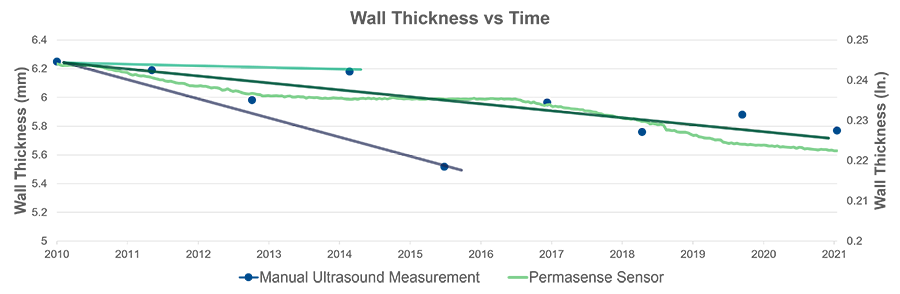 Figure 1: Traditional corrosion monitoring does not provide the granularity required for informed decision making. Emerson’s corrosion and erosion monitoring instruments, with a wide range of mounting options, provide the data needed for optimal monitoring.
These instruments provide a nonintrusive and real-time view of asset health in a variety of industrial applications, from cryogenic conditions to extreme heat up to 600 degrees C (1,112 degrees F), which overcomes historical challenges of traditional monitoring by:
- Providing continuous and high-resolution data. Instead of infrequent manual snapshots, these instruments provide a constant stream of measurements that reveal the true impact of process upsets that were previously very difficult to detect.
- Enhancing safety and reducing costs. With completely nonintrusive and external installation, there is no risk of leak paths or a need for process shutdowns, scaffolding or insulation removal.
- Delivering data quality. With extensive and maintenance-free lifecycles, modern sensors provide exceptional repeatability and durability for the long haul. Furthermore, a leading manufacturer’s patented adaptive cross-correlation (AXC) signal processing ensures stable and accurate readings, even on internally rough surfaces. For general and mid-temperature applications, strap solutions enable rapid and weld-free installation on pipes in just minutes. This makes them ideal for monitoring crude overhead lines and general piping throughout refineries and chemical plants. Additionally, in applications with large diameters, such as process vessels and storage tanks, magnetic vessel mount UT variants can be used to quickly install corrosion and erosion monitoring instruments (Figure 2).
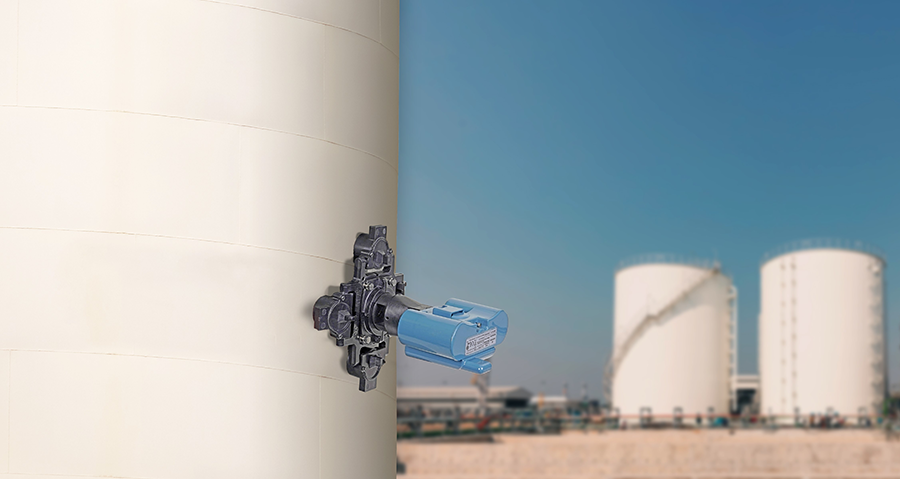 Figure 2: Rosemount Wireless ET310 corrosion and erosion transmitters can be quickly and securely installed in settings up to 270 degrees C (518 degrees F) on large diameter assets—30 inches to flat—using magnetic vessel mounts with no welding or surface preparation required.
In high temperature or extreme service environments, clamp- or welded-stud-mounted instruments ensure data integrity around high-heat units such as cokers, hydrocrackers and high-pressure steam lines (Figure 3).
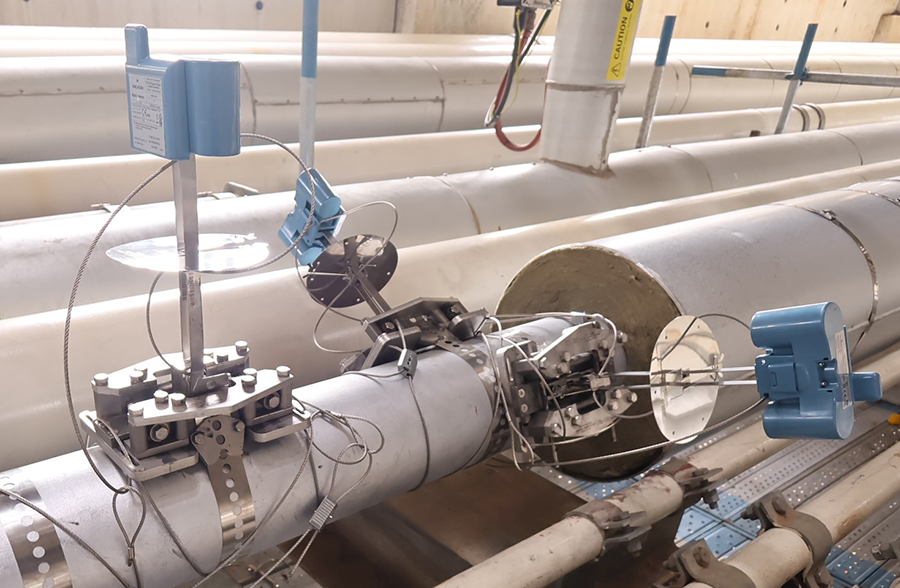 Figure 3: Rosemount Wireless WT210 corrosion and erosion transmitters are rated for extreme environments up to 600 degrees C (1,112 degrees F) using a universal or stud-welded mount with less than 2.5μm repeatability and 1μm resolution.
Additionally, the real-time data generated by these devices becomes even more valuable when integrated into digital ecosystems, which transform raw thickness measurements into predictive intelligence. Visual tools, such as heatmaps, help plant personnel rapidly identify problem areas in a process (Figure 4).
 Figure 4: Metal loss heatmap within Emerson’s Plantweb Insight data analytics software makes it easy to detect where and when corrosion or erosion are occurring.
This information empowers engineers to move beyond simple detection and perform accurate root cause analysis, predictive maintenance and to adjust the amount and type of inhibitors. It also arms staff with confident calculations of assets’ remaining life so they can optimize turnaround schedules, enhance safety and drive productive profitability.
Results: Proactive asset management at a bio-refinery
The tangible benefits of modern corrosion monitoring were witnessed in a leading bio-refinery that was facing significant operational uncertainty within its pretreatment unit (PTU).
The facility processes a wide variety of feedstocks by selecting from among options to reduce costs. While this practice is commercially necessary, it introduced highly variable and unpredictable corrosive environments throughout process operations. This culminated in significantly more metal loss in a PTU separator — which was revealed during a routine inspection—than the company’s historical models had predicted, which required unplanned and costly maintenance. Upon restarting operations, the plant’s integrity team sought to eliminate future surprises. The primary goal was obtaining a continuous and real-time understanding of the corrosion occurring within critical vessels to ensure asset integrity and prevent incidents.
However, monitoring the previously degraded PTU separator presented a significant physical challenge. At 12 feet in diameter, the vessel was too large for traditional strapping-based mounting, and stud welds would require a shutdown and laborious installation. To overcome these issues, the facility deployed a Rosemount Wireless ET310 corrosion and erosion transmitter, paired with a magnetic vessel mount. This combination proved ideal by addressing the unique challenges of this application.
A single technician installed the magnetic mount in minutes without the need for welding, surface preparation or process interruption. This base provided a secure and stable platform for the transmitter to begin measurement.
The continuous stream of high-resolution thickness data provided by the instrument confirmed the integrity team’s concerns: The monitored area was indeed experiencing a more significant corrosion rate than had been anticipated. However, instead of operating blindly or waiting months for the next manual inspection, the team now had continuous visibility into this critical asset’s health. Plant personnel were now able to directly observe the wall thickness trend, calculate real-time corrosion rates and begin to correlate metal loss with specific feedstock batches or process conditions. The constant flow of data removed the element of surprise and transformed the company’s maintenance strategy from reactive to proactive. The integrity team could now make data-driven decisions about the vessel’s operational future, plan maintenance with confidence and manage the risks associated with variable feedstocks far more effectively.
Asset integrity’s future path
The move from traditional to modern corrosion monitoring techniques is part of a broader asset management shift throughout industry, favoring continuous, automated and repeatable data—as compared to sporadic, manual and variable measurements. The latter approach necessitates frequent and expensive inspections to identify asset degradation, and it is still incapable of identifying damage nearly as rapidly as the updated approach.
These new measurement methodologies enable replacement of reactive maintenance methods with predictive servicing to maintain efficient production with lower operational expenses. Additionally, these new technologies can be used to realign roles from data collectors to strategic analysts, facilitating high-value insights and improved data sharing among team members. This enables corrosion engineers to optimize mitigation strategies, inspectors to dedicate more time to critical assets and managers to make data-driven decisions that improve safety and efficiency.
By also integrating these real-time data streams into digital ecosystems, facilities can predict assets’ remaining useful life with higher accuracy by leveraging historical data points and process trends. Driven by nonintrusive corrosion and erosion monitoring technology that provides previously unattainable insights, companies are maximizing reliability, operating more safely and producing more profitability in today’s hyper-competitive industrial markets.
All figures courtesy of Emerson