


AutoQuiz is edited by Joel Don, ISA's social media community manager.
Today's automation industry quiz question comes from the ISA Certified Control Systems Technician (CCST) program . 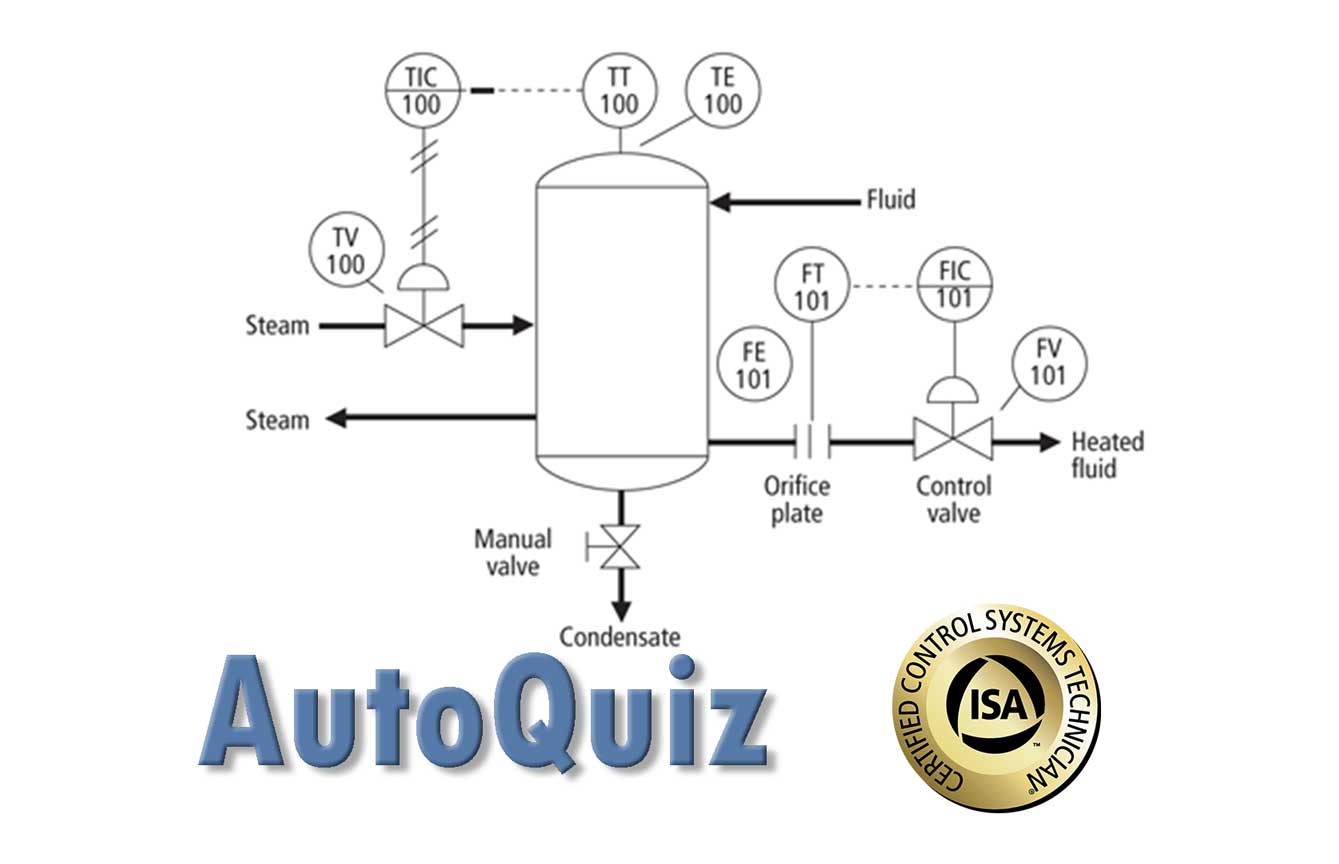 Certified Control System Technicians calibrate, document, troubleshoot, and repair/replace instrumentation for systems that measure and control level, temperature, pressure, flow, and other process variables. Click this link for information about the CCST program. This question comes from the Level I study guide, Domain 3, Troubleshooting. Level I represents a professional who has a five-year total of education, training, and/or experience.
The standard range for pneumatically transmitted signals is:
a) 3-15 psig b) 5-20 psig c) 1-10 psig d) 4-20 psig e) none of the above
In standard piping and instrumentation diagrams (P&IDs), instrument signal lines use special markings to indicate whether the signal is pneumatic, electric, hydraulic, or some other type. In this figure, there are two types of instrument signals in use. The double cross-hatched lines denote the pneumatic signals to the steam control valve and the process outlet flow control valve. The dashed line is the electrical control lines between various instruments. In process control applications, pneumatic signals are usually 3 to 15 psi (pounds per square inch gauge pressure), and the electric signals are normally 4 to 20 mA (milliamperes) DC (direct current).
The correct answer is A .