






There is a real on-going need for monitoring of valve positions (actuated or manual) in the process line. Malfunctioning of a valve can result in danger to human health and safety, affect yields, and generate environmental risks. In some industries, regulation requires constant recording of valve position. Currently, such monitoring is done through wired “Switch Boxes”. Each such device requires data transmission and power cabling.
Not only are these cables costly to manufacture and install, they are also one of the most frequent sources of failures in the process line, due to the fact that they are very often exposed to harsh environmental conditions. In fact, it is right here, at the field device level, where the majority of problems with wires really exist.
The various field buses that have been integrated into most applications over the past years ago have not really changed the situation. The Switch Boxes are still typically connected via wires, in a star topology, to bus concentrators.
Wireless monitoring of valves can revolutionize industrial processing and help industries meet the demands of increasing competitiveness. Intelligent wireless valve monitoring in industrial environments enables real-time data sharing throughout a facility and this, by definition, increases industrial safety, efficiency, and productivity. Wireless valve monitoring technology offers reliable, autonomous, and improved process control enhancing safety, ameliorating product quality, increasing yield, and reducing costs.
The ISA organization has established the standards committee on wireless systems for automation (ISA-100) and recently released the first draft (ISA-S100.11a) of the Wireless Network Optimized for Industrial Monitoring. The Wireless Hart protocol was recently released, and related products have started to appear on the market. The ZigBee protocol, which is very close to the ISA100 and Wireless Hart standards, has been available for some time and is supported by many chip and solution vendors and has the added advantage of being very cost-effective. The ZigBee technology is broadly utilized in building automation and energy control devices which are also used in the process industry.
All three protocols are based on IEEE 802.15.4 standard and have a lot of common.
The worldwide value of the industrial valve market reached $60 billion in 2006. This corresponds to the annual sale of about 350 million industrial ball valves of various sizes. Most of the valves sold (80%) are manual, without any remote monitoring capabilities. About 40% of the actuated industrial valves sold have no monitoring capabilities. All the valve monitoring systems sold today are wired.
Industrial users (pharmaceutical, petroleum, water, etc.) have expressed the need for more monitoring capabilities on the manual and actuated industrial valves they operate in their process lines. This will increase line safety, ensure compliance to regulations, improve yield, decrease operating line costs, provide better compliance to environmental requirements, etc. The option of installing a wired monitoring device on the manual or actuated valve is not practical due to the cost of wiring installation ($50 to $200 per foot) which can exceed $5,000 per value, and a process plant can have thousands of industrial valves. A wireless valve monitoring solution can cost a fraction of this (10%).
The cost of a wired valve monitoring system with 5,000 valves can reach the prohibitive amount of $25,000,000 while setting up a wireless system will run at about $2,500,000.
Wireless technology comes with its own set of challenges – propagation, interference, security, regulations, and other issues. Some control applications can afford the cost of adding a high-end wireless communication system such as cellular phones, WiFi, WiMax, and so on. Nevertheless, the required wireless application will benefit if the technology is relatively low cost, is reliable, and robust, and it is standards compliance in order to drive interoperability among manufacturers and provide direct benefit to the end users.
The ZigBee technology is widely available and can be found in very cost-attractive industrial monitoring and control solutions. Many end users are considering using the ZigBee technology in their process line for simple monitoring applications and for energy management and automated infrastructures. The ZigBee wireless network is robust and reliable, low-cost, with a very low power consumption. It allows utilizing a valve monitoring solution powered by two small ½ AA Lithium batteries which last for more than 5 years assuming a 30-minute update rate, and with less than 100 ms latency.
The relatively low data rate (0.25 Mbps) achieved with a ZigBee network is adequate for valve monitoring requirements. The ultra low power consumption and the low cost features of ZigBee make this technology the best choice for valve monitoring applications.
To achieve the goal of low total product cost as well as long battery life, the ZigBee / 802.15.4 protocol provides reasonable trade-offs in several performance metrics. To control the administrative costs of both the implementer and the user, ZigBee devices employ unlicensed radio bands. The ZigBee device is designed to be relatively short range without infrastructure.
When increased range is necessary, the ZigBee infrastructure utilizes Mesh network topology.
To allow interoperability between ISA100 wireless solutions and ZigBee-based products, the ISA100 standard committee has established a Working Group which has been commissioned to provide a solution to allow seamless integration of ZigBee devices and ISA100-based networks. The ISA100 ZigBee Working Group mission is to provide guidance to end users, suppliers, and regulators to integrate ZigBee devices with an ISA100-based wireless network. The ISA100 ZigBee Working Group will focus on:
- Evaluating the feasibility of such integration and the potential impact on security, reliability, manageability, and performance
- Evaluating various methods using the ISA100 standards to integrate ZigBee devices.
- Coordinating with the ZigBee Alliance using the IP policy of ISA.
The result of this work will be an informative document (technical report) describing the methods and issues associated with this integration.
This ISA100 ZigBee Working Group is expected to release its documents in mid-2010.
A good example of the successful implementation of a wireless valve monitoring solution is the system delivered by ELTAV Wireless Monitoring Ltd. from Israel. ELTAVcurrently utilizes ZigBee wireless communication and plans to modify the communication methodology to the ISA100 standard when it has been released and is fully deployable. Both ZigBee and ISA100 based wireless valve monitoring systems will be available. The following pictures depict an ELTAV valve monitoring device assembled on a manual valve and on an actuator.
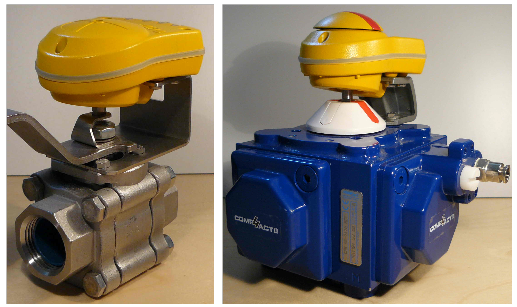
The wireless valve monitoring device can be installed on valve actuators (NAMUR interface) or on manual valves (ISO 5211 Interface). The small battery powered Valve Device (VD) can be installed on existing or new valve actuators or manual valves. The Valve Device can operate for at least 5 years on one battery, which is field replaceable. A network of routers are spread around the plant and use mesh technology in order to transfer the received Valve Device messages to the System’s TCP/IP-based Gateways. The Gateway transmits the valve data to the plant management system, using an OPC protocol, or any other standard communication protocol.
The valve data can be pushed to process line PLCs to allow incorporating valve data into the process operation.
The following diagram shows a typical system implementation.
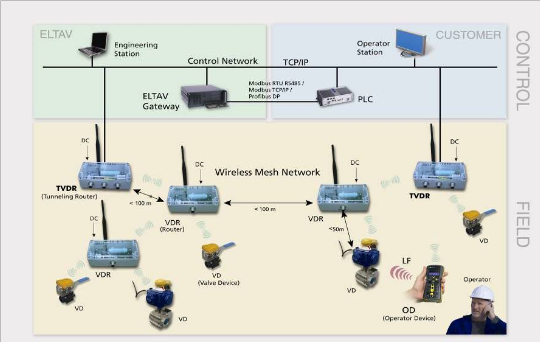
The current product utilizes a Zigbee chip set from Ember. However, once the ISA100 standard is released and a stack is commercially available, the product will be upgraded to the new ISA-S100 standard. Eltav plans to carry both ZigBee and ISA100 based products.
The system is designed to maximize the probability of message transfer from the Valve Device to the Management System. In preliminary pilot tests, a 100% data transfer has been demonstrated (460,000 messages with no losses and with less than 0.1% retries or rejoins). The measured average latency was less than 100 ms.
ZigBee is using Direct Sequence Spread Spectrum (DSSS). This technique increases the bandwidth of the transmitted signal. The wideband technique provides improved communication qualities but usually sacrifice spectrum utilization. DSSS can be modeled by applying a prearranged pseudo-random digital sequence to directly phase-modulate the already data modulated carrier, at a rate in excess of the data rate. The resulting DSSS signal occupies a much greater bandwidth, albeit with a lower spectral power density.
The signal is recovered by demodulating the received signal with a replica of the same modulating pseudo-random digital sequence. The DSSS signal process spreads the original signal into a wider bandwidth for transmission over the channel, and then dispreads the signal at the receiver to recover the original signal and the information it contained.
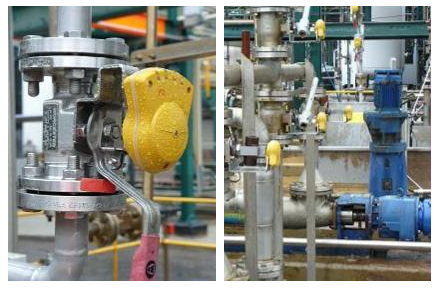
ZigBee uses the 2.4 GHz ISM band which is universally approved for short range unlicensed communication.
