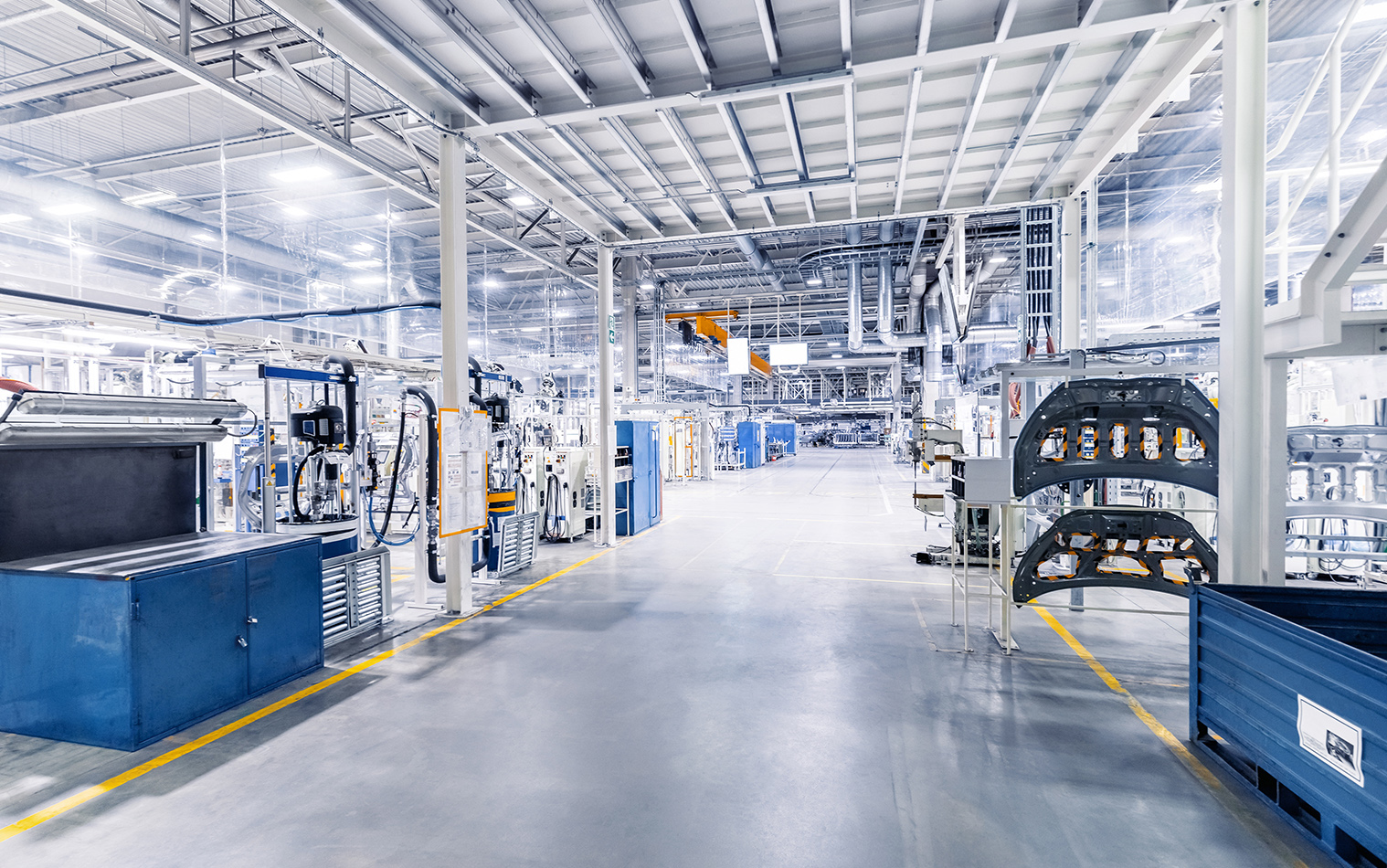
America is spending serious money on manufacturing again: new plants, chips, batteries, shipyards, robots, supply chains, and defense production. There is a problem sitting underneath all of it that we barely talk about: who is going to know how to run these places?
Not just who is going to show up for work. Who is going to know what to do when the line starts drifting, a new batch of material behaves strangely, or a machine looks fine on the dashboard but everyone on the floor knows it is about to cause trouble?
That knowledge usually sits with a small number of people. The operator who has been there for twenty years. The maintenance lead who can hear a bearing going bad. The process engineer who remembers why a parameter was changed years ago—and what happens if someone changes it back. Most factories have more data than ever. And somehow they still lose this kind of knowledge constantly.
More than one-quarter of U.S. manufacturing workers were age 55 or older in2025, according to the Bureau of Labor Statistics. Deloitte and The Manufacturing Institute project that U.S. manufacturing could need up to 3.8 million additional workers between 2024 and 2033, with as many as 1.9 million positions potentially unfilled if workforce gaps persist. The Manufacturing Institute’s workforce address estimates that retirements alone could account for roughly 2.8 million of those openings.
Everyone sees that as a hiring problem. It is, obviously. But it is also a memory problem.
A company can hire another person. It cannot hire twenty years of judgment. You cannot put that in an onboarding deck. You cannot recover it from a SharePoint folder six months after the person who knew the answer has retired. When an experienced operator leaves, the loss is not simply one name on an org chart. It is hundreds of small decisions: when to ignore an alarm, when to stop a line, when a material lot is behaving differently, when a setting that looks correct on paper is wrong for the conditions on that shift.
Walk into a modern factory and you will see data everywhere: sensors, historians, MES platforms, quality systems, maintenance systems, alarms, dashboards. Manufacturers are good at collecting temperature, pressure, vibration, cycle-time, downtime, scrap, and energy data. Fine. But something goes wrong and somebody says, “Call Mike.”
Mike may not even know why he knows. He has seen this failure before. He knows that one supplier’s material runs differently. He knows the pressure is technically in range but wrong for this machine after a cold start. He knows the sound.
The factory has captured the machine’s data, but not the part that matters most: the judgment that turns a signal into an action.
We record temperature, pressure, vibration, cycle time, downtime, and scrap. What do we record when Mike makes the adjustment that saves the shift? Usually nothing useful. Maybe there is a note in a maintenance log. Maybe a supervisor remembers. Maybe somebody sends a message. More often, it vanishes. The machine signal tells you what happened. The experienced person’s reaction tells you what it meant. That is the missing data layer in manufacturing.
I like robots. American manufacturing needs more automation, not less. But there is a lazy version of the automation argument that says we can simply automate our way around the labor problem. We cannot.
Robots are excellent when the work is repetitive and the world behaves itself. The hard part starts when it does not. Materials change. A supplier ships something slightly off. A tool wears differently. A line has an odd startup. A process begins drifting. A quality issue appears that nobody has seen before.
Then a person is still needed. And that person is responsible for the work that is hardest to standardize, hardest to train, and most expensive to get wrong.
Automation does not make expertise disappear. It removes some routine work and leaves people holding the ugly decisions: abnormal conditions, recovery, changeovers, quality exceptions, and failures outside the expected operating envelope.
The more automated a plant becomes, the more important it is that the people remaining can make good decisions quickly.
This matters in every plant. It matters even more in the industries the country will need when things get serious. The Department of Defense made workforce readiness one of the four pillars of its National Defense Industrial Strategy, alongside resilient supply chains, flexible acquisition, and economic deterrence.
The public evidence is already uncomfortable. In 2025, the Government Accountability Office found that none of the seven shipbuilders constructing Navy battle-force ships were positioned to meet Navy delivery goals. The Navy’s own review had identified delays of 12 to 36 months across four major shipbuilding programs, with workforce and infrastructure constraints among the causes. GAO also reported that the industrial base delivered seven new battle-force ships in fiscal year 2023, while the Navy would need to average about 13 ships per year for three decades to reach its current optimal-fleet objective.
That is what the issue looks like in the real world. No single issue explains those delays. Shipbuilding depends on capital, suppliers, facilities, workforce, planning, contracting, and skilled execution. But that is precisely the point: industrial capability is not a switch you turn on after a crisis starts.
The defense sector itself sees this. In the National Defense Industrial Association’s2024 Vital Signs report, 59% of surveyed defense-industry respondents said it was somewhat or very difficult to recruit skilled trade workers; the same share reported difficulty finding cleared workers. The report also identified the ability to expand skilled and cleared workforces as one of the biggest barriers to expansion.
We keep talking about factories as if they are buildings full of equipment. They are not. They are living systems made of people, processes, suppliers, machines, and accumulated judgment. Take the judgment out and you do not have the same factory anymore.
Factories need a way to preserve useful operating context while work is happening. They need to link machine and sensor data to what was happening around the production run, what operators and technicians actually did, what they changed, and whether it worked.
Start with the things already causing pain. Which machine requires the same senior technician every time it acts up? Which process produces scrap when one specific condition changes? Which quality decision depends on one person’s intuition? Where is there a single point of failure disguised as a long-tenured employee?
Capture what happened. Capture the conditions. Capture what the experienced person did. Capture whether it worked. Then make that information available to the next person when something similar occurs.
The company should own that knowledge. It should know where it came from, control who sees it, and be able to take it with them if the vendor relationship changes. That is what I mean by a sovereign knowledge repository: a living record of how a particular factory behaves in reality, not just how someone hoped it would behave when the process documentation was written.
The value of a sovereign knowledge repository is not only less downtime, although that matters. It is less dependence on a few exhausted experts. Faster ramp-up for newer workers. Fewer recurring mistakes. Better recovery when things go wrong. A factory that gets slightly more capable after every difficult shift instead of forgetting and starting over.
America is right to build more factories. But let’s remember - the factory is the building, the equipment, the people—and the memory of how all of it works when things get messy.
Sources
- The Manufacturing Institute — State of the U.S. Manufacturing Workforce Address, 2025
- Government Accountability Office — Shipbuilding and Repair: Navy Needs a Strategic Approach for Private Sector Industrial Base Investments