The past year has been turbulent for US manufacturing. Economic contraction, trade uncertainty and rising costs made 2025 challenging, and Deloitte's 2026 Manufacturing Industry Outlook suggests that unpredictability may continue. Yet the issue keeping many leaders up at night isn't only tariffs or market conditions: it's talent.
Despite mixed economic signals, manufacturers continue to struggle to find skilled workers, particularly as operations digitize and automation becomes more sophisticated. According to Deloitte, more than a third of manufacturing executives rank equipping workers with the skills needed for smart manufacturing as their top workforce concern. And as reshoring accelerates and new semiconductor and data center investments expand domestic capacity, demand for labor is only rising.
In this environment, the shift toward Industry 5.0, the time of human-machine collaboration, has taken on new urgency. Wearable technologies may be one of the most practical tools manufacturers can deploy right now to bridge widening workforce gaps while improving productivity, safety and resiliency.
Wearables as workforce multipliers
For many plants, the challenge exceeds the simple automation of tasks to involve ensuring the remaining people can work smarter, faster and more safely. Wearables deliver on this need by connecting frontline operators directly into digital workflows that were once limited to machines and control rooms.
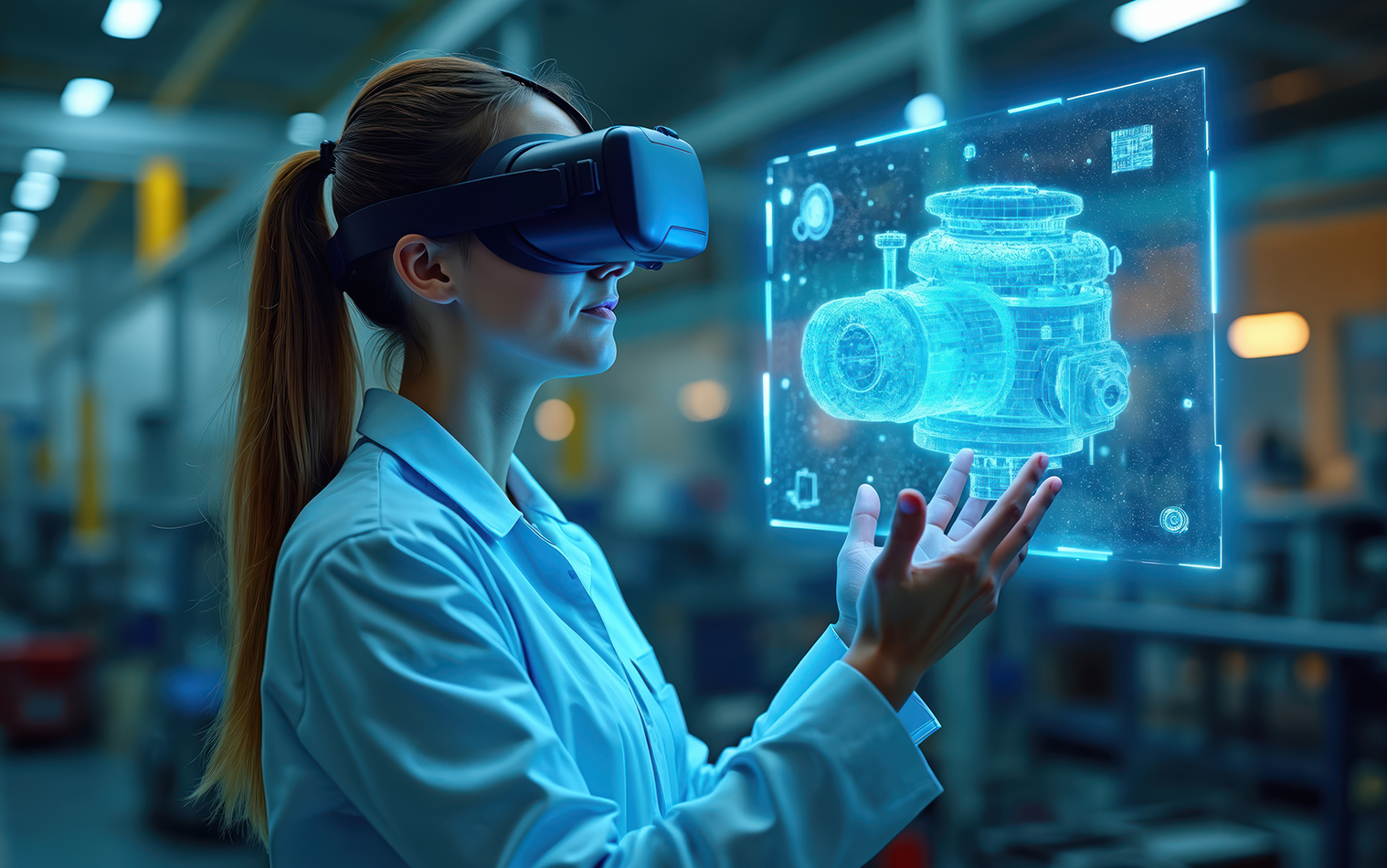
Smart scanners, voice-directed devices and wrist-mounted computers reduce steps in repetitive workflows and make newer workers productive sooner. Augmented reality (AR) headsets project instructions and guided workflows into the user's field of view, eliminating reliance on paper binders or the institutional knowledge that often exists with retiring employees.
At a time when manufacturers face long hiring and onboarding cycles, these devices function as force multipliers by empowering a smaller team to execute work with greater accuracy and speed.
Connecting humans to the IIoT for real-time responsiveness
Industry 4.0 connected machines. Industry 5.0 connects people. Wearables integrate workers into the industrial IoT ecosystem, transforming their movements, tasks, and interactions into valuable operational data. This live stream of insights supports real-time decision-making across the factory:
- When a worker completes an assembly step, connected scanners or gloves can automatically log quality data.
- If a part is missing, that exception can immediately trigger a material replenishment workflow.
- Maintenance staff wearing AR glasses can relay video and sensor data directly to experts off-site, cutting downtime and reducing the need for specialized roles on every shift.
This responsiveness is especially crucial in labor-constrained environments. Instead of waiting for shift handovers or manager availability, connected workers become an active part of the feedback loop by helping factories operate with more agility despite staffing limitations.
AI-enhanced safety and protecting a stretched workforce
While the labor shortage requires the examination of role fulfillment, it also requires keeping the people manufacturers already have safe, happy, and productive.
AI-enabled safety wearables help reduce fatigue, prevent ergonomic injuries, and improve situational awareness, all critical as workers take on expanded responsibilities. Sensors can monitor posture, detect proximity to hazardous equipment, or assess environmental risks like temperature or air quality. Predictive analytics can flag emerging issues before an injury occurs, allowing supervisors to proactively adjust assignments, staffing, or workflows.
With rising expectations for production throughput and fewer hands available, these tools help manufacturers protect their workforce while reducing costly incidents and unplanned absences.
Strengthening skills and knowledge transfer
Workforce turnover and retirements continue to strain the manufacturing talent pipeline. Deloitte highlights the need for adaptive workforce planning and faster, more effective training strategies.
Wearables play a direct role here:
- AR-guided work instructions help new hires perform complex tasks with minimal supervision.
- Voice-enabled workflows reduce cognitive load and help workers multitask safely.
- Digital captures of expert workflows, from maintenance procedures to assembly best practices, preserve tribal knowledge for future employees.
In effect, wearables serve as always-available digital coaches, helping manufacturers scale expertise even when experienced workers are in short supply. Starting with Practical Pilots
Despite their benefits, wearable initiatives don't require sweeping capital investments. Manufacturers can start small and expand as value becomes apparent, an approach well-aligned with the call for targeted, foundational technology investments in 2026.
High-impact starting points include:
- Replacing paper-based checklists with connected wrist devices to reduce documentation time and error rates.
- Implementing AR for maintenance and training, especially in facilities struggling with retirements or a shortage of specialists.
- Using safety wearables in high-risk zones to reduce injury rates and strengthen compliance.
- Integrating smart scanners into quality or inventory workflows to eliminate bottlenecks caused by manual data entry.
Each pilot builds the operational data foundation needed for broader Industry 5.0 adoption.
Infrastructure and security considerations for wearable adoption
As manufacturers introduce more connected devices, a resilient digital foundation becomes critical. Wearables function at the far edge of the network, requiring strong wireless coverage, scalable device management, and secure data pathways.
Key considerations include:
- Reliable connectivity: Wi-Fi 6, private LTE, or 5G ensure uninterrupted data flow on large factory floors.
- Device management systems: Central control of firmware updates, access permissions, and troubleshooting.
- Cybersecurity: Encrypted data transfer and identity-based authentication protect against breaches.
- Data governance and privacy: Clear guidelines about what data is captured and how it's used foster trust among employees.
A thoughtful digital foundation ensures wearable programs scale securely, supporting the broader smart manufacturing push highlighted in Deloitte's research.
Human-centric digital transformation
Manufacturers are investing heavily in smart technologies like automation hardware, analytics, sensors, and cloud platforms to build resilience in uncertain times. However, technology alone won't solve the talent challenge.
Wearable devices represent a balanced approach of strengthening automation ecosystems while elevating human capabilities. They help workers perform at their best, enhance safety, accelerate training, and connect people directly into the data flows that define modern operations.
As manufacturers navigate 2026's tight labor market and prepare for multiple possible economic scenarios, wearables offer a practical, scalable path toward Industry 5.0. The companies that invest now, starting small but thinking big, will be better positioned to build agile, resilient, and human-centered operations for the decade ahead.