-

 ISA provides technical resources and standards to help industrial automation professionals advance their careers and the field. We enable automation professionals worldwide to solve problems and enhance their skills by bringing people together to create new technologies and share best practices with future automation professionals.
-
ISA Resources
-
Upcoming Events
-
Industry Insights
-
Consortia
-




Articles and News
5,269 Results Found
-
Replace and Recycle
There are several ways in which you can get additional use or even make money from automation parts that are no longer needed. In this article leading automation supplier Northern Industrial talk about the different ways you can benefit from obsolete automation. -
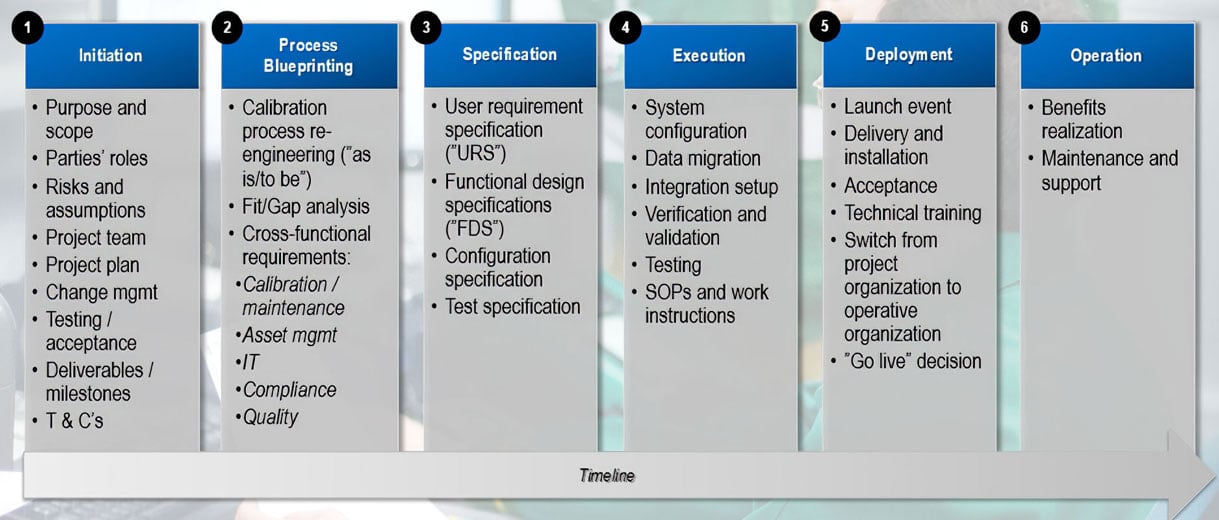
Webinar Recording: Six Steps of an Industrial Calibration System Implementation Process
How to avoid the pitfalls of implementing a calibration process change. -
Cloud Computing vs. Field Controllers
By Bill Lydon, Editor Some industrial automation vendors and computer technology providers are offering cloud services that include historians, analytics, and complete MES (Manufacturing Execution System). These services offer a new way to improve operations by applying more computing power. Another important trend is leveraging new, more powerful controllers within the secure automation system environment. Should you be using one or the other, or both? -
Improve Industrial Ethernet Network Uptime
By Robert Reid, Panduit, on behalf of Industrial IP Advantage Given that greater than 60% of Ethernet link failures are related to physical infrastructure, it is important from the outset to design and build a resilient network that is architected to recover quickly from a failure condition. -
What is the digital difference in Networks vs. Protocols?
By Paul Brooks, Rockwell Automation, on behalf of Industrial IP Advantage Without standard, unmodified Ethernet on the plant floor, many industrial automation companies can’t easily take advantage of higher-level protocols and the immense functionality they support. EtherNet/IP enables organizations to save money by moving away from expensive, closed, plant floor dedicated networks. -
The top five things that cause inverter failure
The most common cause of failure or malfunctioning for inverters is an improper installation, often a combination of not following the user manual recommendation and selecting inappropriate cable type, gauges or in line fuses. But there are more. -

Automation Project and Startup Humor – How to Laugh Rather Than Fret
Automation Project and Startup Humor – How to Laugh Rather Than Fret -
Building the “Connected Factory” from Concept to Reality
By Mike Granby, Red Lion Controls Bringing a factory into the 21st century involves more than just connecting devices to Ethernet and wireless networks. The fundamentals of a successful Connected Factory must be prepared to ensure information can be accessed, monitored and controlled from anywhere. -

Four Myths About Why We Have a Shortage of Engineers
The myths about why there is a lack of qualified, experienced automation professionals in the industrial automation profession. -

Creating Twenty-First Century Learning Systems
A highly skilled workforce is the lifeblood of any successful company, industry, or national economy. -
The Internet of Things (IoT) Frenzy
By Bill Lydon, Editor There is a growing frenzy over the application of Internet of Things (IoT) technologies to industrial automation. The question is, “Why do we want to do this?” The high level goal is to improve manufacturing processes in a number of dimensions, including efficiency, responsiveness, and the ability to meet individual customer needs in a timely manner. -

How to Apply Generalized Eigenvalue Minimization to Processes That Can Be Described by a First-Order Plus Time-Delay Model
An algorithm to transform the uncertain first-order plus time delay model into a state-space model with uncertainty polyhedron is detailed in this technical paper. -
Unico uses wireless ID readers to boost production 40%
Unico Systems, a manufacturer of home air conditioning and heating systems, uses Cognex wireless handheld scanners to read barcodes on the product, and QR codes on employee badges and assembly stations. Operators now spend less time on data entry tasks and the production rate is up 40% -
Integrating Ethernet-Based Machine Vision and Image-based ID Readers into Factory Networks
By John Lewis, Cognex The need to use PCs to interface with vision systems and ID readers required the purchase of expensive hardware and development of sometimes complex software. A new generation of vision systems and ID readers with built-in EtherNet/IP connectivity streamlines factory network integration. -
Is it Time for New SCADA Software Technology?
By Rich Hunzinger, B-Scada With all of the opportunities presented by today's data-driven enterprise, the time has come to consider whether your SCADA system is limiting your potential. -
A Case for Mobile HMIs in Automation
By Rich Hunzinger, B-Scada One of the fastest-growing and most widespread trends in the HMI and SCADA software realms is that of mobility. Namely, how can we - or should we - take advantage of mobile devices in automated work environments? -
Building Safety into Metal Forming Machines
By Steve Aamodt, SICK To help prevent injuries and increase productivity for end users, machine builders are incorporating safety into the design of metal forming and bending machines. The old way of thinking, that safety harms productivity, has changed, in large part due to better safety systems. -

Leveraging Big Data at Manufacturing Plants in Real Time
Changing the paradigm from inspect and reject to predict and prevent is the focus of big data. -
Combined HMI+PLC Unit vs. Separate HMI & PLC System
Combining PLC processing and HMI monitoring and control into a single hardware platform is becoming a more available and popular option. This article compares the combined HMI+PLC unit with the separate HMI & PLC system and highlights where each excels. -
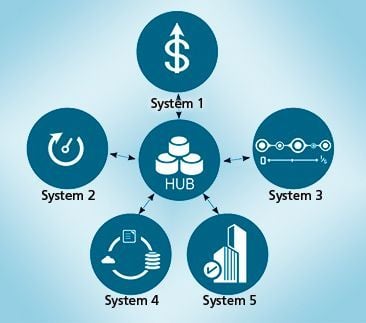
How to Use Workflow to Achieve Business Integration in Manufacturing Operations
Using a workflow-based approach, manufacturing businesses and process industry companies can extend and leverage existing purpose-based systems, expose new functionality that was too complex to captur


