



©2026 Automation.com, a subsidiary of the International Society of Automation.
-

 ISA provides technical resources and standards to help industrial automation professionals advance their careers and the field. We enable automation professionals worldwide to solve problems and enhance their skills by bringing people together to create new technologies and share best practices with future automation professionals.
-
ISA Resources
-
Upcoming Events
-
Industry Insights
-
Consortia
-

Articles and News
1,656 Results Found
-

Soft Solutions for Hard Problems: What’s Coming in 2024
The lessons we learned in 2023 will carry the automation market forward into 2024, with an emphasis on digitalization continuing and driving the need for data interoperability, specialized labor in IT and the expanded adoption of automation across other verticals. -

Flexxbotics Provides Robot Compatibility with Nakamura-Tome Machine Tools
Flexxbotics, delivering workcell digitalization for robot-driven manufacturing, announced robot machine tending connectivity compatibilty with the full range of Nakamura-Tome machinery and equipment. -

How to Reduce Cloud Security Vulnerabilities in Smart Manufacturing
In an era when manufacturing processes increasingly rely on cloud technologies, safeguarding these systems from cyber threats is paramount. -

Rockwell Automation and Michelin Strengthen Collaboration in Digitalization of Manufacturing
Rockwell Automation has strengthened its collaboration with Michelin, the French multinational tire manufacturing company, focusing on digital innovation across Michelin’s manufacturing processes. -

Accelerating Digital Maturity with S.I.R.I. Assessments
The Smart Industry Readiness Index assesses digital transformation in 16 areas within three foundational pillars: process, technology and organization. This feature originally appeared in AUTOMATION 2023: IIoT & Industry 4.0. -

Siemens and Intel to Collaborate on Advanced Semiconductor Manufacturing
Siemens and Intel will collaborate to advance semiconductor manufacturing production efficiency and sustainability across scopes 1-3 of the value chain. -

Space Machines Uses Siemens Xcelerator to Develop Orbital Servicing Vehicle for In-space Transportation
Space Machines Company is using solutions from the Siemens Xcelerator as a Service portfolio of industry software to design, simulate and manufacture its Optimus Orbital servicing Vehicle. -

IFS Reinforces AI Capabilities Across Automation Segments with IFS Cloud November Release
This second of its twice-yearly IFS Cloud releases for 2023 focuses on helping manufacturers leverage digital technology to build agility and operational excellence. -

Paper Mill to Improve Cogeneration Efficiency with Digitalization
DS Smith asks ABB to deliver its ABB Ability OPTIMAX Steam and Energy Optimization software to its paper mill in the Tuscany region of Italy. -

At SPS 2023, Rockwell Automation and Its PartnerNetwork Ecosystem Show How Collaboration Fuels Digital Transformation
Partners will bring best-in-class solutions for holistic approach to optimizing production. -

Cloud-Driven Capabilities Elevate Digital Twins and Other OT Solutions
Global intelligence firm ABI Research forecasts a steady increase in uptake for cloud-driven digital twin solutions, driven by advancements in AI/ ML, edge computing and other Industry 4.0 technologies. -

Cognite Releases Industry's First Definitive Guide to Generative AI
"The Definitive Guide to Generative AI for Industry," is a comprehensive manual for transformation leaders to accelerate AI innovation and reduce time to value of their digital transformation programs. -

Ensure Performance Transparency Through OEE
Performance tracking, OEE and digitalization are necessary for performance transparency. -
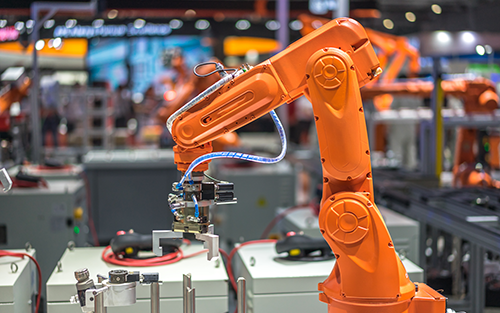
SEMI Launches Industry 4.0 Readiness Assessment Model
SEMI announced the Industry 4.0 Readiness Assessment Model (IRAM) to help organizations across the semiconductor supply chain assess and track their smart manufacturing technology deployment progress and develop a roadmap for their digital transformations. -
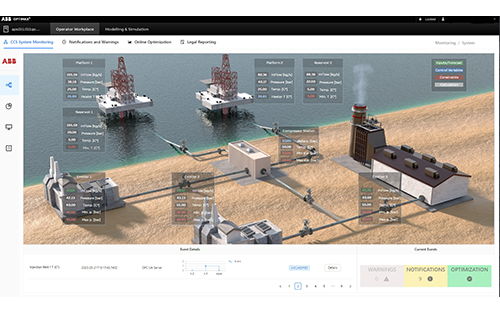
ABB Drives CCS Progress by Adding Subsurface Modelling to its Digital Twin Technology
ABB collaborates with Computer Modelling Group on subsurface simulation to deliver complete end-to-end carbon capture and storage (CCS) model. -

Siemens Takes First Place in the Application for Unitary Patents
The unitary patent is particularly relevant for the open digital business platform Siemens Xcelerator, which helps Siemens’ customers accelerate their digital transformation and offers software-as-a-service, among other things. -

Digital Technology to Decarbonize Industry
Nearly every company has created sustainability goals, and the EPA greenhouse gas reporting requirements will soon be the source of data to create the benchmarks to measure the success of those sustainability goals and to create company specific decarbonization strategies. -

Understanding the Sunk Cost Fallacy in Digital Transformation
In this feature, Sam Dunscombe, Head of Growth at digital BSS provider Mobilise, explores the sunk cost fallacy in relation to digital transformation. -

Object Management Group Announces Transform! @Infocomm 2024 Program Committee
Object Management Group (OMG) announced the program committee for the new digital transformation event Transform! @InfoComm 2024. -

Cybersecurity in the Age of Industry 4.0
Industrial Ethernet switches can help safeguard Industry 4.0 networks from intruders.