



©2026 Automation.com, a subsidiary of the International Society of Automation.
-

 ISA provides technical resources and standards to help industrial automation professionals advance their careers and the field. We enable automation professionals worldwide to solve problems and enhance their skills by bringing people together to create new technologies and share best practices with future automation professionals.
-
ISA Resources
-
Upcoming Events
-
Industry Insights
-
Consortia
-

Articles and News
379 Results Found
-
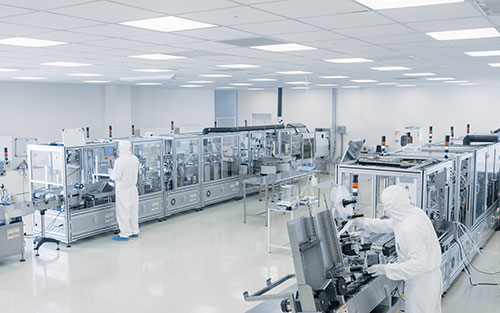
Emerson and Integra CMS Collaborate to Accelerate Adoption of Continuous Pharmaceutical Manufacturing
Joint agreement expands on pioneering research and is expected to improve manufacturing cost and quality. -
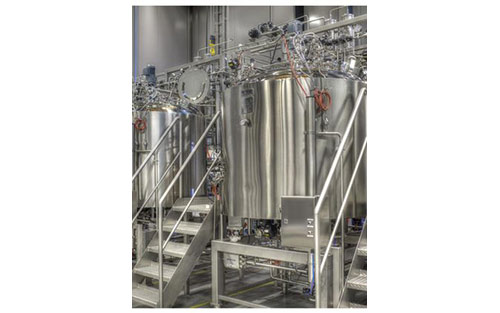
Emerson Extends OEM Program to Life Sciences to Accelerate Industry’s Digital Transformation
Collaboration with leading OEMs will reduce cost and time to bring therapies to marke. -

Siemens makes additive manufacturing capabilities, 3D printers available to medical community
The Siemens AM network is available globally and covers the entire value chain – from upload and simulation to checking the design up to the printing process and associated services. -
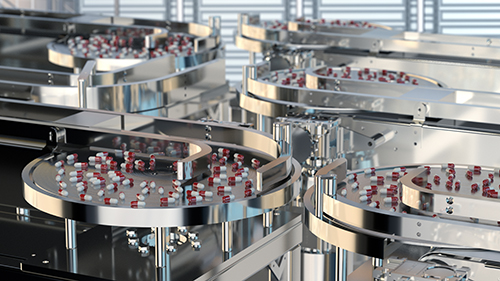
2019 PAR Insights from the Annual Pharmaceutical Automation Roundtable and Survey
By Bill Lydon The current state of pharma manufacturing maturity and the future of automation in the sector were important topics at the annual Pharmaceutical Automation Roundtable (PAR) held October 2019 at a Novo Nordisk facility. -
COPA-DATA announces Giuseppe Menin as Industry Manager for Pharmaceutical
As Industry Manager for Pharmaceuticals, Giuseppe Menin can share his industry expertise with the entire COPA-DATA Group, and will be involved in further development of the zenon Software Platform. -
2018 Pharmaceutical Automation Roundtable (PAR) Insights – Survey
By Bill Lydon, Automation.com The PAR meetings to represent one of the most knowledgeable groups of automation professionals gathered in one place, at any one time, to discuss automation issues, and the 2018 event was no exception. -
Rockwell Automation to help Lonza digitize pharmaceutical manufacturing facilities
The Switzerland-based company, founded in 1897 with approximately 15,500 employees, chose Rockwell Automation’s PharmaSuite Manufacturing Execution System (MES) software to digitize the operations in their manufacturing environments -

2018 Salary Survey Results: The Pay Raise Engineers Have Been Waiting for
The financial situation of the average automation engineer got a nice boost in 2018. With the need for experienced professionals still growing, we anticipate the demand to remain strong for engineers for the foreseeable future, with a great deal of opportunity for young graduates and those who are interested in a STEM career. -
Meeting the Threat in 2019: Cybersecurity for Pharmaceutical and Biotechnology Firms
By Megan Berkowitz As pharmaceutical and biotechnology companies move toward greater digitalization and the storage of more valuable data, their digital security practices become more and more critical. -
University of Birmingham chooses Renishaw systems for healthcare research
The facility will bring together academics from different disciplines to explore the full potential of additive manufacturing (AM) for medical devices. The University of Birmingham has several active projects to innovate new medical devices and technologies to assist recovery following disease or injury, covering various clinical remits. -
Werum IT Solutions announces strategic partnership with Nymi to develop authentication solutions
The Nymi Band is a multi-factor biometrically authenticated wearable that is worn by shop floor workers to perform day-to-day authentication tasks, such as digital signatures within an MES. -
Is the Medical Device Regulation a Threat to Additive Manufacturing?
By Bryan Austin, Renishaw the European Union’s (EU’s) new Medical Device Regulation (MDR) could drastically impact the way that medical devices are made in the EU, particularly those that are produced using additive manufacturing (AM). This article provides advice on how companies in the additive manufacturing industry should handle the MDR. -
Siemens announces plans to develop IPCs for medical market
Commenting on the Lebanon, Ohio facility, Thorsten Julich noted the in-house development of Siemens IPC technology for this market segment will include both software and motherboard manufacturing. -
Siemens announces partnership with Perceptive Engineering to enhance control in pharmaceutical manufacturing
Siemens AG and Perceptive Engineering Ltd announced a partnership which offers Perceptive’s PharmaMV and Siemens Simatic Sipat software products closely integrated to provide a solution for advanced control and optimization applications in both continuous and batch pharmaceutical manufacturing. -
Rockwell Automation helps pharmaceutical company integrate upgraded automation systems
One biopharmaceutical giant recently needed to address obsolescence in two of its purification skids, and saw it as an opportunity to make some additional operational improvements in the process. -
An Eye for Detail: Endress + Hauser brings advanced measurement to Cotter Brothers process skid systems
By Martin Raab, Endress+Hauser Cotter Brothers generates one-third of its revenues with global customers, an area of the business that Randy Cotter Jr. wants to develop further. Many of their custom skid systems are equipped with measurement technology from Endress+Hauser. -
MCAA Market Forecast Projects Industry to be worth $14 Billion by 2021
The 2016 Process Instrumentation and Automation market in the United States, valued at $11.7 Billion, is projected to grow 3.6 percent by 2021 to a total of $14 Billion. -
WSI Global announces Braille embossing capabilities for pharmaceutical packaging
Using the TaskMaster infeed system with Braille module, cartons are fed, aligned, embossed, and transferred to the folder gluer all in one operation – at up to 1000 feet per minute. This unit can either run offline or be put directly in front of an existing folder gluer. -
ISA announces lineup of technical division symposia for automation and control
Each year, ISA’s technical division symposia events bring together innovators, thought leaders and other automation and control professionals from around the world to explore the latest technologies, trends and best practices. -
Otto Motors helps GE enable lean manufacturing of medical equipment
GE Healthcare has reduced the size of its repair cell stations at the Repair Operations Center by 40%, much of which is due to the integration of the OTTO self-driving vehicles.