-

 ISA provides technical resources and standards to help industrial automation professionals advance their careers and the field. We enable automation professionals worldwide to solve problems and enhance their skills by bringing people together to create new technologies and share best practices with future automation professionals.
-
ISA Resources
-
Upcoming Events
-
Industry Insights
-
Consortia
-




Ask the Automation Pros
This long-running series of discussions, curated by 2010 ISA Life Achievement Award recipient Greg McMillan, gathers responses from ISA subject-matter experts on technical topics important to industrial automation professionals, academics and students.

168 Results Found
-
Feature
Why a Virtual Plant Is Crucial for Process Control Improvement
A virtual plant provides uses the actual plant’s control system & operator interface crucial for training and all levels of process control improvement. -
 Feature
The Benefits of Learning the Industrial Codes
Try to learn at least one relevant industrial code or one code section each year and seek to apply that knowledge often so that it is not lost. -
 Feature
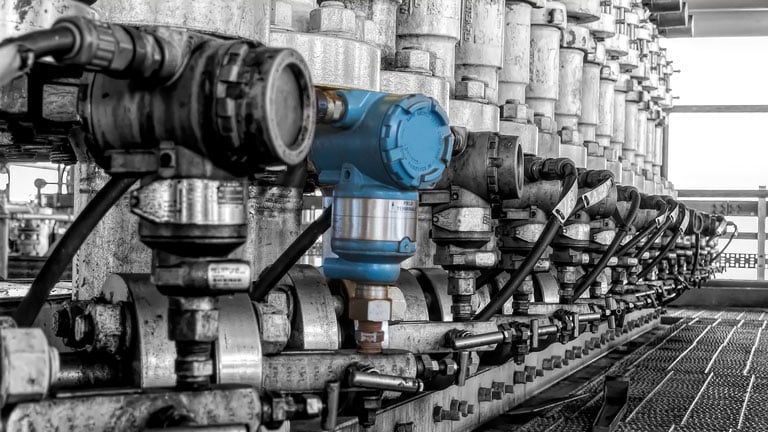
How to Use High Rangeability Flowmeters and Valves to Increase Plant Turndown
To increase plant turndown, use control valves and flow measurements with the best low flow response and precision. -
Feature
How to Specify a Capillary Seal Assembly
Be extremely careful to select knowledgeable technicians to install capillary seals. Many a pipefitter has pulled them out of the box and bolted them up without the proper gaskets and spacers. If this -
Feature
How to Maximize Loop Coordination and Optimization
Employ setpoint filters, velocity limits and external-reset feedback to meet the process control objectives at your plant or facility. -
-
Feature
How to Eliminate Split Range Oscillations in Process Control
Use precise valves, scheduled tuning, external-reset feedback, directional rate setpoint limits, and an enhanced PID to stop split range oscillations. -
 Feature
The Value of Process in Designing or Improving an Industrial Control System
Designing and/or improving a control system is practically impossible if the team does not understand the process. -
 Feature
Why You Should Not Use On-Off Valves as Control Valves
On-off valves should not be used as control valves (for throttling) and control valves should not be used as on-off valves (for isolation). -
 Feature
Why Operators Can Make or Break an Automation Project
Operator buy-in and approval are critical to automation project success. Get the operators involved in the design process early and listen to what they say. -
 Feature
Why You Should Look for Opportunities to Improve Plant Profitability
Estimate benefits from a decrease in variability & an increase production rate. Implement solutions where an increase in plant profitability is justified -
 Feature
Pitfalls of Selecting Low-Cost Industrial Instrumentation
Buying high-quality instrumentation does not mean that the buyer has to pay list price. -
Feature
Why You Should Use an Enhanced PID for At-Line and Off-Line Analyzers
An enhanced PID can simplify the tuning and improve the stability for loops with large and/or variable analyzer update times. -
 Feature
The Cost of a Continuous Waste Stream in Process Automation
Any continuous waste stream is an excellent candidate for a money saving opportunity. Always keep an eye out for them. -
 Feature
Automation Industry Career Tip: Be a Team Player
For a successful automation industry career, work together on a one-on-one basis, and seek inspiration and recognition as a team. -
Feature
ISA Mentor Program: The Key to the Future
The ISA Mentor Program is an ad hoc and extra curricula activity worth sacrificing free time to advance the careers of young automation professionals. -
 Feature
Automation Industry Career Tip: Learn New Skills and Explore Technological Advances
An emerging opportunity is learning how to mine information from an asset management system and an instrument management system. -
News
Automation Week: Control Performance Track
Effective and accurate measurement and control are essential components of both improved efficiency and profitability of industrial operations. Traditionally, increased efficiency directly translated -
 Feature
Why Control Panels Can Be a Source of Risk in Retrofit Projects
Project management is really just risk management, and a large source of risk to an automation project is the control panels. -
Feature
How to Use Control Loops to Eliminate Manual Actions and Sequences in Process Control
Use a PID control to eliminate manual actions and scheduled actions whenever a reasonable PV measurement is available.


