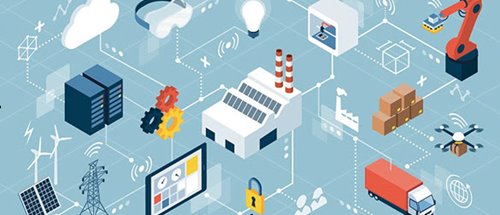
Computing processes are continuing to be more integrated with each other and with the Cloud as we enter the next decade. Enterprise systems have been continuing to absorb plant floor computing, through efforts to achieve real. Time synchronization and accelerate the continued integration of Information Technology (IT) and Operational Technology (OT) groups. This trend has been facilitating changes in organizational structures, and the creation, in many cases, of integrated IT/OT groups. Business systems can now process real-time transaction to be more responsive in all functions, including Manufacturing Execution Systems (MES) functions.
This is being driven by lean manufacturing efforts, which work to optimize entire process including supply chain, production, delivery, genealogy, and customer service. Enterprise systems (ERP, etc.) have become real-time transaction processing and are driving down to the edge, which is resulting in the displacement of traditional HMI and other middleware. Innovative industrial automation vendors are already providing automation controllers designed to leverage the business network, and directly communicate with enterprise business systems. This communication uses Web services and other IoT transport mechanisms to facilitate the integration and synchronization of the entire manufacturing enterprise including machine and process sensor inputs and outputs.
There are notable industry standards being leveraged to accomplish this including: OPC UA, MQTT, AMQP, and B2MML.
Controllers Give Way to Edge Computers
These advances in computing are fundamentally transforming plant control processes. Reliable edge embedded computer hardware platforms are starting to be deployed as automation, PLC, and process controllers that can host a wide range of other applications including analytics, predictive maintenance, machine & process historian, information servers, and other computing functions. Since these are mainstream computing platforms, it has been easier to leverage knowledge and technologies—including open source—from the general computing and IoT industry. This transfer has been accelerating digitalization, enabling multivendor interoperability at all levels of the system architecture.
Further, it has simplified integration, expanding the number of options available for applications, and making applications portable without engineering labor across vendor platforms. The growing number of general IoT applications are spawning continuous introduction of more of these devices. These devices may well disrupt existing PLC and DCS controllers with their high-performance processing and low cost. The new platforms are coming from a range of suppliers including Dell, Advantech, Beckhoff, B&R, NEXCOM, OPTO 22, Hilscher, Harting and Logic Supply. Traditional industrial automation field controllers have typically remained closed proprietary computers, analogous to the long obsolete computer mainframe and minicomputer era.
The impact and integration of the powerful new platforms are fundamental to enabling the digitalization of manufacturing systems in order to be competitive. Embedded computer hardware platforms are displacing PLC and process controllers and will continue to deliver greater functionality.
Even the Sensors are Edge Computing Devices
The manufacturing industry is starting to see a growing trend that sensors are starting are becoming edge computing devices, as well. Incorporating embedded computing technologies and leveraging powerful Systems on a Chip (SoC) embedded processors and communications, these sensors can now incorporate control, analytics, industrial networking, and direct communication with enterprise & cloud systems. There are growing number of communication options including IO-Link, Advanced Physical Layer (APL), Single Pair Ethernet (SPE), and wireless including 802.15.4, Wi-Fi, and Bluetooth.
A major goal is to achieve plug-and-play automatic configuration to lower installed cost including application engineering, installation, and asset management.  This article is part of Bill Lydon’s Top Trends, his Automation & Control Trends Report for 2020-2021. Download the full report here