
Quality control is a critical component of manufacturing operations, and managing it effectively can be challenging. Many facilities experience inefficiencies in these areas, which can cause delays and add operational pressure. In hygienic industries like pharmaceuticals, food and beverage and healthcare manufacturing, strict documentation and regulatory requirements further compound the challenges.
Fortunately, emerging technologies are empowering teams in these types of environments to learn from past deviations and proactively prevent recurrence. This article outlines some of the common obstacles that organizations encounter when investigating quality deviations, and then explains how artificial intelligence (AI) and advanced analytics are helping simplify and accelerate these workflows.
Obstacles to comprehensive analysis
Analytical teams have historically faced many challenges when attempting to identify and remediate quality deviations, including limited resources, manually intensive procedures, lack of real-time insight and context, reactive workflows and documentation overload.
The first of these challenges is resource limitation. Without sufficient staff or automated toolsets, operations teams are often diverted from value-generating activities to collect data and generate reports, and quality teams are frequently tasked with grinding through extensive paperwork and repetitive documentation. These inefficiencies prolong investigation timelines, hamper production and cause revenue losses.
Additionally, these procedures are often manually intensive, with investigations requiring considerable time to extract data from multiple disconnected systems, such as process historians, manufacturing execution systems (MES) and laboratory information management systems (LIMS). Cross-referencing and aligning this information can be cumbersome, requiring coordination among various groups. The time spent conducting these manual tasks delays value-adding optimization efforts and further increases the likelihood of production downtime.
Operational teams also frequently lack sufficient real-time insight and context to effectively process data and pinpoint deviations’ root causes. This absence of contextual details — such as batch numbers, product data and process phases — and proliferation of siloed information across databases and personnel groups delays resolutions, thereby extending quarantines and adding operational disruptions.
Many manufacturers detect deviations only after they occur, stuck in reactive approaches, rather than through predictive or preventative monitoring. Without these proactive workflows in place, operations are prone to repeated interruptions and timeline delays. Recurrent deviations also highlight missed opportunities to leverage historical insights capable of driving continuous improvement.
Finally, highly regulated industries require thorough documentation for compliance, and keeping up without the assistance of automated tools can cause overwhelming documentation overload. Manual or inconsistent reporting practices create gaps in audit trails and inefficiencies across teams, and the burden of documentation sidetracks personnel from higher-value optimization tasks.
Solace in digital solutions
In view of these challenges, modern self-service analytics platforms with AI help plant personnel identify, manage and investigate quality deviations to quickly address and improve production outcomes. These software tools access information directly where it natively resides — without copying or moving it — which decreases time to value, upholds data integrity and empowers teams to generate actionable insights more quickly.
Additionally, these solutions help enhance knowledge capture, increase reporting accuracy and efficiency, and drive better quality outcomes through real-time detection and flagging, intelligent investigation AI-powered reporting and intrinsic and secure compliance review.
Advanced analytics platforms, such as Seeq, integrate data from multiple sources, align timestamps and identify key events and process parameters to create a unified view of manufacturing operations. These parameters can be monitored in real-time through dashboards, while the system automatically flags quality deviations and other outliers, helping teams avoid detection delays and accelerating investigation to mitigate future deviations.
When a deviation is flagged, engineers can leverage no-code/low-code analytics tools for deeper analysis. This empowers subject matter experts (SMEs) to identify trends, correlations and potential root causes efficiently, without the need for advanced data science degrees.
It is best practice to store all investigation information in one centralized location to support collaboration and root cause analysis, which enables AI tools to efficiently learn from and leverage the information for reporting and future investigations. With the help of AI to optimize workflows, SMEs can generate detailed and compliance-focused investigation reports that capture historical context for deeper insights. These reports can be readily shared with leadership, eliminating extensive time spent on manual documentation.
With built-in locking and versioning functionality, advanced analytics platforms maintain full documentation and auditability of user actions, ensuring security and compliance with industry standards, while also reducing the risk of audit failures or non-conformance issues.
Mitigating a bioreactor quality deviation
A prominent pharmaceutical manufacturer leveraged Seeq, an AI-powered advanced analytics platform, to streamline manual deviation investigations into automated, integrated and efficient workflows through a four-step process (Figure 1). The following stages depict how this workflow identifies and addresses quality deviations.
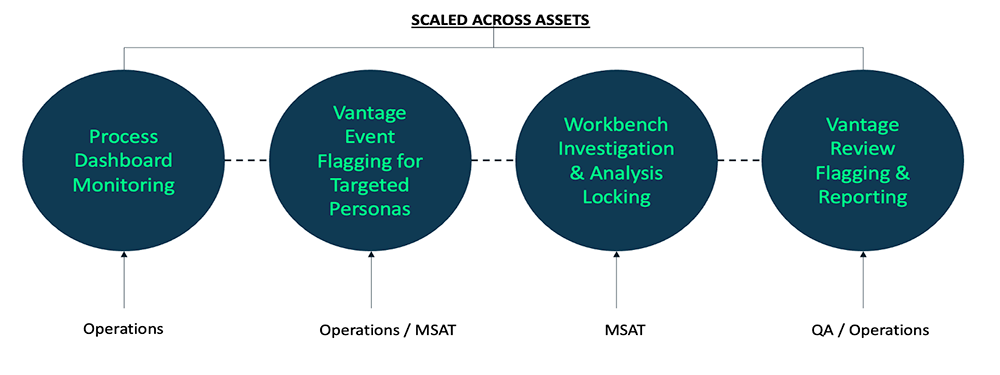 Figure 1: Integrated workflow summary, leveraging the tools and interfaces available in Seeq.
Step 1: Real-time monitoring
First, teams create monitoring dashboards — focused on a set of reactors in this example — using Seeq Organizer, customized and consolidated for control room operators. The dashboard provides real-time access to critical process data, including critical process parameters (CPPs) and performance trends.
Based on the tables and trends available, an operator can rapidly identify deviations, for instance, when a volume signal is outside of normal limits, and flagged in the visual display as a result (Figure 2).
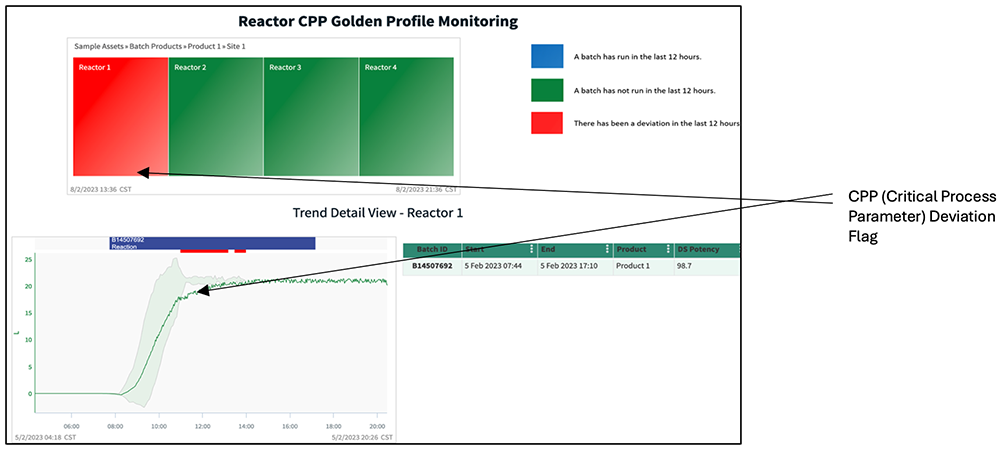 Figure 2: A CPP is flagged in a reactor monitoring dashboard, shown in a customized Seeq Organizer view.
Step 2: Triage and contextualization
Next, using Seeq Vantage — an enterprise-scale monitoring and contextualization application — the operator can identify the flagged deviation, add context and notify the area’s process engineer (Figure 3).
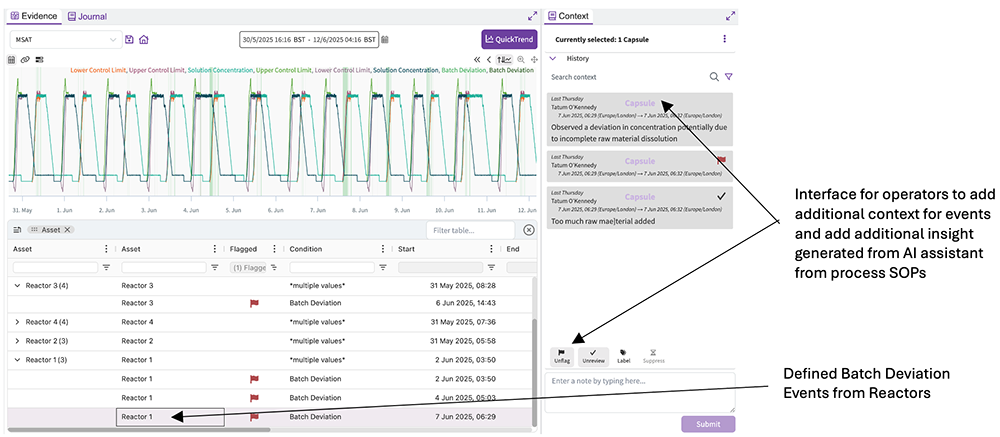 Figure 3: The Seeq Vantage interface empowers plant personnel to triage and contextualize critical process events at scale.
Leveraging integrated AI connected to company documentation and standard operating procedures, the operator can compile additional insights about potential causes and corrective actions for the flagged event.
Step 3: Root cause analysis
The deviation then appears in the engineering team’s Vantage Room, which looks similar to the interface shown in Figure 2. Vantage Rooms can be customized and filtered to show only specific events of interest, and events can be organized according to a team or user’s specific requirements. In this example, events are grouped by asset.
Using Seeq Workbench, the engineering team conducts its investigation of the deviation event. Using clean, aligned data from multiple sources and Seeq’s no-code/low-code analytical tools, they can overlay current batch behaviors with historical batches to identify clear outliers in the process parameters, indicating likely root causes (Figure 4).
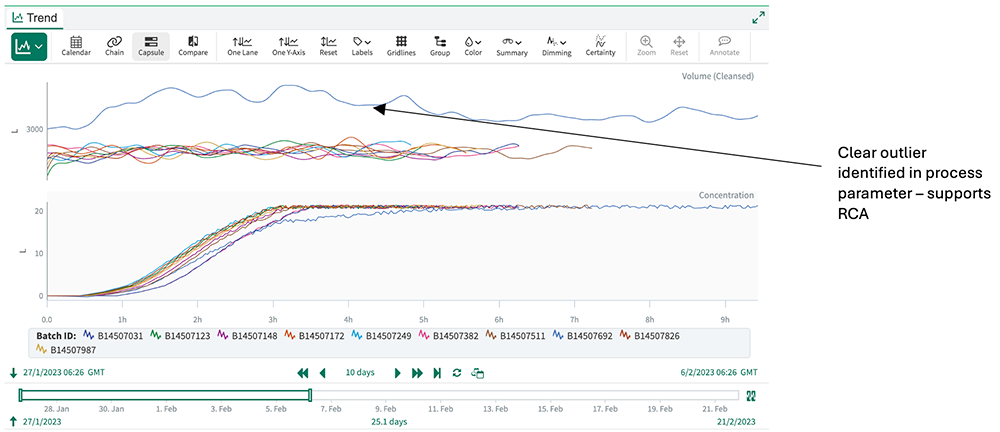 Figure 4: Plant personnel can overlay current batch behaviors with historic batches in Seeq Workbench to identify CPP outliers.
Step 4: Reporting and knowledge capture Lastly, the team can add their findings to Vantage, marking the event for review by quality and production managers. Embedded AI capabilities facilitate full investigation reports with integrated data to maximize context, made automatically available to management and audit personnel (Figure 5).
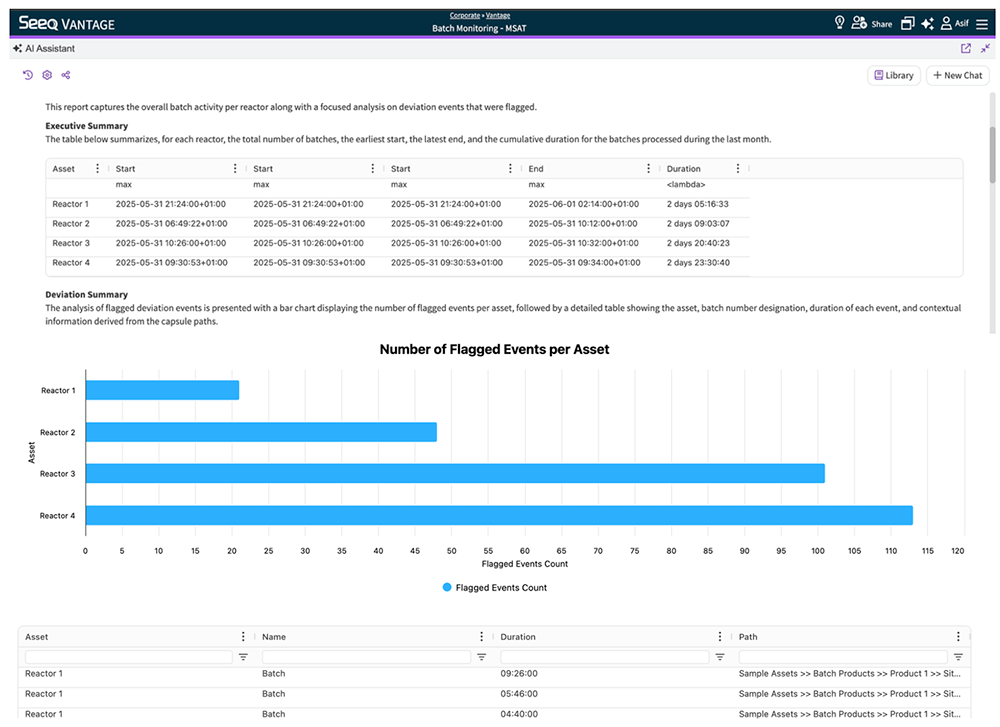 Figure 5: AI-generated deviation reports in Seeq Vantage are automatically made available to authorized quality and production management personnel for prompt sharing and review.
Accelerate deviation investigations and improve operational insights
Advanced analytics and AI are transforming investigation workflows, saving immense amounts of SME time and effort compared to excruciating manual procedures of ages past. By providing teams with real-time access to consolidated process data and trends, personnel can efficiently triage, analyze and document critical events. Additionally, the full process context of stored information simplifies document investigations and facilitates close collaboration.
AI prompts, combined with SME knowledge, is accelerating insight generation, helping fill data gaps and providing process context around critical events. By enabling teams to learn from past deviations and prevent recurrence, these tools are reducing quality risks, enhancing regulatory compliance and improving operational efficiency to drive value-added outcomes across industrial organizations more quickly.
All figures courtesy of Seeq