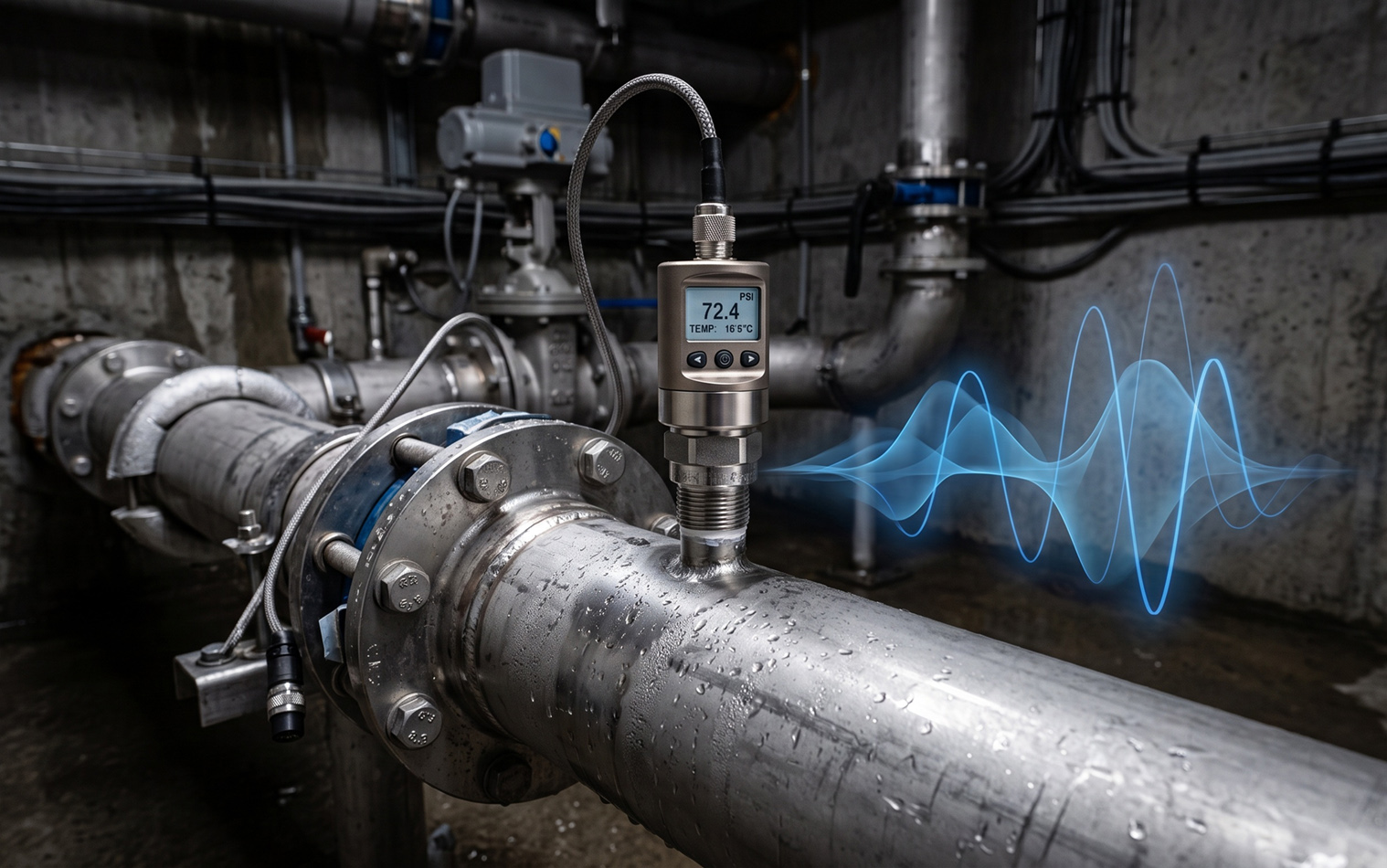
Multipath ultrasonic gas flowmeters (USMs) have long been a preferred custody-transfer technology for natural gas due to their lack of moving parts, low pressure loss, wide turndown and transit-time measurement principle that is, in theory, independent of gas composition. This confidence has been supported for decades by standards such as the American Gas Association (AGA) Report No. 9, International Organization for Standardization (ISO) 17089-1 and the International Organization of Legal Metrology OIML R137 framework, largely within methane-rich service. However, hydrogen production, hydrogen blending, refinery off-gas service and other clean-fuel applications are now pushing USMs into gas compositions that differ significantly from the mixtures for which meters, transducers and calibration bases were originally designed.
In the full version of this article, I explain that the transit-time velocity equation remains composition-independent, because it depends only on meter geometry and measured transit times, not on composition, density, pressure or temperature. I explain why signal detection is not composition-independent, the effects of hydrogen-rich gas on the acoustic environment and the results that make a meter appear to have a flow profile or installation problem when the true cause lies in the signal-detection chain.
The full article details why speed of sound (SOS) is the most useful diagnostic tool for separating profile-related issues from signal-chain issues, including a discussion of the SOS discriminator field rule which states: “In a single-phase, homogeneous gas, a persistent speed-of-sound offset against an independent thermodynamic reference points first toward acoustic-chain or signal-detection issues, not pure velocity-profile distortion.”
Because gas composition in hydrogen-blend streams can shift within minutes, the article stresses time-synchronizing composition, pressure, temperature and meter SOS data to avoid false diagnoses. It also discusses the importance of structured commissioning and provides a structured commissioning checklist for hydrogen-blend USM service that spans pre-commissioning, commissioning, operation and post-adjustment stages, emphasizing calculation-chain verification, synchronized SOS snapshots, per-path diagnostics and independent flow-reference comparisons.
The full article further examines the approach and challenges of using speed of sound as a discriminator for deciding whether an investigation should begin with the acoustic signal chain and the benefits of including acoustic confidence as a practical commissioning requirement.