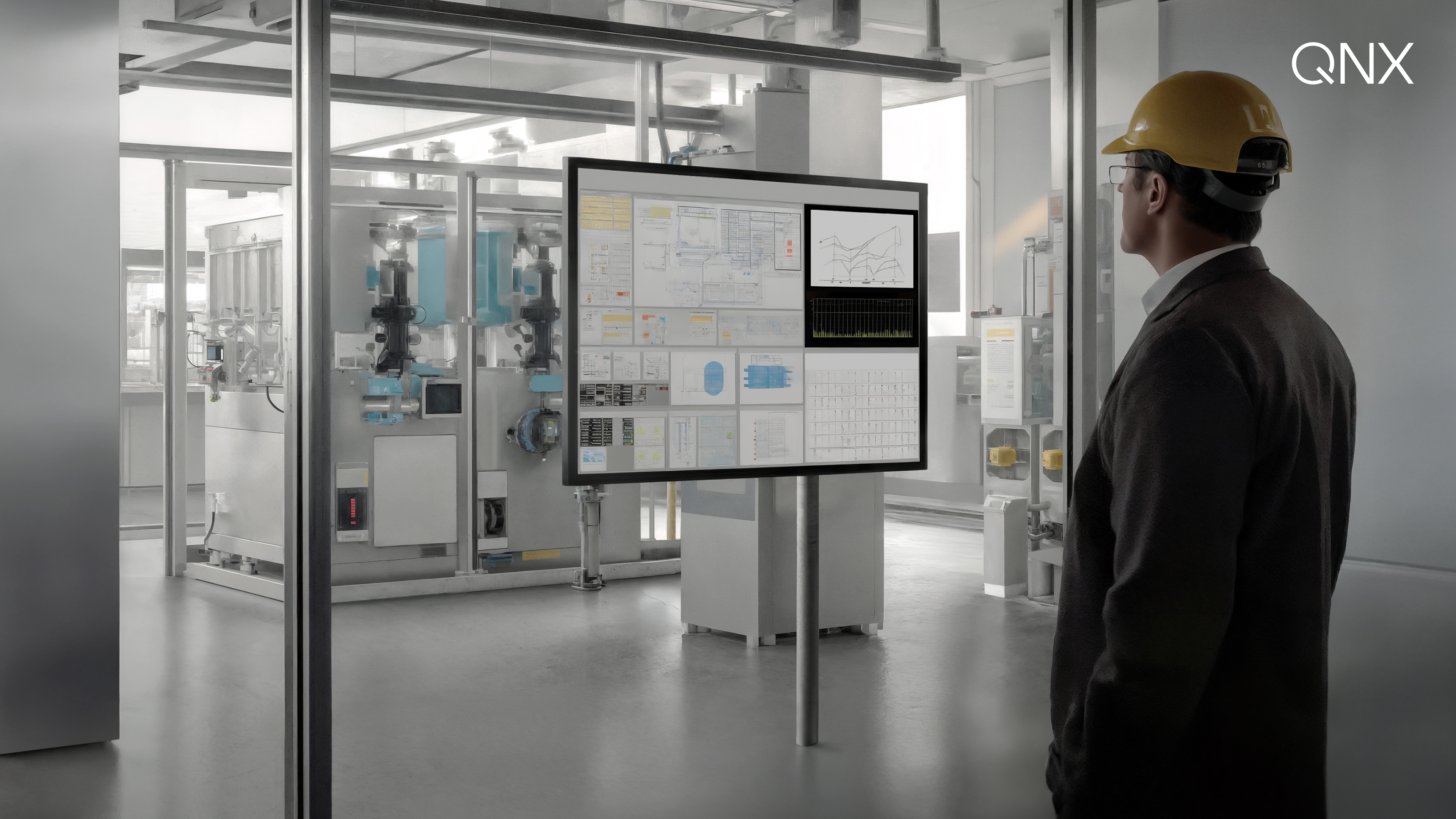
With the emergence of Physical AI, robotics and proliferation of these technologies to modernize Industrial systems, the next generation of automation requires high fidelity, computing power and demanding workloads, all working together in parallel. As manufacturers add high-performance computing, advanced visualization, real-time monitoring and artificial intelligence, the security requirements also become more pronounced for these systems and can no longer be added late in development. These must be in-built while designing and developing the system foundation. Managing modern day distributed automation now moves from beyond isolated controllers and fixed-function machinery toward connected, software-defined systems.
Managing the Shift to New System Architectures- Evolution of MPU and SOC based industrial platforms
Industrial operations have long relied on programmable logic controllers (PLCs) and microcontrollers for predictable control. These technologies remain essential across factories, energy infrastructure, process plants and other mission-critical environments.
However, newer automation includes richer human-machine interfaces, machine vision, edge analytics, digital twins, cloud connectivity that operate and execute based on the intelligence gathered from AI embodied in physical systems. All these capabilities must be seamlessly integrated while preserving existing control investments, maintaining uptime and supporting equipment that may remain in service for years.
Industrial architecture is therefore evolving from predominantly PLC- and MCU-based designs toward systems that combine controllers with higher-performance MPUs (microprocessor units) and system-on-chip platforms.
PLCs can continue to manage field-level control. Additional computing platforms can support supervisory applications, visualization, analytics, connectivity and AI. This PLC-plus-MPU evolution is a central theme that is driving the need for modernizing legacy industrial automation. Predictable execution and reliability of automation is a necessary foundation for mixed-criticality systems. While consolidation of computing workloads gives flexibility, it also introduces more software, more connectivity and more interaction among workloads that can only be met with a robust foundational development platform.
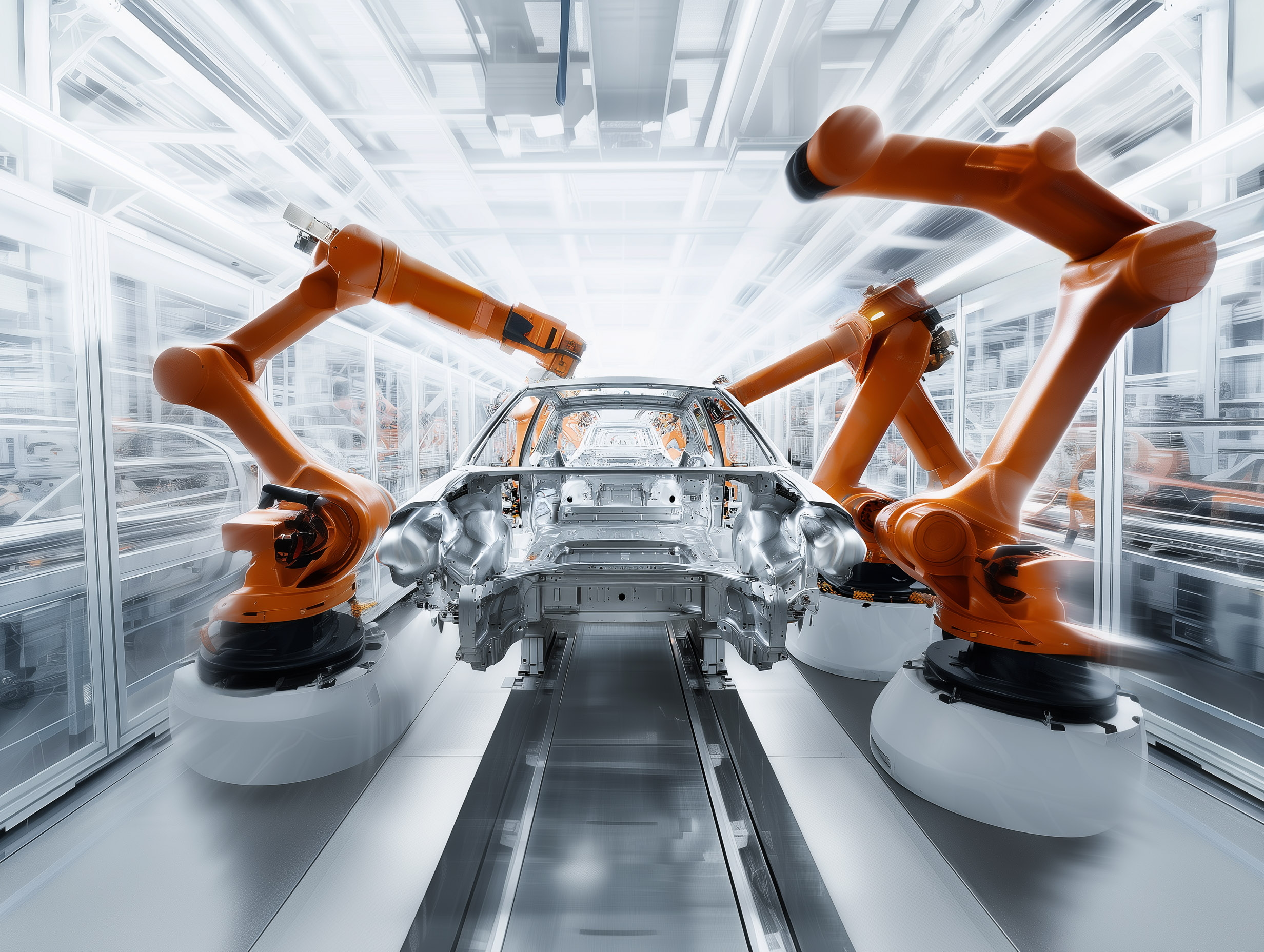 Physical AI raises the stakes, adding to the complexity of automation
Physical AI makes this transition even more consequential because its insights can influence machines, operators and critical assets.
In an industrial automation environment, an AI application can recognize an equipment anomaly, support autonomous inspection or identify a potentially unsafe operator condition. Its output might trigger an alarm, request operator intervention or contribute to an approved machine response that must be met in real time.
However, given that the AI model is only one component of the system, the broader platform must acquire sensor data, execute inference, validate the operating context, apply predefined policies and communicate the result to an operator or control application. This is where a robust foundational platform that can execute and respond to AI’s intelligence is imperative.
Any Physical AI automation architecture must successfully use the insight produced by AI, while the underlying platform schedules, isolates and executes the configured response.
Consolidation leads to mixed-criticality automation workloads
This is where modern multicore processors allow industrial manufacturers to consolidate capabilities that once required separate computing platforms. A single system may now support hard real-time control, supervisory automation, operator interfaces, networking, diagnostics, event logging, machine vision, and AI inference.
For instance, an AI workload may need considerable processing capacity, while a critical control function must execute within a defined real-time constraint. A networking component requires external connectivity, while a safety-related application needs tightly controlled access to memory and hardware resources that runs on a pre-certified development platform.
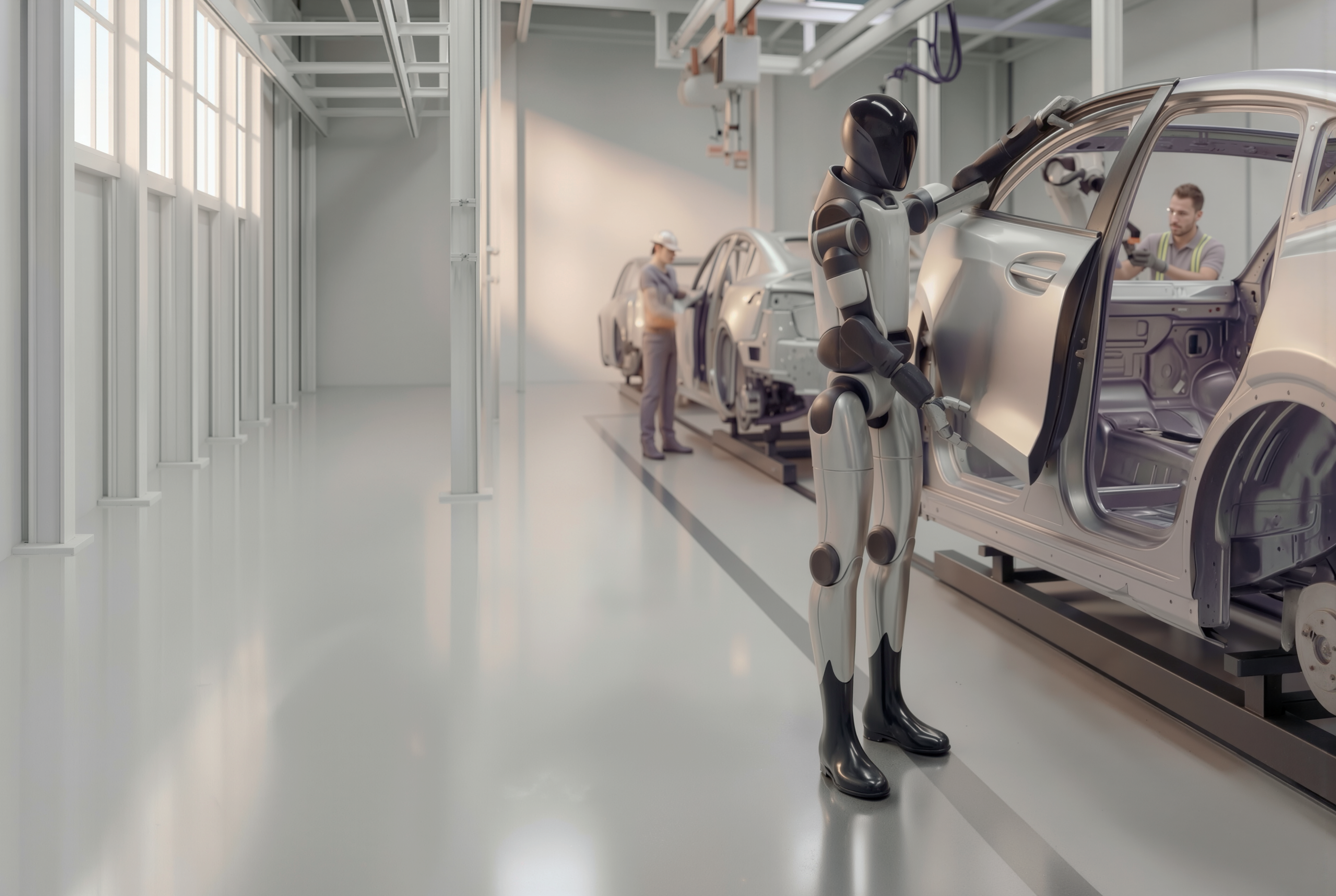 Building the case for a resilient software-hardware automation consolidation with a robust foundational platform
While hardware consolidation can reduce system complexity and closer integration, that doesn’t translate to directly building resilience. The foundational software, including the OS, must prevent a resource-intensive workload from interfering with a critical function. It must protect memory, contain defective or compromised components and vulnerabilities, and support recovery without disrupting the rest of the system.
All these workloads must hence run together without compromising the timing, integrity or availability of critical operations. The next generation of resilient systems thus have a new mixed-criticality baseline in which hard real-time control, soft real-time automation and best-effort AI or analytics coexist that can be powered by a dependable foundational software. The temporal and spatial separation, predictable execution and fault containment are requirements that hardware consolidation alone cannot provide.
Cyber Resilience in automation is also organizational in nature
While Cyber resilience requires strong technical architecture, it also depends on how an organization designs, validates, deploys and maintains its products, post-production and delivery.
Manufacturers need clearly assigned cybersecurity responsibilities, repeatable engineering practices, supplier coordination, component traceability, vulnerability monitoring and controlled update processes, especially in the light of new CRA requirements (Why the EU CRA (Cyber Resilience Act) Matters Now) that released in September 2026. This applies broadly to complex embedded products where even as part of EU CRA, cybersecurity must be managed throughout the product lifecycle and is not necessarily considered complete at launch. On the Industrial automation side, the global framework for cybersecurity in industrial automation is the ISA/IEC 62443 series, which provides a flexible, lifecycle-based approach to securing Industrial Automation.
From a regulatory perspective the ISO/SAE 21434 Cybersecurity standard also offers a useful example of organizational discipline. Although developed for road-vehicle electrical and electronic systems, it addresses cybersecurity risk management across concept, product development, production, operation, maintenance and decommissioning.
Industrial manufacturers should be able to determine which components are present in each product, assess exposure when vulnerabilities emerge, validate remediations, securely deliver updates and support foundational software over the product’s intended life. Ultimately multiple regulatory standards and frameworks may need to be consolidated as an approach towards CRA compliance.
Software foundation- the new enforcement layer for resilient and secure automation
Once control, connectivity and AI workloads share computing resources, the foundational software becomes the layer responsible for enforcing system behavior in addition to managing the runtime of automation applications.
Any fault detection offers little resilience if recovery requires restarting every workload in a system. Here is where the foundational OS (operating system) needs to be robust where it can- control how workloads receive processing time, protect critical applications from interference, effectively manage which components can access memory and hardware, and safely contain failures while the affected services recover.
Only after establishing these requirements can the underlying operating system be considered resilient and secure in the long term.
The microkernel OS advantage for resilient automation
Here is where the nature of the OS matters. In a conventional monolithic operating system, many services, including device drivers, filesystems and networking components, can operate with elevated privileges inside the kernel. A defect or compromise in one privileged component can potentially affect the kernel and other parts of the system.
A microkernel architecture uses a different model. It retains essential functions in the kernel while running many drivers, filesystems, protocol stacks and services as separate processes outside kernel space. The primary advantage is the modularity and protected boundaries created between system components.
For industrial systems, this can provide several benefits:
- Fault containment: A defective driver or service can be isolated within its process instead of automatically causing a system-wide failure.
- Controlled recovery: An affected user-space service can potentially be restarted without rebooting the kernel or unrelated applications.
- Reduced privileged software: Moving services outside kernel space reduces the amount of code operating with the highest level of privilege.
- Freedom from interference: Protected address spaces and real-time scheduling help separate critical functions from AI, HMI (human machine interfacing), networking and analytics workloads.
- Lifecycle maintainability: Modular services can be maintained or updated with less disruption to the wider operating environment.
While a microkernel does not eliminate every defect or cybersecurity threat, it provides architecture designed to limit propagation, protect critical boundaries and support controlled recovery when vulnerabilities are encountered in the systems lifecycle.
Applying the foundational architecture with QNX for Safe, secure and reliable Industrial Systems
As we observed, the requirements for a resilient and secure industrial automation point toward a microkernel-based foundational real-time operating system that combines isolation and fault containment with predictable execution.
Here is where QNX provides a field proven established foundational development platform. The QNX OS is a hard real-time microkernel architecture that allows applications, drivers, protocol stacks and filesystems to operate within protected address spaces while priority-based scheduling supports time-sensitive workloads.
In an industrial architecture, QNX powers the foundational execution and resilience layer -complementary to PLCs while enhancing the response times of intelligence gathered via AI frameworks.
As we look at the Industrial automation landscape, we see that PLCs and controllers continue managing field-level control while AI frameworks can perform perception and inference. As supervisory applications validate context and apply policies, HMIs can communicate conditions and actions to operators.
Modernizing Industrial automation on a resilient foundation
The next generation of industrial automation needs to build upon the existing control systems that have supported reliable operations for decades. While the legacy systems worked well before, the new architectural path should preserve the existing strengths and accommodate the complex computing capabilities needed for software-defined automation and Physical AI.
Here is where MPU and SoC-based platforms can introduce advanced HMI, AI, analytics, connectivity and supervisory applications. The foundational real-time platform must ensure that these capabilities coexist without compromising critical operations.
A microkernel architecture based QNX OS provides a durable basis for this transition by providing a high performant foundational architecture, isolating components, containing faults and supporting controlled recovery. QNX natively applies these principles of foundational security, resiliency and reliability - as millions of embedded devices, complex machines in industrial automation, automotive and medical devices are powered by QNX OS.
The future of modern industrial automation hence must rely on a resilient, safe and secure automation foundation.