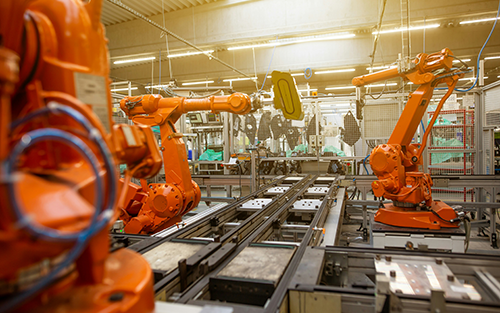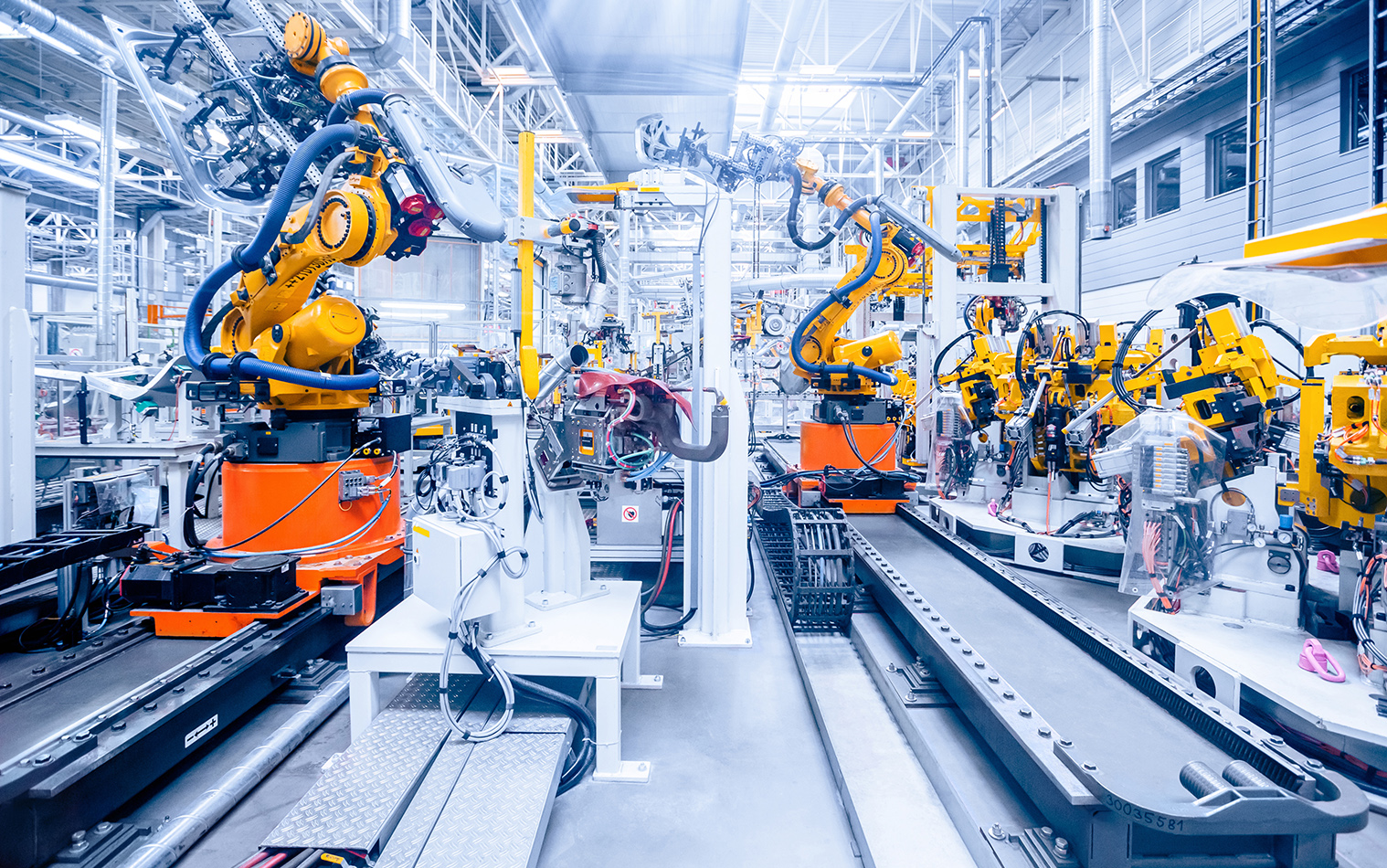
Modern manufacturing floors are the densest information-generating environments ever built. Thousands of sensors on a single line, streaming temperature, vibration, pressure, and quality data continuously. IDC estimated that by 2025, connected devices would generate more data annually than the rest of the digital economy combined, with real-time machine data making up the overwhelming majority of everything created in real time - more than the entire social and transactional internet. The platforms that have defined the last thirty years of technology - search, social, SaaS - were built on a sliver of the world's actual information. The rest comes off machines. And almost none of it gets used.
Siemens' own leadership puts the utilization rate inside industry at 20%. Eighty percent goes untouched. Other estimates put the unused share above 90%, some above 99%. The exact number is not the point. Every credible estimate lands in the same place: the physical economy is generating a volume of information that dwarfs the digital economy, and almost none of it reaches a decision.
This is the defining paradox of the modern factory. It is the single most consolidated source of sensor data on Earth, and one of the least intelligent decision-making environments in the industrial economy. Every inefficiency on that floor - the stoppage that could have been predicted, the defect that could have been caught three steps earlier, the changeover that eats half a shift - has an answer already sitting in the data stream monitoring it. The information exists. It is not being read in time to matter.
You can measure the cost of that failure in a number every plant manager already tracks. The benchmark for world-class Overall Equipment Effectiveness, set decades ago, is 85%. Most plants run in the 55-67% range. That gap - twenty to thirty points of production capacity, lost quietly on fully instrumented lines, every shift, indefinitely - is the size of the problem. It is not a mystery requiring more sensors. It is a failure to connect, interpret, and act on the sensors already installed.
The last decade of "Industry 4.0" spending failed to close that gap, and the reason matters. It was not a failure of ambition. Digitization projects across Western manufacturing largely stalled in pilot mode - IDC found that only four out of every thirty-three enterprise AI proofs of concept in industry ever reach production, and the root cause was never a shortage of good ideas. It was a failure of infrastructure and trust. These are solvable, unglamorous problems. They were simply never solved.
China treated them as solvable, and the results are measurable rather than aspirational. Gree Electric's air conditioner plant in Zhuhai built a private 5.5Gnetwork across twelve production lines with China Unicom and Huawei, giving the factory enough real-time bandwidth to move sensor and machine-vision data as fast as the line itself moves. The line now reconfigures itself instead of waiting on a person to notice a batch changed. Changeover time dropped from five hours to ten minutes, and the plant posted an 86% efficiency gain. Xiaomi's smart factory outside Beijing tells the same story with the marketing stripped away. The company claimed "one phone per second" and "zero human workers." The honest figures are closer to one phone every three seconds at 81% automation. That gap between the pitch and the reality is worth stating plainly - even the best examples of this shift are incremental and hard-won, not magic. What remains true underneath the exaggeration is still the point: an AI system tracking inventory, triggering replenishment, and catching equipment failures through a live model of the line before a technician would notice.
A factory with more automation but the same blind decision-making is not competitive. A factory that reads its own data in real time and acts on it before the defect ships, before the line stalls, before the shift is wasted - that factory operates at a structurally different cost basis than one that doesn't. That gap compounds. Over a decade, it is the difference between a manufacturing base that sets the price and one that takes it.
The opportunity in front of manufacturers is not to install more instrumentation. Most plants already have more sensor data than they know what to do with. The opportunity is to build the infrastructure that makes that data trustworthy, moves it in real time, and gives it the authority to change what the machine does next - not just what appears on a dashboard nobody opens. The countries and companies that build that layer first will not just run more efficient factories. They will set the terms of industrial competition for the next decade.
Sources
- Seagate / IDC, Data Age 2025 — Data Age 2025
- VnExpress, No lights, no workers: AI-powered ‘dark factories’ are reshaping China’s manufacturing — VnExpress