AutoQuiz is edited by Joel Don, ISA's social media community manager.
This automation industry quiz question comes from the ISA Certified Automation Professional (CAP) certification program . ISA CAP certification provides a non-biased, third-party, objective assessment and confirmation of an automation professional's skills. The CAP exam is focused on direction, definition, design, development/application, deployment, documentation, and support of systems, software, and equipment used in control systems, manufacturing information systems, systems integration, and operational consulting. Click this link for more information about the CAP program.
Which of the following statements correctly defines the relationship between the shaft speed of an AC squirrel cage motor, the frequency of the power input, and the number of poles for which the motor is wound, assuming negligible slip?
a) the shaft speed is directly proportional to the number of poles and does not depend on the motor frequency b) the shaft speed is directly proportional to the frequency and does not depend on the number of poles c) the shaft speed is directly proportional to the frequency and is inversely proportional to the number of poles d) the shaft speed is inversely proportional to the frequency and is directly proportional to the number of poles e) none of the above
The correct answer is C
, the shaft speed is directly proportional to the frequency and is inversely proportional to the number of poles. The shaft speed is related to frequency and the number of poles by the following equation: N = [(120 x F) / P] - Slip
where,
N = shaft speed (RPM) F = frequency of the power supply (Hz) P = number of stator poles (pole pairs)
Assuming no "slip," if the power supply frequency increases (assuming the number of poles remains the same), the shaft speed will increase (directly proportional). For the same motor, as the number of stator poles is increased (assuming a constant power supply frequency), the shaft speed will decrease (inversely proportional).
Reference
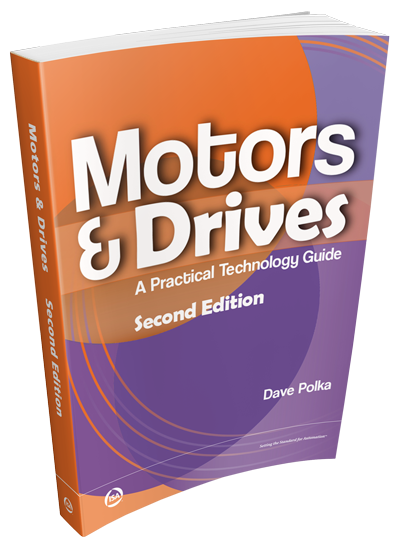
: Dave Polka, Motors and Drives: A Practical Technology Guide, Second Edition.
About the Editor
Joel Don is the community manager for ISA and is an independent content marketing, social media and public relations consultant. Prior to his work in marketing and PR, Joel served as an editor for regional newspapers and national magazines throughout the U.S. He earned a master's degree from the Medill School at Northwestern University with a focus on science, engineering and biomedical marketing communications, and a bachelor of science degree from UC San Diego .
Connect with Joel