In the US, adequate wastewater treatment is probably not the first thing that comes to mind when moving to a new town. In fact, without any evidence to the contrary, a clean water supply and adequate disposal are typically assumed to be adequate in any district. It’s a testament to good municipal planning, civil engineering and the control systems that run everything.
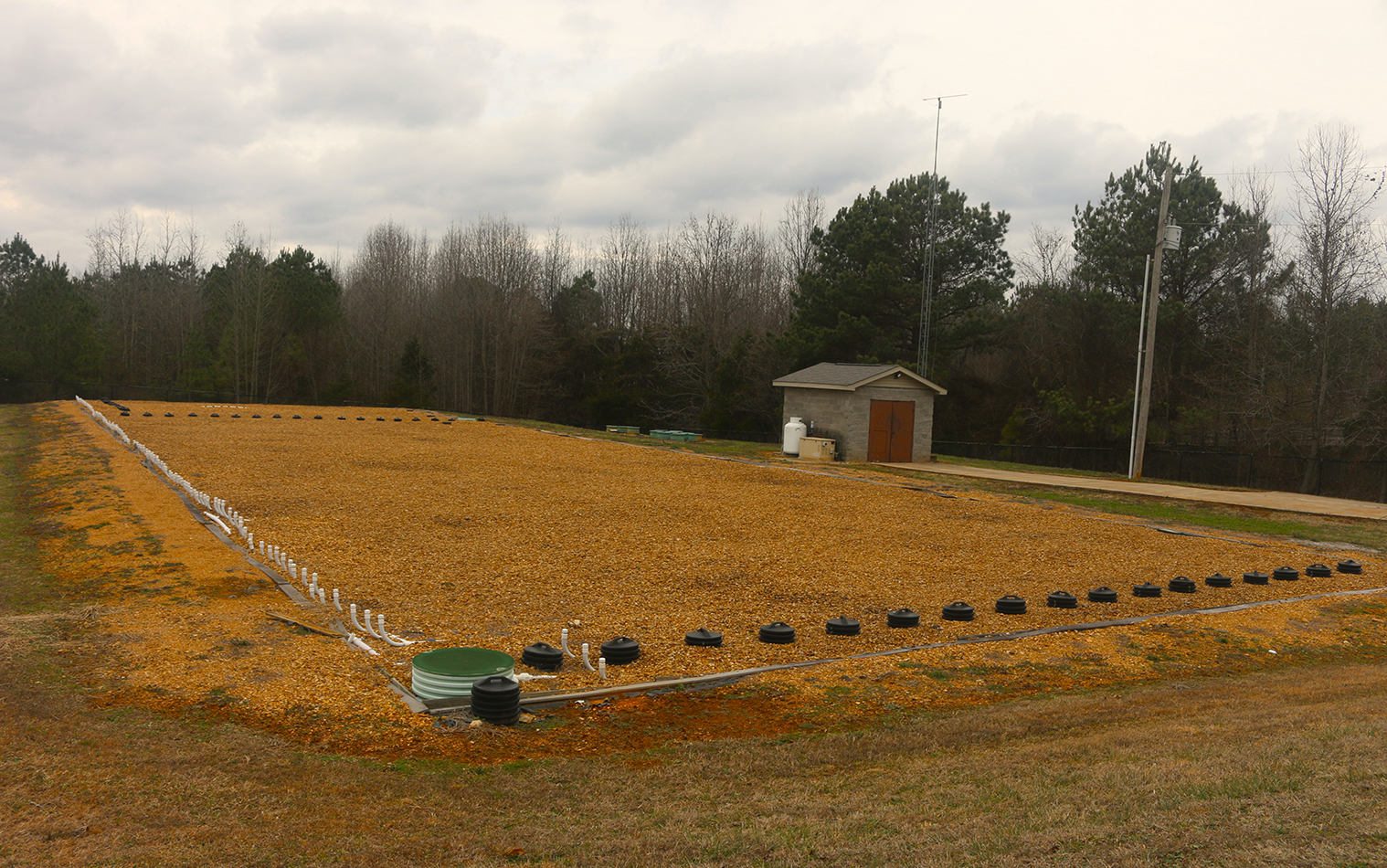
To maintain this status quo, despite an increasing population in the area, the Harvest-Monrovia Water & Sewer Authority, located northwest of Huntsville, Alabama, typically requires that each new housing subdivision build its own central water sand filter system. This is a lined structure dug into the earth — very much the size and shape of an in-ground pool — with a partition segregating the volume into an 80% main recirculation area and a 20% distribution area. Upon completion, this installation is then turned over to the utility for ongoing maintenance.
In this scenario, each individual home employs a local septic tank for preliminary treatment. Solids are handled, and the resulting gray water is output to the central sand filter system. There, water is processed by repeated circulation through sand media, eventually passing it into a final filter section and UV exposure steps before it is output to a settling field, where it slowly soaks into the ground.
A number of float-type level switches in the filter, recirculation and distribution tanks monitor the sand filter’s water content, while inlet and an exit flowmeters measure water volume. Pumps and valves control this process, along with the periodic distribution to various settling zones.
Broad performance statistics are important for monitoring the system’s overall health. However, access to immediate, real-time information is not a critical priority, given the slowly developing nature of wastewater operations. In fact, the process is gradual enough that in the event of a failure, a human operator with a radio can temporarily handle operations with manual overrides.
Wastewater treatment for a growing population
The early 2000s saw a rapid population growth in the area, leading to a corresponding increase in sand filter installations. During this period, and in subsequent decades, a mixture of specialized circuit board-based controllers, commercially available programmable logic controllers (PLCs), touchscreen human-machine interfaces (HMIs), physical switches and other elements was used to automate these systems.
While each installation has performed suitably over the years, eventually this hardware became obsolete. The specialized controllers in particular — which were originally designed for heating, ventilation and air conditioning (HVAC) duties and adapted for this application — were problematic as they eventually went out of production. They also required the use of a PC-based hyperterminal text-based console interface, which was acceptable when first implemented, but more useful options are available today.
This configuration made operation, maintenance and future upgrades difficult, requiring expertise and sometimes trial and error. Making this situation even more challenging, on-site wiring diagrams and documentation are often lost over time, and those who might have the necessary unwritten knowledge to work with these systems are retired or retiring.
Therefore, the utility needed a new solution that was standardized and implementable across all sand filters, with code and other documentation easily accessible to engineers and technicians now and in the future. Every installation site is somewhat unique in terms of how many level floats and distribution zones there are and how they are wired. Due to the variability at each site, a method to identify existing input and output control signals would be needed to facilitate cutovers.
Open hardware advantages
With a decades-long background in the water/wastewater industry, I was retained to help guide control solution development to meet the needs of the utility as they transitioned to more modern PLC and HMI designs, and eventually to incorporate cellular connectivity for more wide-ranging supervisory control and data acquisition (SCADA) solutions. In fact, my goal with founding RTUdirect LLC was to leverage this experience, providing cost-effective controls packages that can be “dropped in” by an electrician with little specialized industry experience.
While there are many PLC options today, AutomationDirect stood out for offering a hardware and software platform for this project that supports the standardized, future-looking system needed by the utility. Some of the key selection criteria included:
- Capable yet easy-to-use hardware and software
- Free software
- Comprehensive learning and support options
- Fast shipping of parts, with clear visibility of availability
Some of these requirements are about technical capability, but equally important are features that empower the end user to learn and support their own systems, or to readily subcontract providers who can help them.
Based on prior design experiences and to meet the established needs, the AutomationDirect BRX family of stackable micro brick PLCs was selected as the controller for this system, along with C-C-More HMI touchscreensMore HMI touchscreens as the local interface (Figure 2).
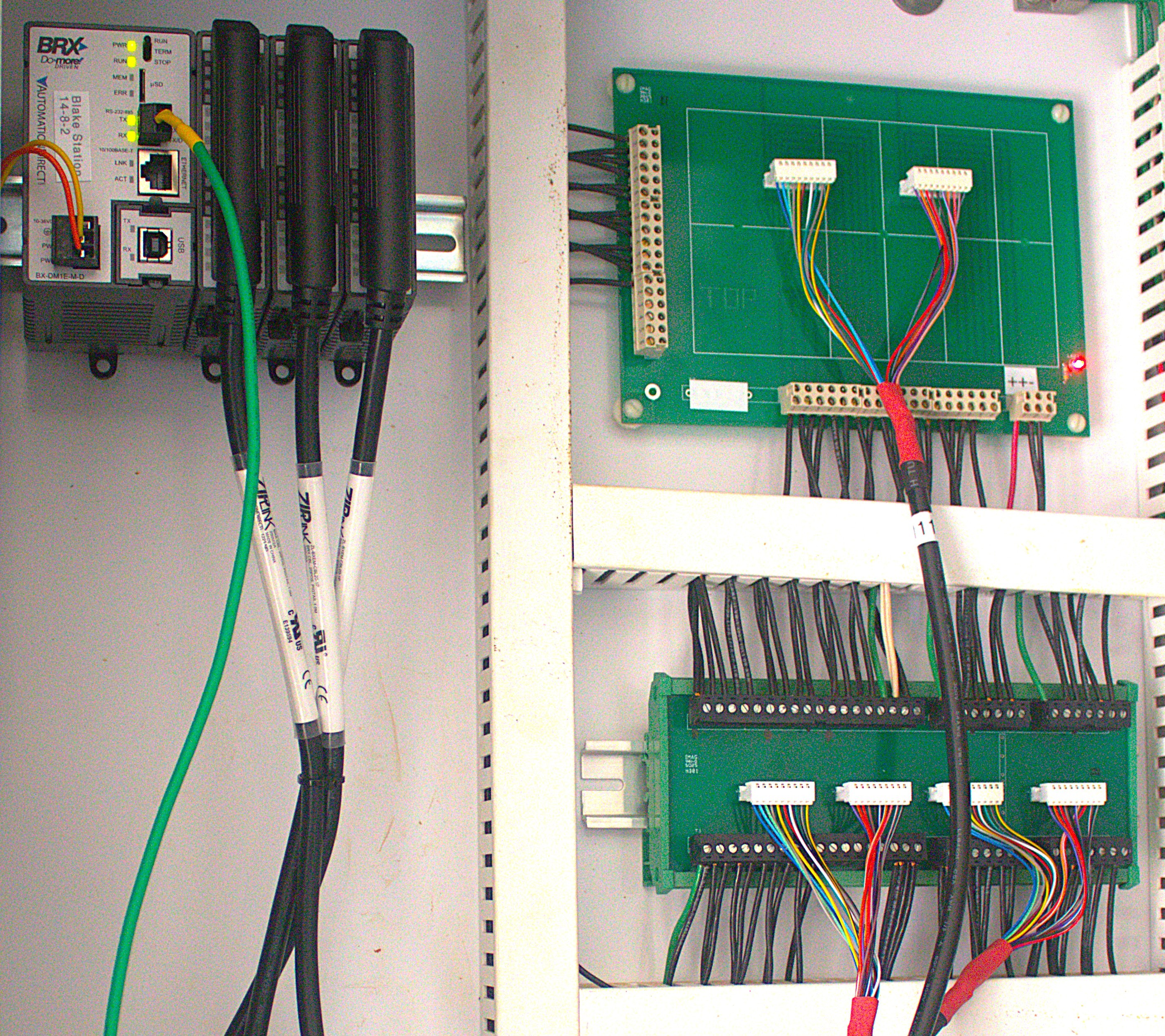 Figure 2: The AutomationDirect BRX PLC, shown here with ZIPLink modules to provide quick and easy retrofit wiring connectivity, was selected to deliver a capable and easy-to-implement automation upgrade in wastewater treatment control cabinets.
Free software means that municipalities and contractors don’t have to pay steep licensing fees for packages that might get used intermittently — but are sometimes needed to interface with machinery. As an added bonus, free online training resources mean that engineers and technicians can keep their capabilities sharp — and even improve — between jobs, and that anyone with the proper motivation and ability can obtain new PLC skills.
A stackable modular design — allowing up to eight input/output (I/O) modules to be connected with no backplane — provides complete flexibility, and if and when new capabilities are needed, additional modules can simply be snapped on. New hardware is auto-detected by the Do-more PLC design software. In this scenario, a standardized basic design can be established, which can then be customized for individual wastewater management scenarios. This might mean including additional output controls, or sensors like water level transducers, rain gauges and more for diagnostics.
Unlike earlier-generation PLCs, this modern iteration stores tags on the CPU itself so that I/O labels are always available in the software. Engineers no longer need to coordinate with stored documentation, which may be missing anyway. With one megabyte (MB) of on-board memory, supplemented by up to 32 gigabytes (GBs) of plug-in microSD card storage, the PLCs can act as effective data loggers with no additional hardware. The PLCs can even host their own web pages for basic browser-based monitoring and control. A wide range of communication protocol capabilities means that integration with external devices and other SCADA systems is straightforward.
Another consideration is obtaining the parts. Instead of going through a more complicated and expensive distribution channel, this family of products is available for direct ordering from a website, with clear indication of stocking levels and fast shipping times. PLC and HMI products — even older models — are well-supported over the long haul, which is ideal for end users needing to keep systems in operation for decades.
Advanced advantages In preceding years, the utility had already explored a design upgrade option. However, the approach was seen as unnecessarily complex, in part because it included many hardwired hand/off/automatic (HOA) selector switches to support manual override operations. For the new design, HOA capability is still implemented, but as part of the HMI (Figure 3). This allows the installer and subsequent operations teams to toggle control outputs individually, important for I/O verification during system commissioning, troubleshooting and even emergency on-site operation.
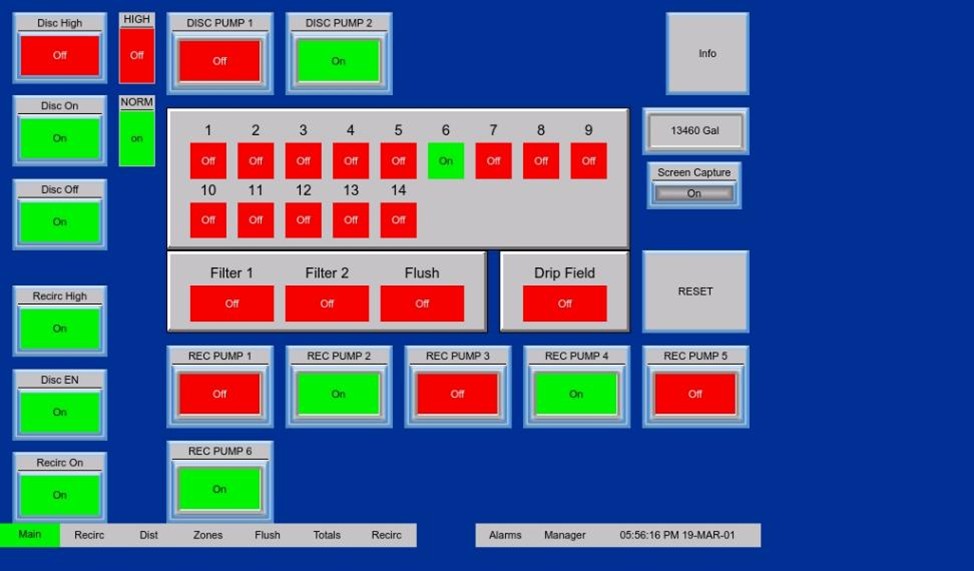
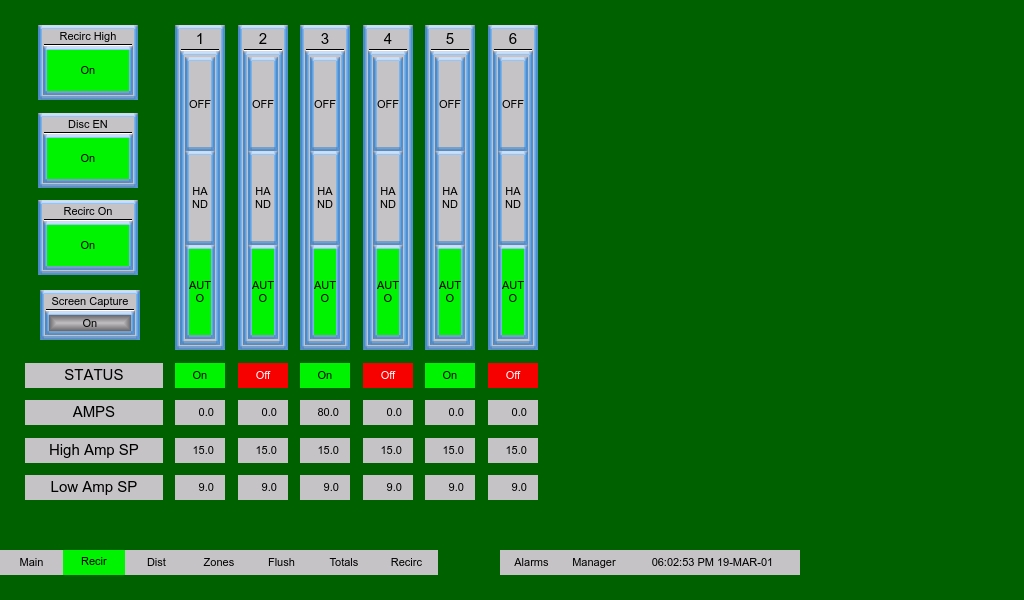
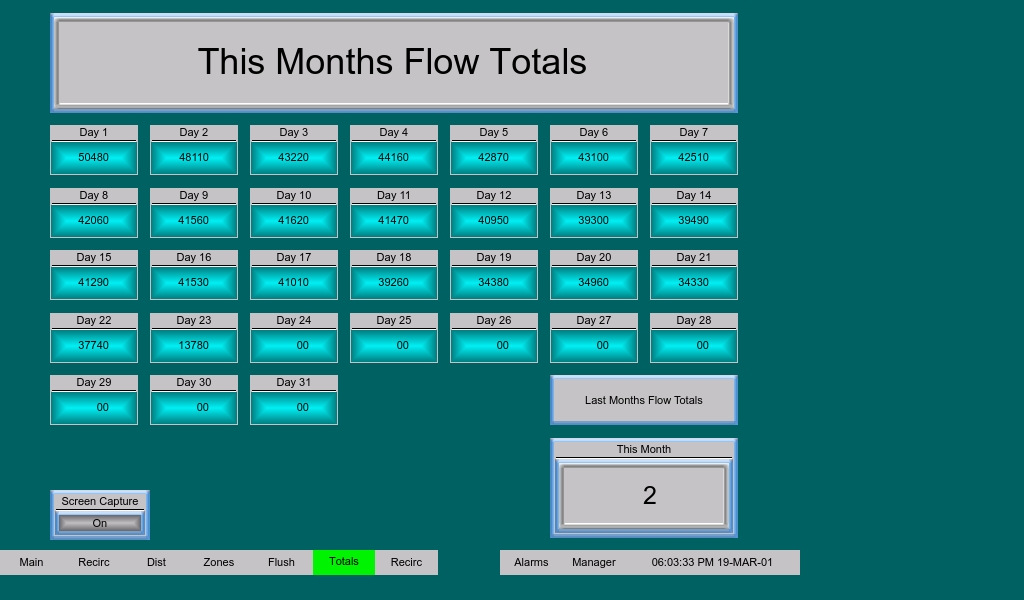 Figure 3: AutomationDirect C-more HMI screens include statistics and HOA functionality, providing far more useful capabilities than were previously available.
Using a touchscreen for controls that are needed infrequently reduces required cabinet space and complication — and the cabinet’s cost — while increasing flexibility. Changes are simply a matter of updating the PLC/HMI configuration. Equally important, new data and diagnostic displays provide operators with additional information to better understand the system’s operation, and how it can be adjusted to perform better.
The overall design has been created with field personnel in mind. Due to clear drawings and procedures, the utility can bid the installation work to local contractors, and potentially perform multiple upgrades nearly in parallel. This also positions various local contractors to be part of the future support system if needed.
For remote connectivity, the new controls package utilizes the cellular data network, leveraging government pricing for low-bandwidth IoT devices. Economical secondary market hardware is implemented for wireless Ethernet connections to PLCs. This cellular setup replaces an older radio-based system that was previously installed for SCADA duties, but that proved problematic at times. The new platform will easily handle future additional needs for telemetry point monitoring, alarming, data gathering and analytics, reporting and more.
Ready for another period of growth
Today, rapid population growth is expected to continue, in part due to the U.S. Space Command Headquarters relocating to Huntsville. This makes it important for the utility to establish a standard PLC-based controls solution for sand filtration systems, making new wastewater treatment installations relatively simple. The choice of an extremely well-supported hardware and software partner will help keep it viable for decades to come.
While those in the industry can appreciate the system’s elegant design, the public will ideally never have to think about it. Residents can maintain the practical assumption that, like magic, water comes out of the tap and disappears down the drain to … somewhere.
Of course, experienced water industry engineers understand that the situation is more complicated. System upgrades are currently ongoing, with approximately half of the 15 existing sand filters in the area already upgraded to the new PLC/HMI solution. Because of the careful planning to proactively maintain these filtering systems — bringing them up to modern PLC and HMI standards — water can keep flowing without a hitch, now and into the future!
All figures courtesy of Wesley Benefield, PE