


Changeovers are a complex process for manufacturers, requiring shutdown, cleaning, mechanical changes, material swaps and setpoint adjustments. Each of these interruptions introduces variability in equipment performance, and even minor details can create major issues post-changeover.
At one Fortune 500 consumer packaged goods manufacturing plant, changeover occurs on a line that fills, packages and cartons multiple product configurations based on varying customer demand. Changeovers to less common products — those which only run a handful of times per year — create additional challenges. Due to the infrequency of these product changes, the team automatically loads machine settings from a master database instead of referencing the most recent successful runs. As a result, these changeovers introduce even more variability, leading to quality issues and performance losses both during startup and while running.
This experience at one facility highlights a broader industrywide reality: changeovers are not just a time problem, but they are primarily a consistency problem. A changeover can be completed quickly, yet still hamper the business if the transition produces out-of-spec materials, scrap, an unstable process or unplanned downtime.
When startup conditions vary, performance becomes unpredictable, and because changeovers are routine, they are often accepted as normal and left unchallenged. However, with the right baseline, a strong digital foundation and a capable industrial AI platform in the operational workflow, changeovers can become consistent, repeatable and measurable like any other production outcome.
Addressing challenges to achieve consistency
There are three foundational needs for consistent changeovers:
- Standardization: Written procedures alone do not ensure consistent execution. Line clearance and startup steps vary by shift and site, relying on checklists, memory and informal training. Recipe and process settings drift without clear guidance, leading to inconsistent outcomes.
- Digitization: Disconnected systems and paper-based processes interrupt the data flows needed to learn from changeovers. Static recipes cannot reflect real-world conditions, such as raw material variation or environmental changes. Teams are often forced to fall back on experience and tribal knowledge, instead of consistent standards.
- Cross-functional collaboration: Changeovers span multiple teams, and when those teams lack shared and timely context, small gaps — such as late schedule changes or undocumented maintenance adjustments — can extend time-to-stabilization and increase the risk of scrap during startup. Improving changeovers begins with measurement. The first step is documenting the process as it occurs in real-time, categorizing it into detailed activities, and examining duration and outcomes. Aligning with total productive maintenance (TPM), a framework that treats changeovers as repeatable processes influenced by both equipment condition and operator practices, this effort typically reveals two underestimated sources of loss:
- Preparation loss caused by poor staging and unclear readiness criteria
- Stabilization loss when the line is running, but not yet producing in-spec material
Within a TPM framework, these losses are closely tied to equipment readiness, setup standardization and operator ownership. A digital foundation ensures these improvements persist. But even with this foundation, variability often remains, especially during startup. This is where industrial AI becomes critical.
Operationalizing industrial AI for changeovers
Standardization and digitization often plateau when startup relies heavily on operator experience alone. Operators often know what usually works, but applying that knowledge consistently under changing conditions is difficult, especially for less common products, which is common across enterprises.
Industrial AI addresses this gap by embedding intelligence directly into execution. Rather than acting as a separate analytics layer, it provides decision support at the moment of action, helping teams achieve consistent and predictable outcomes.
One of the most common challenges during changeovers is determining the ideal machine settings, or centerlines, when switching products (Figure 1).
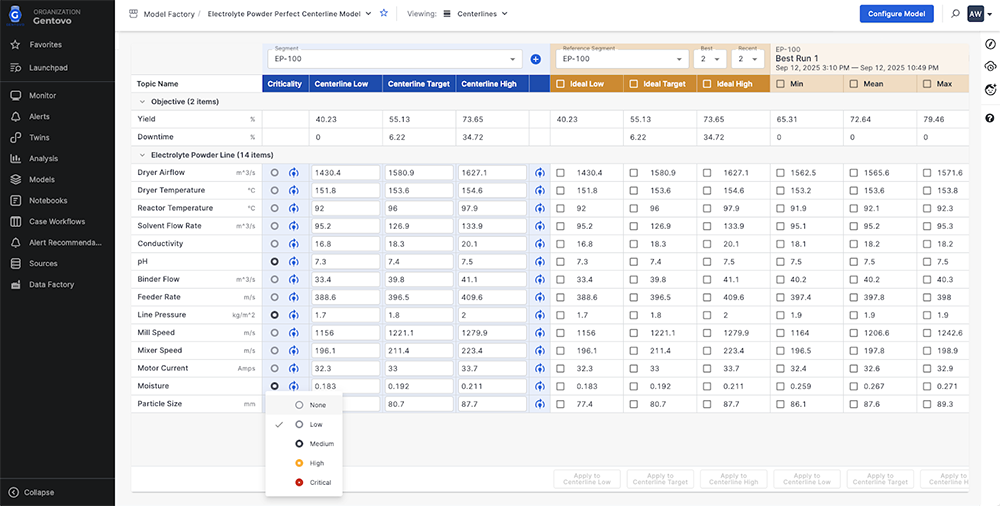 Figure 1: TwinThread’s Perfect Centerline automatically analyzes results across many batch runs of the same type, providing optimal equipment settings for each.
Industrial AI is particularly valuable in the following scenarios.
Setting the best-known startup conditions
Industrial AI can recommend startup setpoints for a given product and operating context based on historical performance. This transforms operator experience into repeatable starting conditions that can be governed within recipes and workflows.
The goal is simple: start closer to the target so fewer corrections are needed, reducing variability and improving predictability. These recommendations must operate within approved ranges and include clear ownership and approval processes to maintain control.
Shortening stabilization time with in-run recommendations
Even with strong initial conditions, processes often drift early in a run. In-run recommendations identify which adjustments historically brought the process into control under similar conditions, providing consistency. By reducing large corrective actions, teams can shorten time-to-spec and minimize scrap while making outcomes more predictable.
This approach only works when recommendations are specific and actionable. Systems that generate frequent, non-actionable signals quickly become noise.
Creating a traceable record for learning and troubleshooting
Consistent data capture is essential for continuous improvement. Recommendations, operator actions, applied setpoints and outcomes should be recorded with sufficient context.
This creates a digital record that explains why a changeover performed well or poorly, and it also spotlights causes, such as whether startup conditions differed, whether recommendations were followed, and what constraints were present. Over time, this reinforces consistency and enables more predictable performance.
Role-based execution and evidence from production deployments
Industrial AI does not replace teams, but strengthens them. It empowers engineers to validate recommended conditions, maintain optimal settings and troubleshoot anomalies so operators can execute changeovers consistently and provide feedback for improving workflows.
This creates a system where execution becomes more consistent and performance more predictable, while also revealing new opportunities for process improvement. Results vary by industry, yet production deployments regularly demonstrate measurable improvements in process stability and operational efficiency.
In a recent example, a global paper and packaging manufacturer aimed to reduce run-to-run variability created by regular product changeovers. While baseline operating ranges were defined, variability between runs continued to impact overall performance and consistency.
After implementing an industrial AI-assisted approach, the system provided ideal run conditions by product, along with automated alerting (Figure 2).
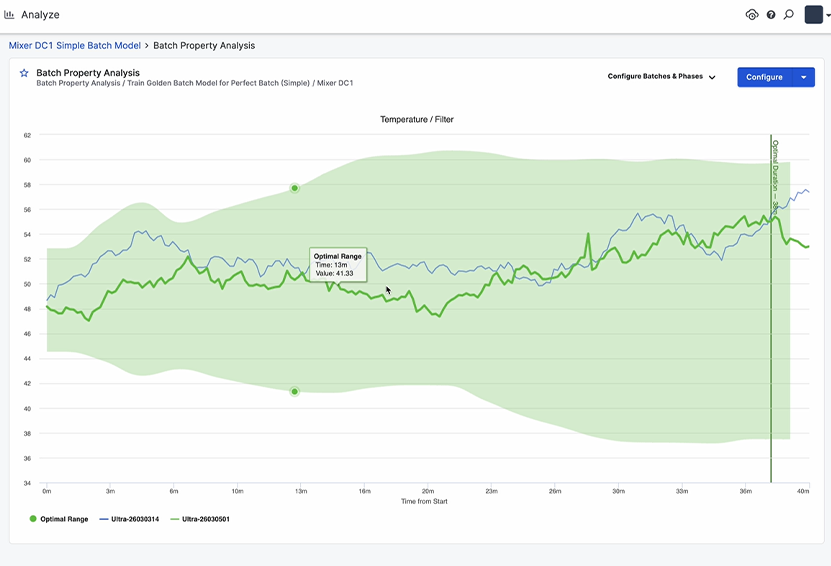 Figure 2: A global paper and packaging manufacturer used TwinThread’s Perfect Batch, an industrial AI-assisted analytics application, to improve process stability by 50% and achieve greater changeover consistency, enhancing efficiency.
The approach delivered a 50% increase in process stability, effectively codifying the best run as the standard for every shift. Operators and engineers remained actively involved, with the ability to validate and override automated setpoints, ensuring both control and trust in the system.
Across similar deployments, organizations report improved stability, more consistent execution, stronger knowledge capture and a solid foundation for continuous improvement.
The real opportunity and the right partner
While changeovers are often treated as a speed problem, the bigger opportunity lies in reducing variability, reaching stable startup and predictable in-spec production. With a strong digital foundation, embedded industrial AI and the right partner to support execution, manufacturers are driving more consistent changeovers and higher operational performance.
All figures courtesy of TwinThread