Artificial intelligence is rapidly reshaping industrial production, from semiconductor fabrication to advanced manufacturing and large-scale digital operations. As AI-driven compute becomes foundational to performance, a less visible constraint is emerging as critical to operations: thermal infrastructure. The heat these workloads generate — with rack densities now climbing into triple-digit kilowatts — is unlike anything industrial facilities have had to manage before.
Modern high-performance computing environments routinely exceed rack power densities of 120 kW, with expectations continuing to rise as AI workloads scale. At these levels, traditional air-cooling systems, long the backbone of industrial and data center environments, are reaching physical and operational limits. In environments where uptime, precision and throughput directly determine output quality, cooling is no longer a supporting utility. It is becoming a defining design constraint for the facility.
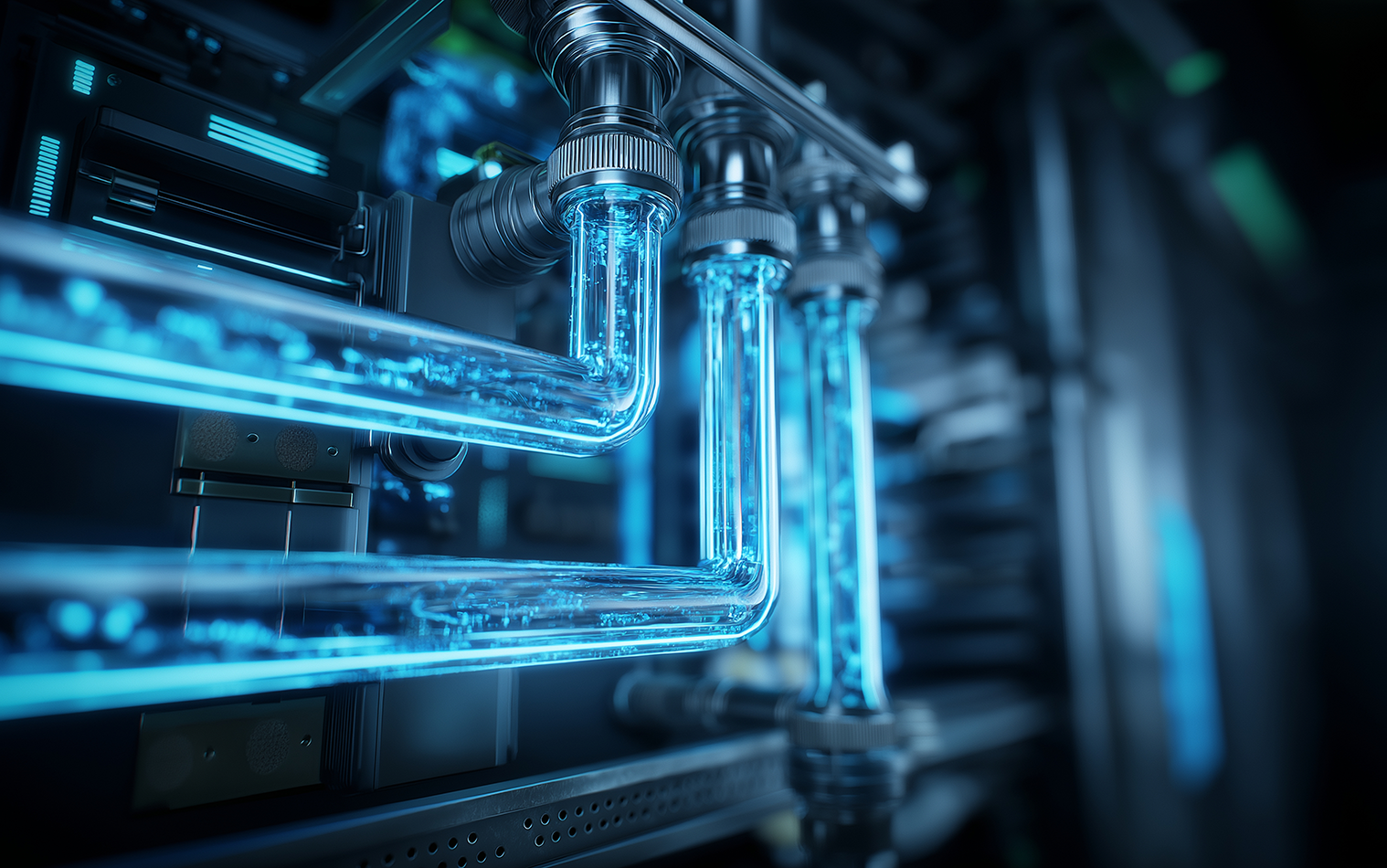
This shift is driving rapid adoption of liquid cooling across high-density manufacturing ecosystems. By transferring heat at the chip level, roughly 1,000 times more effectively than air, liquid cooling enables thermal strategies aligned with AI-scale compute demands. These liquid and hybrid architectures are transitioning from specialized deployments to mainstream design options.
However, adopting these technologies is not simply a matter of substitution. It introduces a broader operational challenge: how to deploy advanced thermal systems while maintaining production resilience, workforce readiness, resource efficiency and long-term scalability.
Designing for extreme density
AI workloads differ fundamentally from traditional compute patterns. They are highly dynamic and can spike unpredictably to multi-megawatt levels across clusters of racks. This variability places significant stress on thermal systems, which must respond in real time without destabilizing production environments.
To address these demands, operators are increasingly implementing liquid and hybrid cooling architectures. Direct-to-chip cooling delivers targeted heat removal at the source, while rear-door heat exchangers provide rack-level thermal management without relying solely on facility air movement. Together, these systems enable higher compute density within constrained physical footprints, making them essential for next-generation manufacturing environments.
Managing operational complexity
While liquid cooling improves thermal performance, it also increases system complexity. Cooling infrastructure is now tightly integrated with IT workloads and facility systems, requiring coordinated control across mechanical, electrical and computational domains.
This convergence changes operational requirements. Coolant distribution systems, leak detection and integrated monitoring platforms introduce new maintenance practices and more sophisticated control dependencies. Facilities teams must develop familiarity with fluid dynamics and system integration, while IT teams must incorporate thermal behavior into workload planning and capacity management. As a result, cross-functional training and shared operational models are becoming essential for reliable large-scale deployment.
Balancing sustainability and resource constraints
Sustainability is also reshaping cooling strategy decisions. Liquid cooling can significantly improve energy efficiency at the chip level, but it introduces new considerations around water use, system design and lifecycle impact. Operators are increasingly evaluating performance using Power Usage Effectiveness (PUE), Water Usage Effectiveness (WUE) and, increasingly, Carbon Usage Effectiveness (CUE), rather than relying on a single metric. This combined view highlights trade-offs between energy consumption, water availability and environmental conditions across different geographies and facility types.
In some deployments, closed-loop or water-free systems may be preferred. In others, hybrid configurations offer the best balance of efficiency, scalability and resource optimization. The key decision factor is no longer standardization on a single approach, but alignment with workload density, infrastructure constraints and sustainability targets.
Overcoming adoption barriers
Despite strong momentum, several barriers continue to slow broader adoption of liquid cooling in industrial environments. These include infrastructure redesign requirements, commissioning complexity, interoperability challenges between vendors and a shortage of trained personnel.
To reduce these barriers, the industry is increasingly adopting validated reference architectures developed collaboratively across chip manufacturers, server providers and infrastructure vendors. These standardized designs improve interoperability, reduce engineering uncertainty and shorten deployment timelines, enabling organizations to move from pilot projects to scalable production environments more efficiently.
Preparing for future operations
As thermal systems become more integrated with compute infrastructure, monitoring and predictive maintenance are becoming essential capabilities. Condition-based maintenance, enabled by real-time telemetry from sensors and control systems, is shifting from an advanced capability to a baseline requirement.
This evolution reflects a broader transformation in industrial operations. Cooling has shifted from a passive facility function to an active component of operational intelligence that directly influences system reliability and production performance.
Organizations that invest early in integrated thermal strategies, workforce development and predictive analytics will be better positioned to support the next wave of AI-driven industrial growth. Ultimately, cooling the AI era is not just about managing heat. It is about enabling scalable, resilient high-density manufacturing systems.