



As artificial intelligence (AI) software applications become more prevalent, the need for high-performance computing (HPC) facilities — and the energy infrastructure that powers them — is rapidly expanding. This shift is changing the way that owners; engineering, procurement and construction firms (EPCs); and design engineers are evaluating instrumentation.
To meet high-density IT equipment performance needs, these hyperscale facilities are transitioning away from air-cooled server rooms to liquid-cooled environments, requiring accurate and reliable measurement of flow, pressure, temperature and water/coolant quality. Instrumentation in these settings must also support fast commissioning, precise cooling loop control, operational confidence at scale and high efficiency — with the latter extremely important because the energy needed for cooling is the largest operating expense for these facilities.
The need for efficient and reliable data center utilities
The massive takeoff of AI considerably altered the trajectory of data center growth, requiring a heavy focus on utility management (Figure 1). Data centers are no longer simply scaling capacity linearly as they did during the early 2000s cloud hosting boom; the industry is now confronting unprecedented server rack and HPC chip advancements, with a correspondingly large increase in equipment heat generation. Simultaneously, project schedules have become more aggressive throughout the industry.
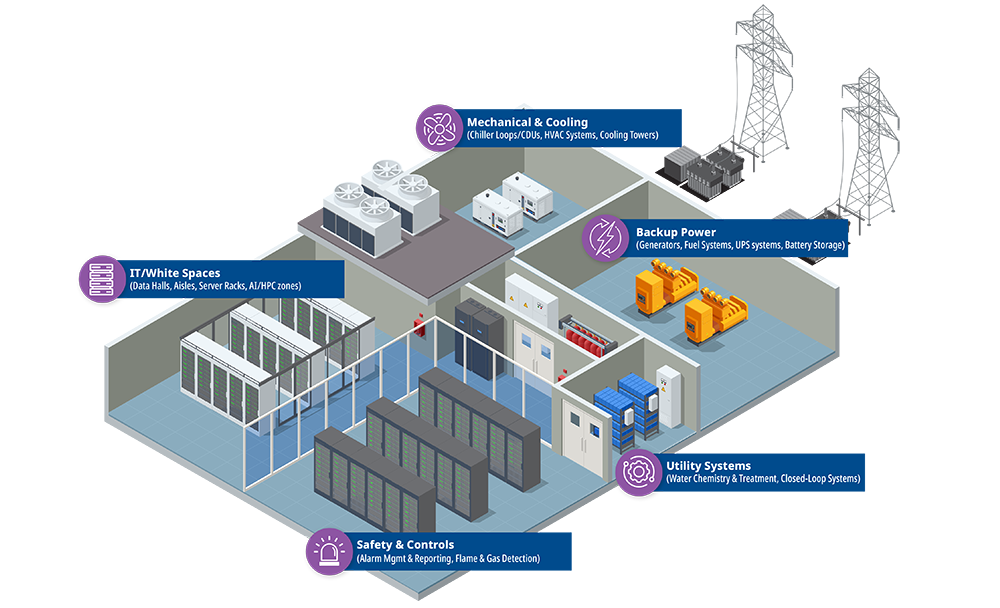
Figure 1: Successful data center deployment relies heavily on efficient utility management to meet uptime requirements, protect IT equipment and minimize operational costs.
These advanced chips and AI workloads are pushing rack power densities well beyond traditional limits and placing immense strain on back-end cooling systems. As a result, utility infrastructure that once operated quietly in the background can now become a limiting factor in facility startup speed, operating efficiency and baseline uptime.
Cooling performance depends on trusted data
To manage these rising heat densities, the industry is rapidly rolling out advanced liquid-cooling systems with operational stability entirely dependent on accurate and continuous data. Facility uptime requirements necessitate granular visibility into critical metrics, like fluid flow rates, system pressure, temperatures and water chemistry. In response, many operators are standardizing on proven measurement technologies, such as Rosemount magnetic flow meters, pressure and temperature transmitters and analytical sensors to maintain confidence in cooling loop performance.
In the event of inconsistent measurement or drift over time, engineering teams are forced to build buffers into their systems, such as large equipment temperature safety margins, which degrade operational efficiency and inflate costs. Additionally, unreliable instrumentation consumes valuable trained technician time, requiring frequent device calibration, sensor accuracy validation and instrumentation troubleshooting, taking away from hours that could be better spent balancing cooling loops and optimizing system performance.
Why the right instrumentation matters
Meeting high-availability service-level agreements requires industrial-grade instrumentation in modern data center environments to ensure uptime and protect expensive IT equipment. One of the key differentiators between industrial-grade and commercial grade instruments is the former’s much higher mean time between failure (MTBF), better suited for the critical environments in which they operate (Figure 2).
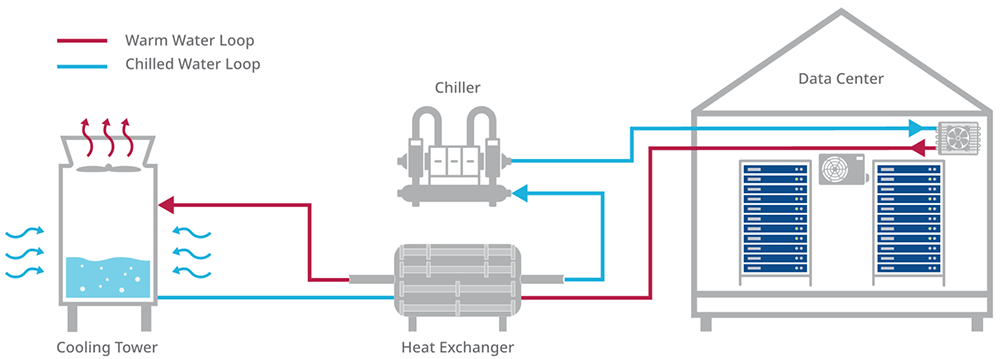 Figure 2: Cooling loop efficiency and server equipment protection depends on accurate instrumentation for process measurement.
For example, flow meters and temperature transmitters in primary facility cooling loops must be able to withstand constant vibration from large pumps, electromagnetic interference (EMI) from power distribution, and varying ambient temperatures to maintain stable operations around the clock. Meeting these demands often requires industrial-grade measurement instrumentation, including Rosemount temperature, pressure, flow and level devices built to perform reliably under these conditions. The instrumentation choices made during the early stages of project design and construction have long-lasting operational consequences for site personnel.
Industrial-grade, reliable measurement devices also significantly improve closed-loop control performance and support tighter operating temperature bands, while alleviating reactive maintenance and nuisance alarms, along with disruptive future repair and retrofit work.
Operational benefits
Empowered by reliable components, data center stakeholders reap the following benefits:
- Increased commissioning speed: Accelerated loop tuning because engineering teams can trust the field data transmitted to host systems during commissioning and into the operational phase, decreasing time to get online and begin generating revenue.
- Improved operational efficiency: Precise instruments facilitate stable cooling chemistry, maximizing heat transfer and improving power usage effectiveness (PUE).
- More uptime: Real-time visibility provides anomaly detection, prompting plant personnel to address issues before they trigger thermal trips, preventing costly downtime. These continuous and reliable data feeds also form the foundational prerequisite for predictive maintenance.
- Sustainability: The tighter error-bands of accurate instruments support corporate sustainability objectives by reducing the energy and water required to run chiller and other related equipment.
- Standardization: A consistent portfolio of high-quality sensors empowers engineering teams to standardize mechanical designs, creating repeatable blueprints across multiple geographic regions.
Partner up to drive value
As the complexity and scale of AI data centers grow, operators and EPCs are looking beyond just hardware and technical specifications because they know that integration efforts go more smoothly with established supplier partnerships, providing comprehensive support that spans a facility’s lifecycle.
In addition to physical devices, leading instrumentation partners bring domain expertise to the table, helping stakeholders select the right components for every application. They also help standardize complex mechanical designs globally across facilities, while ensuring compliance with regulations that can vary regionally. Furthermore, the right partner helps integrate instrument technology into existing control architectures, such as supervisory control and data acquisition (SCADA) systems, data center infrastructure management (DCIM) systems, and the building management system (BMS). And crucially, these partnerships provide supply chain assurance and logistical agility that helps keep intense construction schedules on track.
Efficiency begins with measurement accuracy
In the AI and HPC age, data center reliability is defined by the quality of its utility infrastructure, which keeps the boundless rows of server equipment humming. By prioritizing industrial-grade instrumentation and working with the right supplier, industry participants can future-proof their facilities, ensuring that critical infrastructure supports demanding high-availability requirements.
All figures courtesy of Emerson