
In a steel mill in 2025, a hidden spindle shaft misalignment triggered an unplanned shutdown. Each idle hour burned $100,000 in lost production. That one incident illustrates a brutal fact. Modern plants can burn six figure sums for every hour of downtime.
Reactive maintenance fixes equipment after it breaks. Scheduled preventive checks often aren’t enough. Predictive maintenance (PdM) uses data to catch failures before they happen. Imagine 0.001 mm shifts or tiny wear gaps detected in time to fix a bearing or realign a shaft. This detection can save hours of emergency repair and production loss.
Displacement sensors are the unsung heroes here. These non-contact sensors measure micro scale motion and gaps with micron or even sub-micron precision. Laser triangulation, eddy current probes, capacitive gauges and ultrasonics work in harsh plant environments. Oil, dust and high heat challenge them. They see what other instruments cannot.
By continuously streaming real time displacement data to Industrial Internet of Things (IIoT) systems, they alert us to anomalies long before a breakdown.
Studies show PdM cuts maintenance costs 18% to 25% and unplanned downtime by 30% to 50% versus reactive strategies.
How displacement sensors work in PdM
Displacement sensors measure physical position changes without touching the target. Laser triangulation sensors shine an infrared beam on a target. They detect the reflected spot on a linear photodiode. Changes in angle reveal distance shifts. These non-contact lasers resolve micron level motion. Some top models boast repeatability of 0.005 µm. They sample at up to 400 kHz. Others yield ±3 µm accuracy over a 20 to 1,000 mm range. In PdM, a laser sensor trained on a shaft or bearing surface continuously reports its position. If wear or vibration causes even tiny axial or radial movement, the measured beam position moves. The sensor’s analog output streams over IIoT links such as OPC UA or MQTT to a controller. Any deviation beyond a threshold instantly flags an alert.
Eddy current sensors use electromagnetic induction. A coil in the sensor head generates a high frequency magnetic field. A metal target moving closer induces eddy currents. These alter the coil’s impedance. The sensor’s electronics convert that change into a voltage proportional to distance. Eddy probes excel on rotating shafts and bearings up to 500°C (932°F). They require a conductive target. They offer high accuracy and fast response at kHz rates.
Eddy probes and optical lasers both deliver high accuracy and fast response. Ultrasonic sensors trade some precision for longer range. Eddy sensors handle dust, oil and vibration well. Many turbine shafts use dual eddy probes. They generate an orbit plot of shaft motion. One probe tracks vertical offset; one tracks horizontally. This enables precise misalignment detection.
Capacitive displacement sensors form a capacitor with the target. As an object moves, the air gap changes. Capacitance shifts too. By measuring that capacitance shift, the sensor infers distance with extreme precision. Sub-micron levels are possible. These work best on smooth conductive targets or layered dielectrics like silicon wafer thickness. They’re popular in semiconductor fabs and machining metrology. Capacitive probes are very short range. Often a few millimeters. They’re sensitive to stray fields.
Ultrasonic displacement sensors emit high frequency sound bursts. They measure echo time of flight. They tolerate dirt and provide longer ranges, up to meters. They typically resolve only tens of microns at best. Use cases include overflow or level sensing. However, not a fine vibration detection. In a PdM system, these sensors connect to programmable logic controllers (PLCs) or edge gateways — by either hard-wired or wireless. The raw signals are analog or digital. They’re often sampled at 1 kHz or higher. This captures vibrations and transient shifts.
Edge processors apply fast Fourier transform (FFT) or filters to extract vibration frequencies. The data goes via OPC UA, MQTT or similar IIoT protocols to a central historian or cloud. Analytics and dashboards track the displacement time series. One simple diagram shows a laser beam pointing at a shaft. In normal operation the return spot is steady. If the shaft vibrates or sags, the spot oscillates. Software flags an anomaly. Modern sensor hardware streams data continuously. A 392 kHz laser sensor tags micrometer deflections 1,000 times per second. It feeds an IoT database for real-time health monitoring.
Key applications in industry
Rotating machinery such as turbines, motors and pumps. This is the classic application for displacement probes. Eddy probes or laser sensors are mounted around shafts. They watch for axial or radial shaft movement. Even a 0.1 mm shaft orbit or axial shift signals imbalance, misalignment or bearing wear. In power plants and process plants, eddy current probes are standard for turbine rotor health. They’re called vibration proximity probes.
B&K’s case study shows a refinery pump setup. It used two radial accelerometers plus one axial displacement probe on the thrust bearing. That detected shaft creep from bearing wear. It happened long before a complete bearing failure or pump seal fire. Using displacement monitoring, the refinery eliminated fires. The system paid for itself in one year. Industry surveys show continuous displacement monitoring cuts failure rates by 30% to 40%, compared to sporadic checks. It extends overhaul intervals too. If sensors show everything within tolerance, a turbine runs longer between inspections. Siemens reports that some automotive assembly lines lose $2.3M per hour when they stop. High precision shaft monitoring avoids such multi-million-dollar losses.
Conveyor systems for belt drift and roller wear. In bulk handling plants and assembly lines, conveyor belts must stay aligned (Figure 1). Otherwise, they rub and tear. Laser or LiDAR sensors at belt edges measure lateral belt displacement. Belt wander shows up in real time. Even a few centimeters of drift can be corrected early.
 Figure 1: In bulk handling plants and assembly lines, conveyor belts must stay aligned. Otherwise, they rub and tear.
Ultra compact distance sensors watch roller deflection under load. A thinning roller or worn flat spot appears as vertical displacement changes. Plants reduce conveyor stoppages by monitoring these metrics. Facilities adding belt alignment sensors see mis-tracking incidents drop by 30% to 50%. Benchmarks vary by industry. If a roller grinds with excessive vibration, the displacement sensor’s output changes. It triggers maintenance before the belt tears or jams.
Presses and molds for tool deflection. In metal stamping, injection molding or plastics, precision tooling is vital. Displacement gauges watch critical gaps and plunger positions. A laser sensor checks if a stamping press slide is parallel to the die. A slight skew of tens of microns produces bad parts. In injection molding, capacitive sensors measure mold thickness or platen distance. They detect warpage or wear. When tool deflection exceeds spec, the system alarms. Part runs halt before scrap increases. In automotive assembly, one OEM saw stamping defects fall by 40%. It installed displacement sensors to track die wear in real time.
Bridges and civil structures for crack and shift monitoring. Displacement sensors live in structural health monitoring. Laser or capacitive sensors measure crack openings or joint displacements on bridges and towers. A 0.1 mm opening from thermal cycling flags early. Tilt sensors and long-range lasers watch for bending or settling in beams. Maintenance teams schedule repairs long before failure. This approach works on concrete dams and large chimneys.
Non-contact capacitive sensors monitor millimeter scale movements in real time. They prevent catastrophic collapse. Across all these cases, the payoff is clear. Plants that adopt displacement-based PdM report far fewer unplanned outages (Figure 2). Automotive studies cite a 40% reduction in line stops. This came after real-time sensor monitoring including displacement probes was deployed. Precision is key in the previous examples. Displacement sensors resolve shifts down to 0.01 mm or less. Trouble is detected long before a 1 mm fault. Micron precision monitoring lets maintenance teams schedule repairs based on actual wear — Not calendar or guesswork.
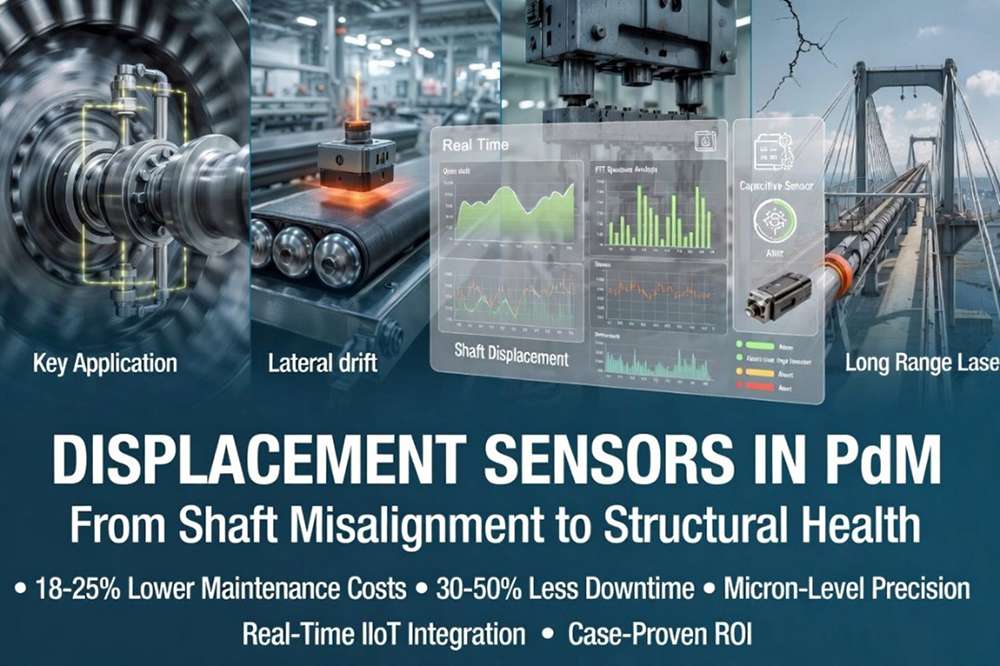 Figure 2: Implementing displacement sensors in a PdM setup follows a multi-step process.
Integration with PdM systems
Sensor selection comes first. Pick the right sensor type and specs. Consider range, resolution, target material and environment. A laser triangulation sensor suits long range up to 1 m. It offers ±1 µm repeatability. It needs a clear line of sight. They are rated to 50°C (122°F) or use water cooled heads. An eddy current probe fits hot oily turbine shafts under 500°C (932°F). Gap range is short at 0.2 to 5 mm. Capacitive sensors need conductive targets and constant permittivity. Ultrasonic sensors need an acoustically reflective target. They are several meters in the air. Ensure industrial ratings. Use IP67 or IP68 models for dust and oil ingress protection. Select explosion proof ATEX or IECEx versions for hazardous areas. Mount on sturdy supports or brackets. Avoid their own vibrations.
Mounting and wiring next. Position sensors close to the target. For shaft monitoring, use threaded mounting flanges or brackets bolted to bearing housings. Ensure rigid installation. Small looseness creates false readings. Route cables through metal conduits or armored tubing. In long range laser setups like wind turbines, wireless gateways work. LoRa or ZigBee transmit data back to a PC. Electrically ground the sensors properly. Avoid electrical noise.
Edge computing and preprocessing follow. An edge device like a PLC, industrial PC or gateway should be oriented near sensors. It handles real-time analysis. It collects high-rate data streams at 1 kHz to 10 kHz. They compute FFTs or filtering on the fly. An edge PLC computes the amplitude spectrum of shaft vibration. It watches key frequencies. Preprocessing saves network bandwidth. Not all raw samples go to the cloud. Extract displacement trends and spectral features locally. Use Kalman filters to smooth position signals or detect drift. Bandpass filters eliminate known harmonics or electrical noise.
Anomaly detection and ML come next. Add analytics or machine learning (ML). Simple rule-based scenarios set thresholds. Alarm if axial displacement exceeds 10% of normal clearance. Advanced methods use statistical or ML models. A running LSTM neural network learns normal vibration displacement patterns. It flags unusual deviations. One class SVM works too. Kalman filters predict expected values. They highlight outliers. Algorithms live on edge gateway or cloud server. They analyze incoming streams. Catch early wear signs: a slowly rising offset, an emerging 2nd harmonic in shaft motion or an unusual orbit shape.
Dashboard and alerts finish it. Connect sensors to monitoring software. Supervisory control and data acquisition (SCADA) or IoT dashboard work. OPC UA or MQTT maps each sensor tag to a process variable. Dashboards graph real-time displacement, FFT spectrums and trendlines. Set alerts. Email or SMS when axial displacement crosses 0.05 mm or vibration amplitude doubles in a bearing band. Teams see color coded status. Green, yellow or red for each sensor. This closes the loop. A laser sensor detecting anomalous shift notifies an engineer.
These steps turn raw micron level measurements into practical decisions. Choose the right sensor. Mount robustly. Preprocess at edge. Apply analytics. Issue alerts. Companies integrate displacement probes into full PdM systems.
Real-world case studies
Oil refinery pump monitoring. A North American refinery had recurring fires from seal leaks on solvent booster pumps. Traditional weekly checks missed frequent bearing faults. Engineers installed an online PdM system. Two accelerometers on pump bearings. One axial displacement probe was placed on the thrust bearing. The sensor measured the shaft axial position continuously. Lubrication faults reduced bearing support. The shaft began to creep. Sensor detected micrometer scale shift instantly. The monitoring unit’s voting logic shut down the pump. This prevented seal opening and fire. The solution caught faults with a six-hour lead time. None before. The system paid for itself in under a year. The refinery reports a 20% savings in pump maintenance costs. Far fewer emergencies since adopting the displacement sensor system.
Wind turbine blade deflection. A wind farm deployed a non-contact laser sensor inside a turbine tower. It watched blade tips. Blades spin under aerodynamic loads. They bend slightly. The laser tracked blade tip position in real time. Ice buildup, bolt loosening or material delamination altered orbit. Bachmann Monitoring’s cantilever sensor measures strain with a ±0.5 µm tolerance. Two sensors per blade created an orbit signature. Early frost or fatigue distorted orbit and triggered maintenance. Numeric ROI data is proprietary. Operators noted longer blade life. Repaired at first micro cracking sign. Not macro failure. Asset life extended 25% over baseline 15 to 20 years. This avoided full blade replacements. [run-in head] Pharmaceutical filling line. High-speed vial filling needs precision. Slight pump or valve vibrations mis-doses drugs. One pharma plant installed laser displacement sensors on filler pumps and rotary indexing table shafts. Over six months, sensors caught bearing wear and motor imbalance shifts. Before jam or dosing error. The result was zero unplanned downtime with scheduled stops only for changeovers. Quality metrics improved. Fill volume variance dropped 15%. Misalignment errors were caught early. Matches field experience with precision processes. Continuous PdM using displacement sensors scheduled based on real deterioration — not spare parts stock.
Challenges and solutions
Displacement sensor PdM isn’t plug and play. Engineers overcome hurdles. Noise and interference challenges were addressed first. Laser sensors reject ambient light. Eddy probes see electrical noise. Fix with signal filters and shielding. Digital low pass or band stop filters on edge compute common mode rejection. Hum from the 60 Hz mains require a notch filter to compensate. Modern heads have built in filtering. Vibration isolation key. Mount sensor on stable bracket. Separate from machine vibration.
Calibration drift creeps over time — especially with capacitive probes. The remedy is automated with zero routines. Trigger zero reference at power up or per shift. Use known mechanical stops or fixed targets. In continuous systems, auto zero during idle periods or between batches. High precision lasers include temperature compensation. Avoid thermal drift.
Scalability concerns large plants because dozens of sensors are needed. Hardwiring to PLCs is expensive. Wireless networks like Wireless HART or ISA100 deploy many at lower cost and low cabling overhead. Mesh networks route around failures and send data to the gateway. For remote assets like outdoor conveyors, 5G cellular and IoT SIMs stream data. Thoughtful choice solves issues. Rugged IP67 self-calibrating models are immune to EMI. Use good wiring or wireless design. Noisy floors yield clean actionable data.
Future trends
Smart PdM systems leverage AI and connectivity ahead. AI enhanced edge analytics are coming. A mini-computer on a sensor network can run a tiny neural network to recognize subtle patterns or bearing fault signatures from displacement time series, then alerts cloud only when needed.
Combine displacement probes with vibration accelerometers, acoustic emissions and temperature sensors. Fusing laser gap sensor and vibration transducer improves diagnosis. Changing blade orbit plus rising bearing temperature pinpoints failure.
In addition, 5G networks can drive near-instant monitoring with sub-millisecond latency by polling sensors thousands of times per second. They broadcast anomalies instantly. Active control happens. Shut the valve or adjust alignment on the factory floor. Hybrid wired or wireless architectures.
Final thoughts
Predictive maintenance using displacement sensors multiplies ROI through downtime avoidance. When tiny positional changes are caught before failure, plants avoid emergency repairs, which are four to five times more expensive than planned fixes. Industry reports find 95% of PdM adopters see positive ROI. Many pay for themselves in under a year, which translates to five to 10 times on return. Downtime costs and extended asset life considered. Displacement sensors provide micron level insight for precision machinery and structure health. The bottom line is clear for refineries, turbines or assembly lines. Audit critical equipment with right displacement sensors. Slash unplanned outages up to 50%. For plants halted by microns of misalignment, that’s an easy sell.