




Today’s digital trends are supported by the rapid rise of artificial intelligence (AI) and high-performance computing (HPC), which has placed unprecedented demands on data centers. These facilities house the critical IT infrastructure that stores, processes and manages the immense flow of the world’s information. Once relegated to corporate office basements, data centers have evolved into specialized and sprawling campuses that are vital to the global economy, and 24/7 uptime is non-negotiable.
As facilities densify to accommodate these increased AI and HPC workloads, cooling system efficiency and reliability form the bedrock for scaling effectively. Efficiency is critical because the energy consumed by cooling systems constitutes the largest single operating expense for data centers, and reliability is a must because downtime is unacceptable. As with all industrial processes, the efficiency and reliability of these cooling systems is dependent on the quality of the data that drives them.
Without precise and reliable process value measurement, especially for flow and temperature, data centers risk damage to the powerful yet fragile chips providing the computing power demanded by their customers. To meet these performance demands for digital reliability, data center operators are increasingly enhancing cooling infrastructure with advanced, non-intrusive instrumentation solutions that prioritize accuracy, provide redundancy and minimize maintenance requirements.
Conventional data center application challenges
Despite the sophistication of the servers they condition, the cooling loops in many data centers are often insufficiently planned during construction. Particularly before the recent AI surge, greenfield data center project standards were often dictated by adherence to restrictive construction budgets that only allowed purchasing commercial-grade sensors.
However, these inferior components inevitably degraded quickly, with mechanical elements wearing out and calibration drifting. The corners cut with less reliable hardware quickly escalated operational expenditures over a system's lifecycle as maintenance teams struggled with inaccurate data, frequent replacements, and unplanned downtime. These issues become even more pronounced in modern liquid cooling environments, which are much more complex and have largely replaced air cooling systems.
Unlike a chemical plant or refinery, most data center decision makers are more familiar with traditional IT skillsets and methodologies, not process control. The lack of specialized process engineering staff further compounds process upsets because when issues arise, specialists must be brought in to troubleshoot, calibrate and configure instruments, and reset utility processes into operation.
Data center operators cannot afford downtime, and they therefore need instrumentation that works reliably with minimal intervention required. Because constant uptime is critical to the cloud, AI, and HPC services that data centers provide, triple redundant flow and temperature measurement in the cooling loops is frequently required to assure stability of the sensitive and powerful chips being cooled (Figure 1).
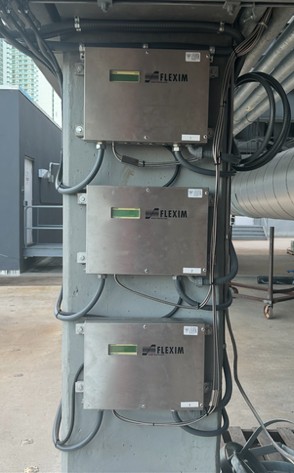
Figure 1: Emerson’s Flexim™ non-intrusive temperature and flow instrument design can be leveraged to provide triple redundancy on critical lines, ensuring continuous process and measurement integrity.
Conventional intrusive flow and temperature sensors require pipe penetration, which introduces several potential leak points. Additionally, sensor failures often require interrupting the process for repair or replacement. Fortunately, high-accuracy, non-intrusive instruments provide much more flexible solutions and alleviate the risk of downtime during maintenance.
Precision sans intrusion
Clamp-on flow and temperature sensors address these and other pain points by measuring processes using advanced transit-time ultrasonic technology, without requiring contact with the process media. As their name suggests, these non-intrusive meters clamp onto the outside of pipelines, measuring flow through the pipe walls without any pressure drop or risk of leakage. This provides the following benefits in data center cooling loops:
- Versatility and inventory reduction: A typical data center contains numerous different pipe diameters. Supporting a vast array of different pipe sizes with conventional mechanical meters requires a large inventory of varied spare parts. However, facilities might need to keep just one or two spare clamp-on flow instruments on hand to cover the entire gamut of needs.
- Triple redundancy and voting logic: Leading clamp-on flow meters, such as the Emerson’s Flexim FLUXUS line, provide multiple measurement channels from the transmitter to simplify communicating redundant measurements from nearby field locations to a host system. For example, a triple redundant setup typically contains transducers mounted at different angles of rotation on a small stretch of the same pipeline to account for potentially different flow profiles. In either the shared transmitter or controller programming, this type of system can detect if any meter deviates significantly from the others so it can be flagged for service and removed from the measurement calculation that controls server room cooling.
- Non-intrusive retrofit and maintenance: One of the defining advantages of clamp-on sensors is the ability to add them to any pipe at any time without a shutdown. The installation procedure is the same on any pipe size, for example from a 3-inch sub-distribution line to a 24-inch main header: clamp, couple and measure. This makes it easy to add measurement points to existing loops wherever desired, or to validate existing instruments in a process.
- Installation innovation: To further simplify deployment, leading suppliers provide track (Figure 2) and permalock (Figure 3) mounting options. These ensure that transducers are rigidly fixed to the pipe to maintain optimal acoustic coupling, even in settings with high vibration.
- Measurement accuracy: While some surface-mounted temperature sensors do not match the accuracy of probes in contact with the process directly or via a thermowell, this is not true of leading non-invasive instruments, as proven through rigorous testing in varied operating environments at different temperatures (Figure 4). By matching clamp-on resistance temperature detectors (RTDs) with proper thermal coupling and insulation, facilities can achieve accuracy comparable to conventional intrusive methods, without the need to weld thermowells into the pipe.
- Low-flow detection: For safety and backup systems, such as fuel-oil flow for generators, non-intrusive flow switches can detect low flow conditions in tight spaces with limited straight pipe runs. This helps ensure continuous flow to critical equipment, without requiring complex piping modifications.
- Reduced planning and engineering effort: Clamp-on flow meters require significantly less space for installation because they eliminate the need for bypasses or isolation valves typically associated with inline meters. This simplifies system design, reduces mechanical complexity and facilitates faster project realization.
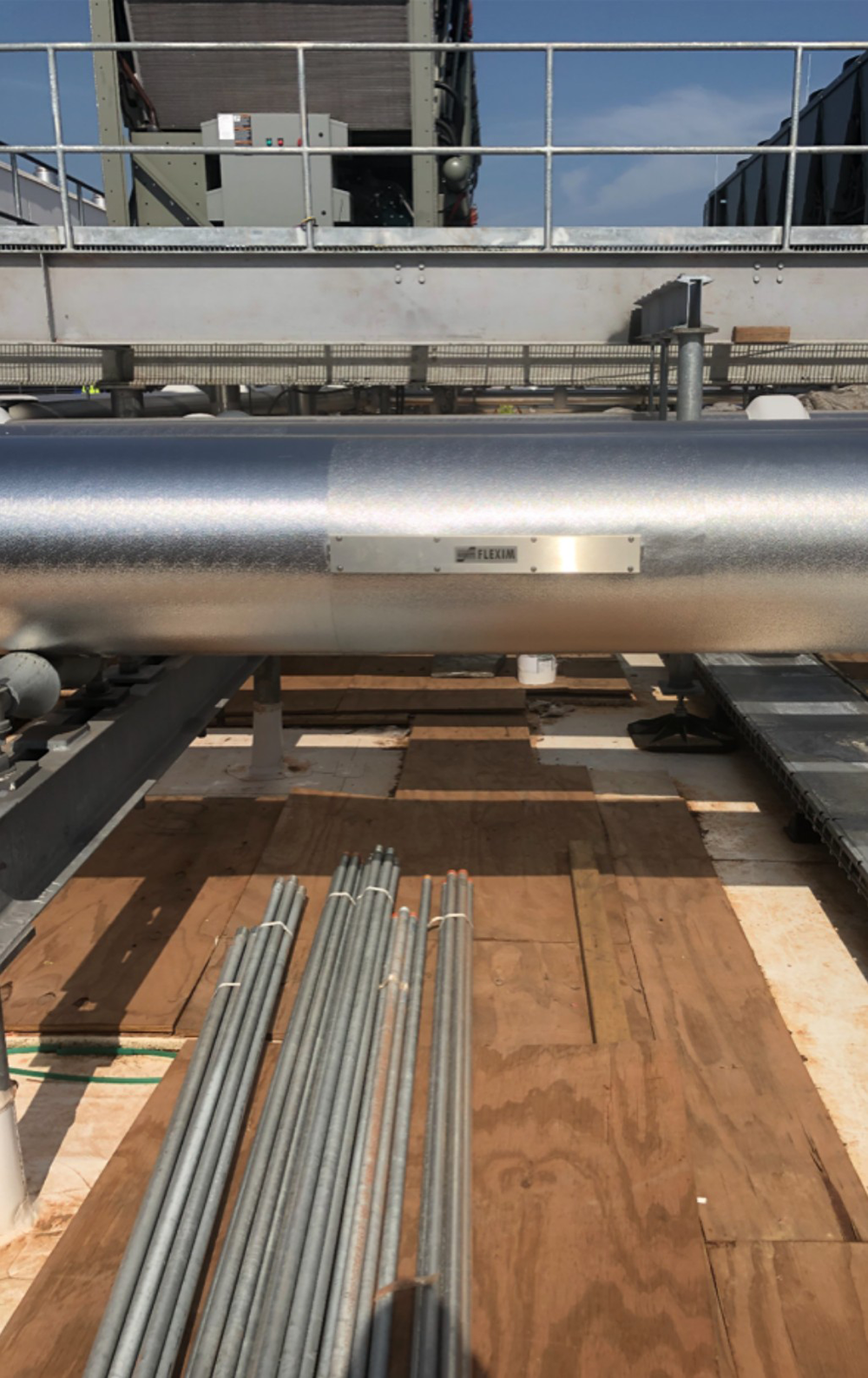 Figure 2: Emerson’s Flexim Track Mount system ensures rigid and precise transducer alignment for consistent measurement accuracy.
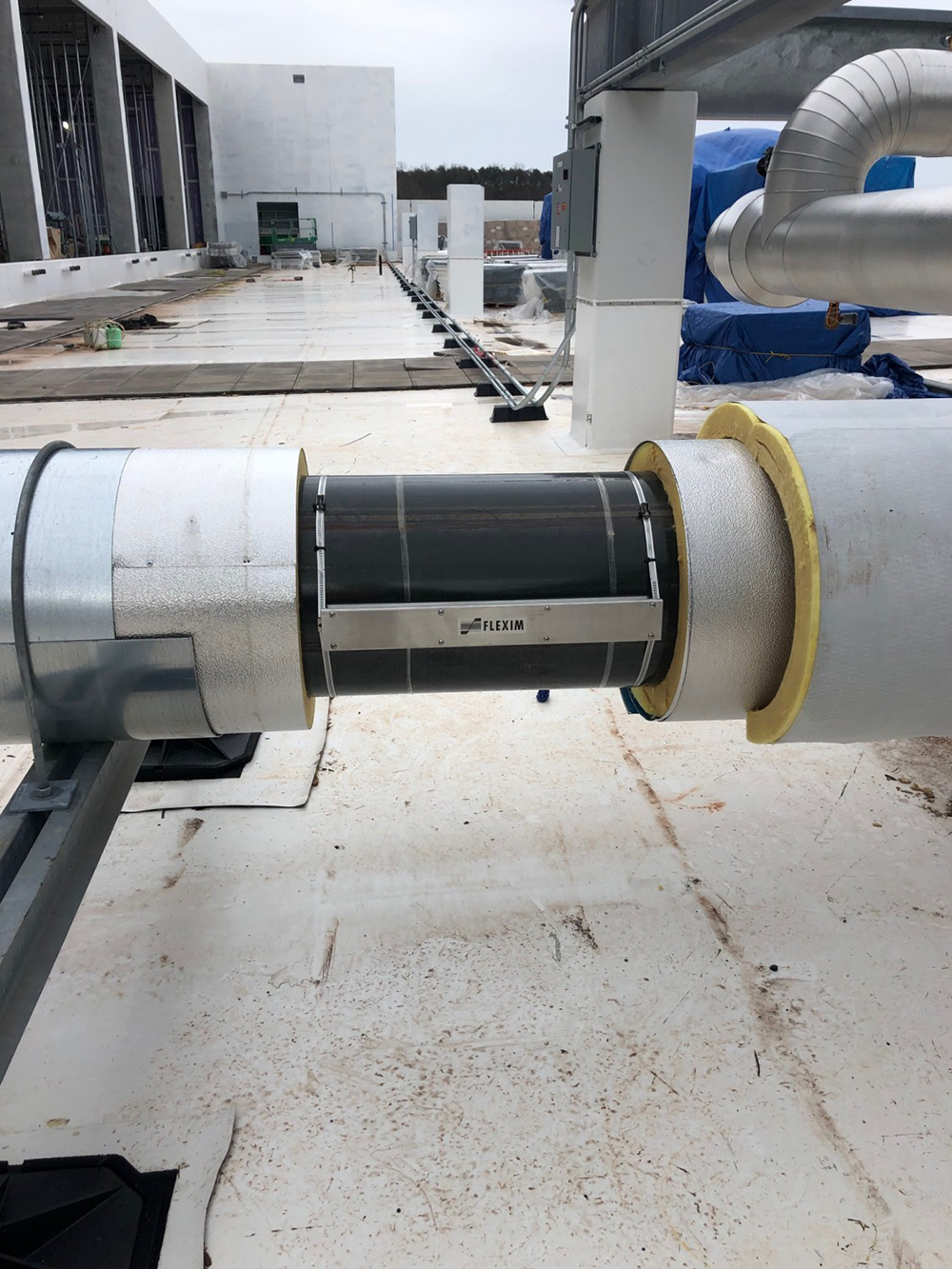 Figure 3: Permalock tracks installed prior to insulation, securing the measurement point for the life of the facility.
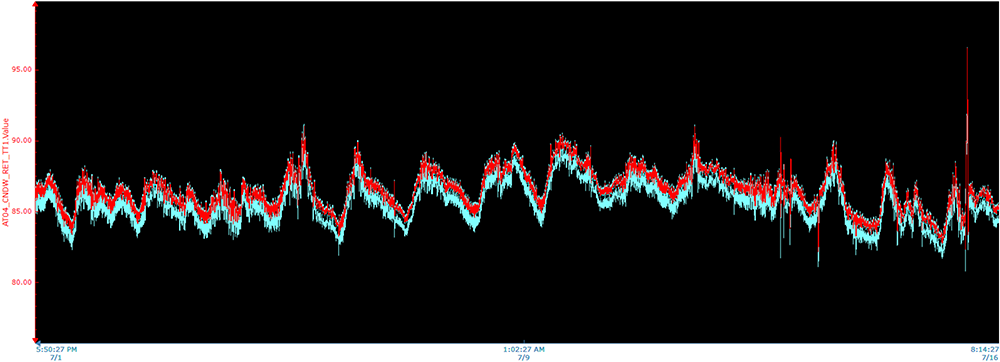 Figure 4: Comparative testing demonstrates the temperature measurement of a Flexim FLUXUS F731TE BTU clamp-on instrument (orange) tracking seamlessly with a thermowell-situated RTD (light blue) over a two-week span, validating its accuracy. The F731TE provides flow, temperature, and thermal energy measurements from a single device.
Results: Calming triple-redundant cooling loop chaos
A major North American data center was experiencing challenges with its triple redundant mechanical flow meter setup on a critical chilled water line. Instead of providing measurement confidence, the flow meters produced vastly different readings, creating chaos: one read ~750 gallons per minute (gpm), another ~950 gpm, and the third ~1150 gpm.
The control system was programmed to average these readings, but because the meters were all so far out of alignment, the averaging calculation was meaningless. Intensifying matters, the system lacked the logic to omit zero readings, so when a meter failed completely, it dragged the average down significantly, causing the chillers to ramp up aggressively to compensate for a false positive low flow condition.
An expert instrumentation team was brought in to investigate, and they installed a Flexim FLUXUS F731WD non-intrusive ultrasonic flow meter on the same line to provide a reference point. This meter revealed that the actual flow rate in the cooling loop was closer to 1450 gpm, significantly higher than any of the mechanical meters were registering, meaning that the facility was vastly over-pumping and over-cooling due to inaccurate measurement data. The team decided to replace all potentially failing flow meters throughout the facility with Flexim surface-mount, non-intrusive instruments to improve process efficiency.
On the critical cooling line, the three new meters read within a few gallons of each other, restoring faith in the triple redundancy scheme. Additionally, the efficiency gains from accurate flow data amounted to energy savings of nearly $100,000 per year on this line alone.
The facility also decided to replace its inline RTDs with Flexim surface-mount RTDs, which matched the reaction time and accuracy of the prior insertion models with vastly simplified maintenance and calibration requirements, while also eliminating the risk of pipe leaks around thermowells.
Future-proof data center utilities with accurate measurement
As the demand placed on data centers for computing power continues to accelerate, the physical infrastructure supporting high-performance chips must also evolve. Data centers cannot afford the maintenance liability and inaccuracy of commercial grade instrumentation, so many are pivoting to clamp-on surface-mount options, which help verify cooling delivery, optimize energy consumption, and vastly improve uptime assurance.
Non-intrusive and drift-averse flow and thermal energy measurement instrumentation empowers data center operators to proactively optimize operation and maintenance procedures, abandoning outdated reactive methodologies.
When it comes to critical chilled water supply, condenser loops and backup fuel systems, data center operators and specifiers should seek out leading instrumentation suppliers that understand the stakes of the industry, comparable to many large process plants. By investing in high-performance and reliable instrumentation, facilities can secure the operational stability and efficiency required to meet the HPC demands, which only promise to increase over time.
All figures courtesy of Emerson and Tri-T Energy Solutions