
Many industrial minerals are easier to transport and purify when mixed with water to create a slurry, solving many conveyance problems. However, slurries create a new set of challenges due to their abrasive nature. Solid particles in slurries tend to wear out the inside of pipes, pumps, valves and other points of contact, including parts of flow meters that contact the process media. In this article, we will concentrate on the measurement of slurry flows for the production of silica sand, which is used in industrial mineral chemical applications and foundries.
Common mineral processing techniques and technologies are depicted in Figure 1, with some of the steps requiring mixing silica raw sand with water to create a slurry. The steps call for optimized slurry density (water/solids proportion) to support the desired slurry properties. Consequently, at various points, both the slurry flow and the percent solids must be measured. This requires specialized flow meters to measure the density of silica sand slurry, ideally without process pipe penetrations or production interruptions during installation.
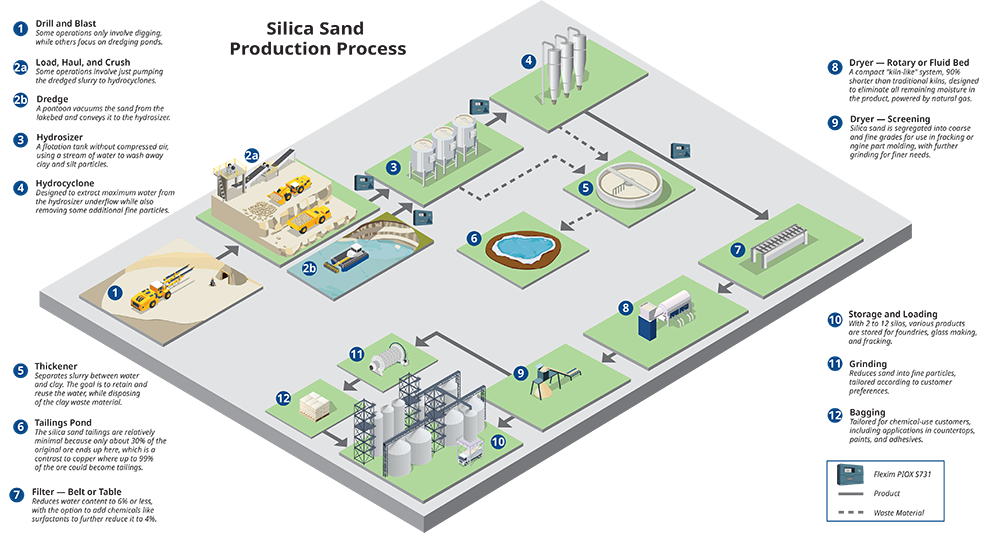 Figure 1: Many mineral processing steps require measurement of slurry flows, creating a variety of challenges.
Before the flow and density measurement technology is discussed, let’s look at the challenges faced by operating companies in the silica sand production space.
Silica sand production
Silica sand, also known as quartz sand, is a natural form of silicon dioxide (SiO2) with small amounts of various impurities. Common beach sand usually has a significant proportion of SiO2, but it is contaminated with higher levels of iron, carbonate, potassium and other trace minerals.
Silica sand is valued for three primary characteristics: hardness, high melting point and chemical inertness. This gives it a wide range of industrial uses, including:
- Oil & gas wells (frac sand).
- Glass making and ceramics.
- Foundry mold making.
- Filler and aggregate in construction.
- Filler product in paints, coatings and adhesives.
- Photovoltaic panels and general electronics.
- Abrasives.
Different uses demand particular characteristics, so the specifics of source purity and processing must match the end use. Silica sand use in hydraulic fracturing of petroleum wells (fracking) has driven demand, resulting in exploitation of new deposits and expanded processing sites. The ability to produce granules in a specific particle size ranges with a relatively spherical shape, combined with its innate hardness, makes silica sand ideal for injecting into wells to keep fissures open.
At the mine head, for either hard rock or dredged mine run from bodies of water, the raw sand material contains some clay, silt and other deleterious material that must be washed out in the hydrosizer (area 3 in figure 1) or some other type of gravimetric separator as the first step. This requires creating a slurry with sufficient water volume to allow most of the contaminants with lower specific gravity to be floated out from the raw sand.
The washed sand then proceeds to the hydrocyclone (area 4 in Figure 1) where much of the finest particles of sand and excess water are removed. The final coarse sand product goes further to dewatering and drying. Depending on the use of the final product, some streams of coarse sand proceed to milling. Fines slurry waste streams from the hydrosizer and hydrocyclones go to the thickener (area 5 in figure 1) to extract remaining solids and recover water for reuse, with the remaining solid tailings disposed.
Measuring slurry flow and density in between process stages is necessary to optimize throughput and maximize process efficiencies. The challenge is how to make this measurement in a way that does not subject instrumentation’s wetted parts to slurry’s abrasive solid particles.
Instruments to measure slurry density and flow
As depicted in Figure 1, there are at least four hand-off points in the process where flow and slurry density must be measured in real time between process steps:
- From crusher/hopper to the hydrosizer (area 2a to 3).
- In the case of dredging, from the dredge to the hydrosizer (area 2b to 3).
- From the hydrosizer to the hydrocyclone (area 3 to 4).
- From the hydrosizer to the thickener (area 3 to 5).
- From the thickener to the tailings pond (area 5 to 6).
Each of these hand-off points has an optimal slurry density range. All stages need enough water, combined with sufficient velocity during conveyance through the piping, to keep the sand in suspension, against its natural tendency to settle.
For instance, in the initial liquefaction stage, when water is first mixed with sand coming out of the crusher as it moves to the hydrosizer, the ratio of solids to water (density) is low for effective clay and silt removal. As slurries advance to subsequent stages, the amount of water is generally reduced at each hand-off, with some finer solids removed as the sand is further purified. Consequently, each of these steps has a specific optimal density, throughput rate and residence time for optimal process efficiency.
The traditional method of measuring slurry density in silica sand mining is a nuclear density instrument, but this technology can’t measure flow rate of fluids and density simultaneously. The instrument is a two-piece mechanism with a transmitter and sensor mounted on the outside pipe wall on opposite sides. The transmitter is a radioactive source (typically Cesium-137 and Americium-241/Beryllium), which emits particles through the pipe wall to the receiver on the other side of the pipe to measure transmission versus backscatter. Solids in the slurry interfere with wave propagation, so signal strength is inversely proportional to density.
Since nuclear density gages require a radioactive source, they are subject to a host of regulations and pose potential safety concerns. Fortunately, a much better solution exists in the case of silica sand processing, specifically a flow meter and density meter in a single device.
Flow and density measurement simultaneously
Emerson’s Flexim™ PIOX S731 Non-Intrusive Ultrasonic Liquid Analyzer and Flow Meter, for example, can measure solids content in a silica sand slurry, along with volumetric flow. It is suitable for all pipe materials, including steel, glass, plastic and others. Ultrasonic flow meters operate by sending sound waves through a pipe wall (Figure 2) from a source to a receiver, positioned a known distance away. The source and receiver then reverse roles and send a signal in the other direction.
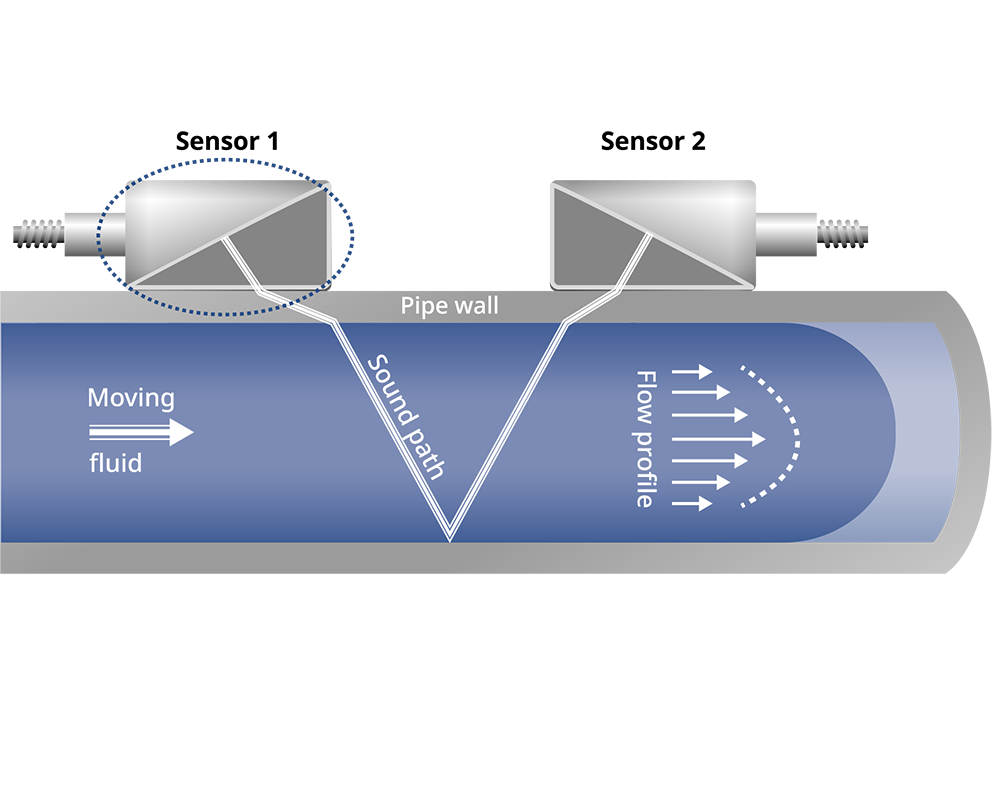 Figure 2: Emerson’s Flexim Non-Intrusive Flow Meters use a pair of sensors, each of which function alternately as a transmitter and receiver.
The signal propagating in the direction of flow has a different transit time than the signal propagating against the direction of flow. The transmitter calculates this transit time difference, which is directly proportional to the fluid velocity, and uses this to determine the volumetric flow rate based on the pipe parameters. A slurry temperature input is also required because sound speed in the fluid varies with temperature, and this measurement can be provided by any suitable temperature sensor.
When flowing fluid is a slurry, the entrained solids block sound waves, causing amplitude attenuation. Increased slurry density also affects sound speed. This means there are three variables — transit time difference, sound speed and temperature, which are all used by the flow meter (Figure 3) to determine silica sand density. The meter can also be used to determine concentration of acids, mass flow rate and other parameters.
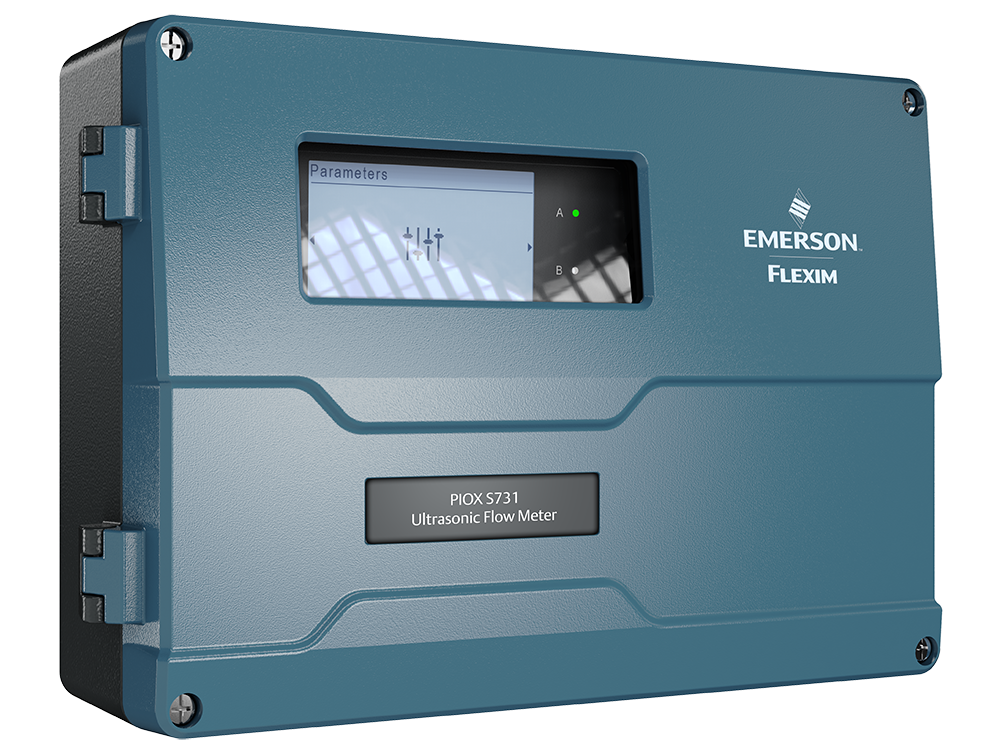 Figure 3: This Flexim flow meter transmitter is a sophisticated analytical tool capable of measuring concentration, in addition to flow rate.
Verifying slurry measurement capabilities
A West Texas frac sand producer tested Emerson’s non-intrusive ultrasonic flow meter by monitoring a 10-inch HDPE pipe carrying raw sand slurry from the pit to the wash plant. The site wanted to compare slurry density readings from Emerson’s Flexim flow meter against the installed nuclear density instrument. The challenge was to determine if the change in signal amplitude measured by the Flexim flow meter provided an accurate representation of actual slurry density.
Based on Flexim’s successful experience with ultrasonic flow measurements in many different media, including various types of sand slurries, Emerson’s engineers believed the Flexim flow meter could indeed measure silica sand slurry density reliably in this application.
The engineers were able to mount the new flow meter easily since it did not require a process penetration nor production interruption. They then monitored both devices during normal production operations. Over several hours, the team recorded output from both instruments, showing them in parallel on an operator interface screen (Figure 4). Signal-to-noise ratio was around 50 dB, a comfortable range, capable of providing reliable calculations. Throughout the test run, the two traces were virtually identical, allowing the engineers to calculate a constant to convert signal amplitude of the ultrasonic pulses to slurry density based on the combination of silica sand and water.
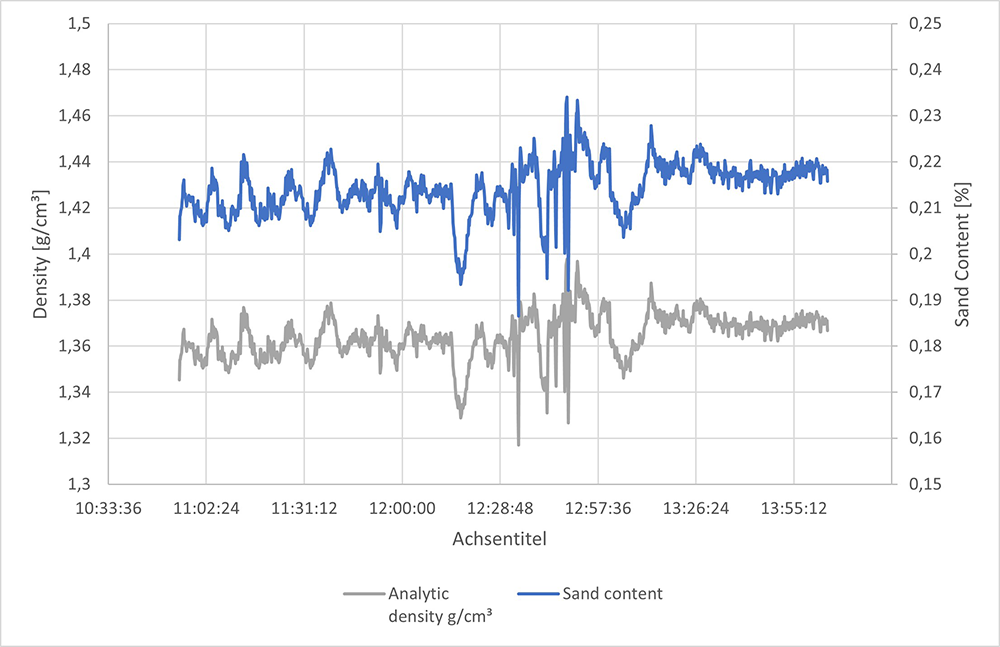 Figure 4: Over several hours, the nuclear and ultrasonic density instruments ran in parallel. The ultrasonic signal attenuation followed the existing nuclear instrument precisely, showing the company that it could provide the same information, plus the flow rate, from a single instrument.
The nuclear density instrument does not measure flow. Therefore, the ability to measure liquid velocity and therefore volumetric flow in addition to slurry density was a significant improvement.
Lessons learned
The frac sand manufacturer saw the experiment as very informative:
- The ultrasonic measuring technology could indeed correlate sound signal attenuation with slurry density for silica sand.
- It also provided flow rate from the same instrument.
- Flexim flow meters can be installed at any point in the piping without a process penetration or interrupting production.
- Nuclear instruments in silica sand production could be retired.
The versatility of this technology, especially in difficult applications such as the flow and density measurement of silica sand slurries and hazardous chemicals, often makes it the best solution for many other types of applications in a wide variety of industries.
All figures courtesy of Emerson