




In industrial environments, aging PLCs, HMIs, servers and network devices continue to function while accumulating significant risks. In the absence of lifecycle visibility, these outdated assets become concealed vulnerabilities that can adversely impact safety, cybersecurity and operational continuity. This article delineates a structured methodology for identifying and managing these risks through the development of enriched asset inventories, weighted scoring mechanisms and criticality-based lifecycle mapping. This comprehensive approach enables management to make more informed capital expenditure decisions and to effectively reduce instances of unplanned downtime.
Introduction: The silent threat inside every industrial plant
Within critical infrastructure sectors such as petrochemical units, power generation facilities, water treatment plants and manufacturing sites, numerous operational technology (OT) assets function unobtrusively. Many of these components, including controllers, programmable logic controllers (PLCs), servers and operator workstations, are either obsolete or nearing the end of their operational lifespan. Although these devices continue to operate, they no longer receive manufacturer support, firmware updates or security patches, thereby rendering them increasingly fragile and vulnerable over time.
The associated risks escalate silently as aging assets become more susceptible to failure, recovery becomes more difficult and security measures become more complex. Cybersecurity threats often target these legacy systems due to their lack of authentication, encryption and modern hardening capabilities. Concurrently, maintenance teams face challenges with outdated components, which typically have limited documentation, scarce spare parts and no escalation path provided by vendors.
These risks remain obscured without robust lifecycle visibility. Consequently, lifecycle intelligence has emerged as a fundamental pillar of industrial cyber resilience. By enhancing the asset inventory with lifecycle attributes and implementing weighted scoring and criticality mapping, organizations can convert these concealed vulnerabilities into clear, quantifiable risk assessments. This enables informed decision-making and proactive risk mitigation strategies.
Deep asset inventory: Incorporating lifecycle attributes
A reliable asset inventory is essential for any lifecycle management or operational technology (OT) cybersecurity program. Traditional inventories usually capture static identifiers like asset name, vendor, IP address and firmware version. However, this limited information does not effectively support risk analysis or lifecycle evaluation.
A comprehensive asset inventory includes various operational and security parameters. Typical fields may include lifecycle status (such as active, mature or declining), vendor support level, vendor end-of-life (EOL) and support end dates, OT zone classification and criticality rating, among others. These attributes allow for a correlation between lifecycle maturity, vendor dependency and cyber exposure.
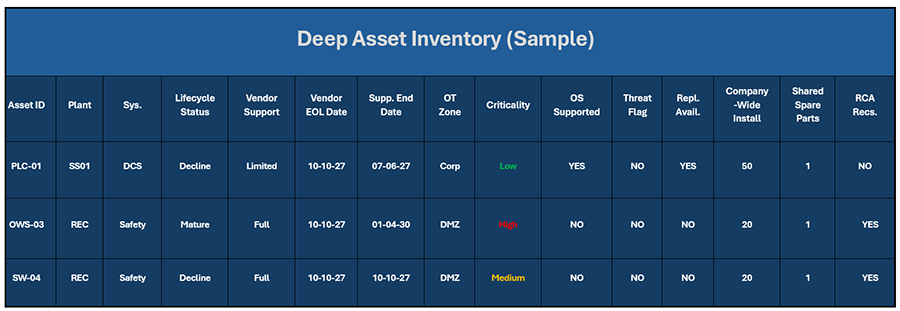 Figure 1: Deep asset inventory (sample).
When organized in this manner, the inventory serves as a multidimensional reference model, enabling condition monitoring, obsolescence tracking and vulnerability assessment across different layers of the control system. Figure 1 illustrates a representative deep asset inventory model, demonstrating how lifecycle and support parameters can be integrated to enhance technical visibility.
Adding operational and cyber parameters to reveal hidden obsolescence risk
Lifecycle status alone cannot provide a complete picture of an asset’s risk. To achieve a comprehensive assessment, each asset record must also include operational and cybersecurity parameters that influence its reliability and resilience.
Four key parameters form the foundation of this extended evaluation model:
- Hardware factor: Represents the physical health and sustainability of the asset, including component aging, reliability trends and spare part availability.
- Application factor: Reflects the asset’s role within the control system and the stability of its supporting operating system and application software.
- Cyber factor: Evaluates vulnerabilities and exposure, considering patching capability, authentication mechanisms and network connectivity.
- Performance factor: Monitors operational behavior, communication stability and fault patterns over time.
These parameters are not analyzed in isolation. Instead, they are treated as interconnected dimensions of risk, providing a holistic understanding of each asset’s technical condition and its resistance to both operational and cybersecurity threats.
Weighted scoring to quantify lifecycle risk
Each parameter is assigned a weight to reflect its relative impact on lifecycle risk. Hardware typically carries the highest weight because physical degradation has the most direct effect on reliability and maintainability. Application and cyber factors are equally significant due to their influence on operational stability and security, while performance serves as a supporting indicator.
Integrating the criticality factor
While lifecycle scoring reflects an asset’s internal health, it does not fully capture the impact of failure on operations. To address this, a criticality factor is introduced, measuring how essential each asset is to safe and continuous operations. Assets that directly influence core production, safety shutdown systems or compliance functions are assigned higher criticality ratings. These are then translated into criticality multipliers, for example, 2.0 for high, 1.5 for medium, and 1.0 for low criticality, ensuring that crucial assets carry proportionally higher lifecycle risk values.
This integrated model combines lifecycle status, operational and cyber health and asset criticality into a single scoring framework, enabling organizations to identify, prioritize and mitigate obsolescence risk before it leads to costly downtime or security incidents.
Combining lifecycle scores with criticality to reveal true obsolescence risk
The final PLCM (Product Lifecycle Management) score is calculated by multiplying the weighted lifecycle score by the assigned criticality multiplier. This process ensures that assets that are crucial for safety, production continuity or regulatory compliance rise to the top of the risk hierarchy. Even if an asset's lifecycle score seems moderate, a high criticality rating can elevate its overall score, accurately reflecting its operational significance and potential impact on the business.
This integrated approach combines two key dimensions: the internal health of the asset and its operational criticality. This combination provides a realistic assessment of true obsolescence risk, enabling organizations to identify assets that not only face issues related to aging or end-of-support but also pose the greatest consequences if they fail.
To maintain objectivity, each organization establishes clear thresholds for lifecycle ratings. For instance, if an overall PLCM score exceeds a predefined threshold, the asset is automatically classified as high risk. Conversely, assets with scores in a lower range are rated as medium or low risk.
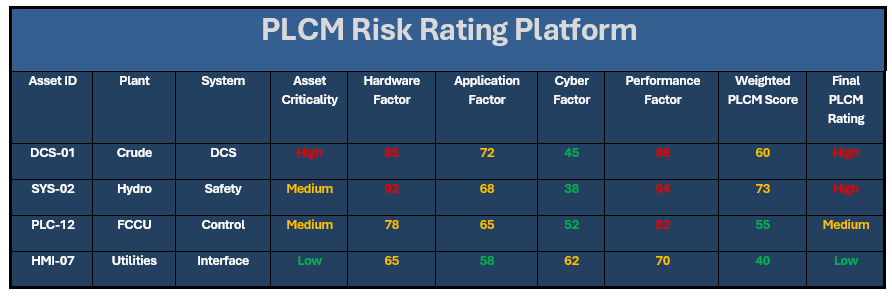 Figure 2: PLCM Risk Rating Platform.
The resulting data is visualized in an overall PLCM risk matrix, where assets are categorized as low, medium, high or critical based on their lifecycle score and operational criticality as shown in Figure 2. This matrix provides a clear overview of asset risk distribution, enabling teams to prioritize maintenance, upgrades and replacement activities effectively, allowing plant and management teams to quickly identify which assets pose the highest exposure and which remain within acceptable lifecycle thresholds.
Conclusion
Obsolete operational technology (OT) assets pose an increasing and often overlooked vulnerability in industrial environments. The risks associated with these assets cannot be identified simply by looking at a basic asset list. To effectively manage these risks, organizations should transform their asset inventory into a lifecycle intelligence platform. This approach allows them to quantify risks, prioritize essential upgrades and plan investments more strategically.
By using weighted lifecycle scoring in conjunction with criticality mapping, organizations can gain a clear understanding of which assets require immediate attention, which should be included in long-term upgrade plans, and which can continue to operate with minimal risk.
A sample representation of this analysis is shown in Figure 3, demonstrating how the PLCM model identifies high-risk assets that require timely action and investment planning.
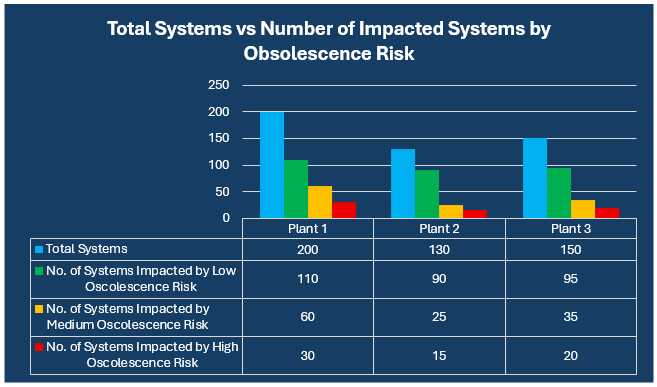 Figure 3: Total Systems vs. Number of Impacted Systems by Obsolescence Risk.
This structured, data-driven strategy empowers organizations to shift from reactive maintenance to proactive lifecycle management. As a result, they can strengthen cybersecurity, reduce unplanned downtime and enhance overall operational resilience.
In today's industrial landscape, lifecycle visibility is essential. It serves as the foundation for modern cyber resilience and is critical for sustaining secure operations.