Digitalization had been developing slowly, but the dawn of COVID-19 has ramped up its importance. Digital solutions can bring about not only sustainability but also resilience and progress. That was the main message of presenters at the Schneider Electric Innovation Summit North America 2020 , a conference held virtually in early November. Leaders from Schneider Electric discussed the company’s vision for an all-electric, all-digital future and what this means for the environment, the economy and, of course, people. Chairman and CEO Jean-Pascal Tricoire explained how an all-electric future fits into the equation.
“Electric builds a green future,” he said. “We are moving to a world that is going to be digital and electric, creating a future that is going to be both smart and green.” Though electricity isn’t a new technology, it is offering new opportunities for renewable energy, decentralized microgrids, net-zero buildings and electric vehicles, Pascal said. “This is not only about the environment but also about the economy. Producing green and cheap electricity is better than doing it the old way.
If we don’t do it for the environment, do it for the economics,” he said.
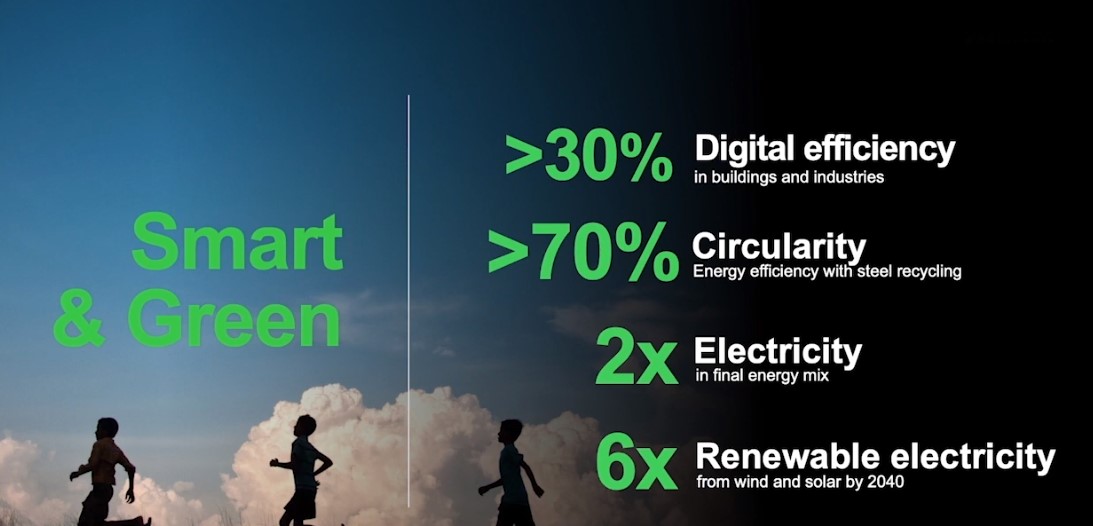
Pascal outlined four basic steps for his vision of a smart and green future. First, he emphasized that existing installations need to be digitalized. Specifically, he recommended reaching for a 30% increase in digital efficiency for both buildings and industries. Second, he recommended a 70% increase in circularity. “Expect the proportion of the proportion of electricity to double in the next 20 years,” he said.
Finally, he predicted that there will be six times the amount of renewable electricity in the form of wind and solar by 2040.
The building blocks of anti-fragility
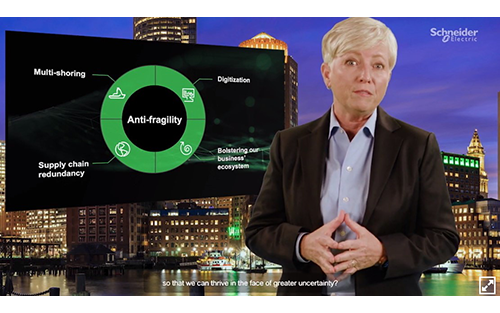
Building a smart and green future will require not just surviving challenges but finding ways to thrive despite them. "We don’t foresee a return to the old normal,” said Annette Clayton (pictured above), Schneider Electric president and CEO – North America. “We are preparing for a future of continual change. The key will be to thrive, not survive, in uncertainty.
You will need … anti-fragility, which goes beyond resiliency—which means simply surviving the shock.” The four pillars of anti-fragility are digitalization, multi-shoring, supply chain redundancy, and bolstering business ecosystems. One of the U.S. panel discussions during the event focused on building anti-fragility in supply chains.
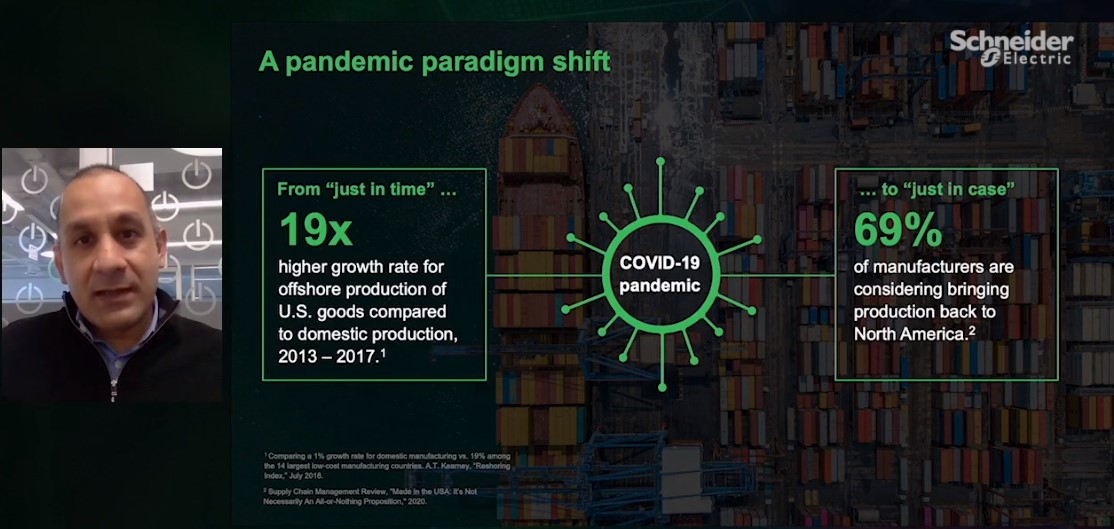
“Sixty-nine percent of manufacturers are… rethinking their supply chain footprints,” said Aamir Paul, U.S. country president – Schneider Electric. “Multi-shoring is becoming an increasing priority for a lot of manufacturers because we are going from ‘just in time’ to ‘just in case' in our supply chain planning.”
 Multi-shoring has many advantages. It is hybrid model that is customer-centric, creates jobs, allows for a more sustainable journey of goods, and presents an opportunity for greater control over security. To advance multi-shoring and build supply chain resilience, Schneider Electric has announced an additional $40 million investment toward modernizing its U.S. manufacturing plants across several states.
The investment is expected to not only strengthen the supply chain and develop the local workforce, but also build toward anti-fragility and reduce potential disruptions. Sessions from the virtual Innovation Summit North America 2020 event are available on demand, and include insights from more than 50 thought leaders, more than 20 in-depth Strategy Talks and Expert Learning Sessions, and the latest EcoStruxure solutions in 3D at the Innovation Hub.