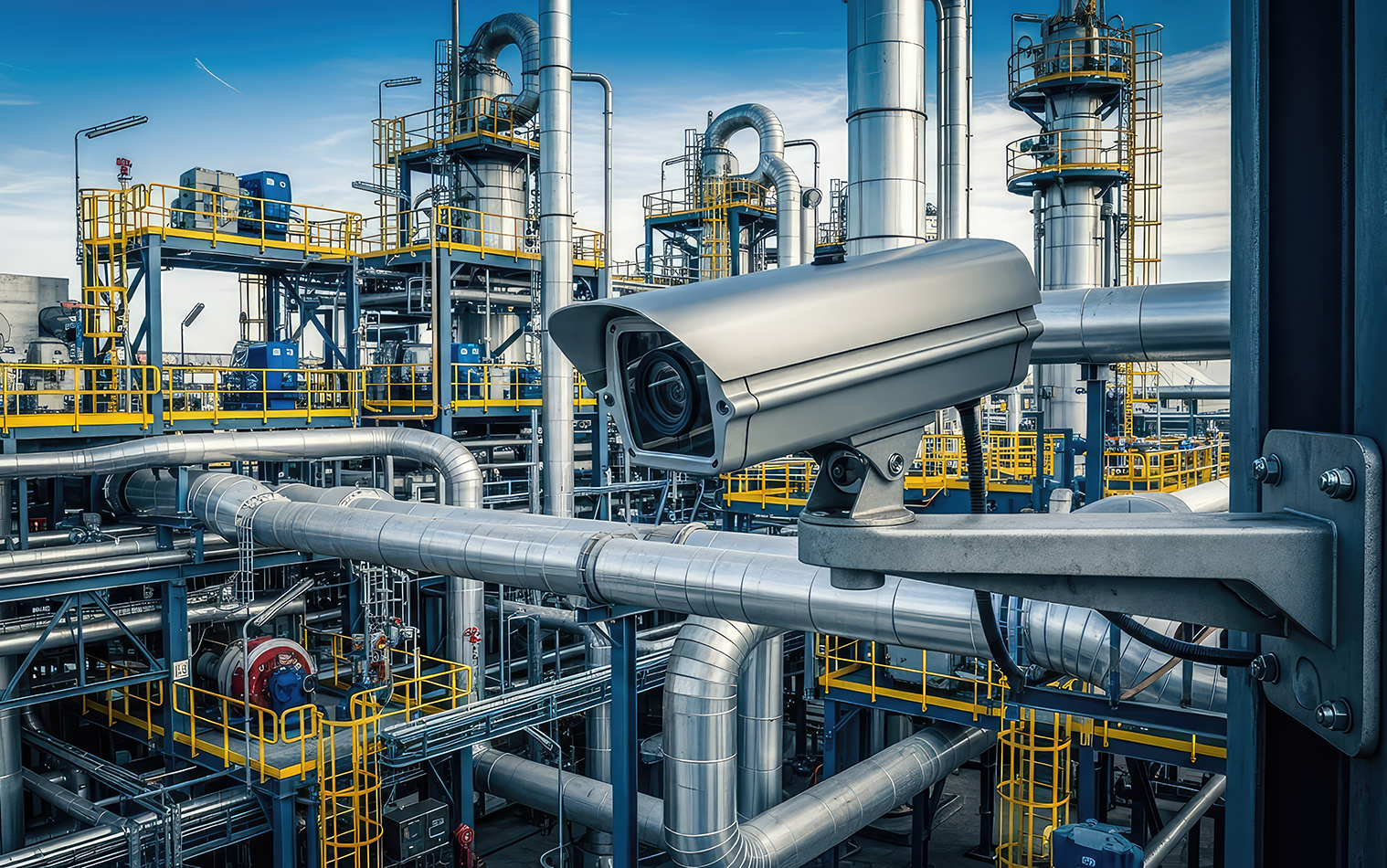
The role of physical security infrastructure within manufacturing and industrial environments is undergoing a profound shift. Historically, IP camera networks operated under a "best effort" paradigm. If a camera went offline for an hour or a video stream experienced intermittent latency, it was an operational nuisance or a post-incident investigative blind spot, but rarely an immediate threat to life or property. Service assurance was important but not required.
Today, that boundary is dissolving. Driven by rapid advancements in artificial intelligence (AI) and computer vision analytics, modern industrial facilities are actively enhancing their IP camera infrastructure from passive surveillance tools into also being proactive, critical fire and life safety systems. However, elevating commercial-grade Internet of Things (IoT) hardware to the level of certified life safety infrastructure introduces a severe operational bottleneck: meeting the uncompromising uptime, continuous supervision and verifiable compliance standards demanded by regulatory bodies and insurance underwriters.
To successfully unlock the benefits of vision-based hazard detection, organizations must bridge the gap between reactive security maintenance and automated, continuous lifecycle management.
The industrial challenge: Where traditional sensors fall short
Large-scale manufacturing facilities, aerospace hangars and expansive logistics warehouses present unique environmental hurdles for traditional life safety mechanisms. Standard point-detection systems — such as localized thermal or photoelectric smoke detectors — rely on physical particles or heat plumes reaching the physical sensor.
In high-ceiling environments, this approach faces a physics problem known as air stratification. Because warm air rises and can trap cooler air layers below it, smoke and thermal energy from an early-stage fire often flatten out and lose upward momentum long before reaching a ceiling mounted sensor dozens of feet in the air. This delayed response time can be catastrophic in high-value industrial settings.
The vision-based alternative
By contrast, AI-powered video analytics approach hazard detection visually. A single high-definition IP camera paired with edge or server-based AI can monitor thousands of square feet instantaneously, spanning the entire field of view from floor to ceiling.
This directly provides early-stage detection. Modern machine learning algorithms analyze pixel-level changes to identify the distinct optical signatures of smoke plumes and open flames at their point of origin, bypassing the limitations of air stratification.
It also provides contextual accuracy. Advanced AI models are trained to differentiate between actual hazards and common industrial "fire-like" phenomena, such as reflections from welding equipment, glare or emissions from heavy machinery and moving vehicles.
This approach directly improves ROI and infrastructure optimization for security investments. By utilizing a heterogeneous mix of existing cameras, Video Management Systems (VMS) and localized applications, industrial enterprises can maximize their return on existing IoT investments while dramatically expanding their safety coverage.
The compliance bottleneck: The rigor of life safety
While the technological capabilities of AI-driven camera analytics are clear, operationalizing them under life safety frameworks introduces strict regulatory and financial hurdles. To be recognized by commercial insurance carriers (such as FM Global) and local authorities having jurisdiction (AHJs), a system cannot simply be "smart" — it must be inherently dependable with service assurance.
Traditional life safety infrastructure, like automated sprinkler systems or hardwired fire alarms, is bound by rigorous supervision standards. These systems require continuous, automated health checks to ensure that if a single component fails, an alert is dispatched instantly.
Standard physical security networks are rarely designed to meet these stringent criteria. Common operational gaps include blind failures where a camera may experience frozen video, a misaligned field of view or a subtle software crash that leaves the device online from a network ping perspective, but completely non-functional from an analytics perspective. There can also be firmware drift. Managing a diverse fleet of IoT devices often leads to fragmented firmware versions, introducing unpatched security vulnerabilities or software bugs that can cause unpredictable system drift or sudden downtime.
Ultimately the operator of these systems must be able to provide (on demand) auditable proof of operations. Insurance underwriters do not accept "best effort" maintenance logs. They require continuous, immutable and verifiable compliance reporting that proves the safety infrastructure was operational, maintained and compliant every minute of the year.
Without automated systems to bridge this operational gap, multi-million dollar investments in AI camera analytics remain relegated to secondary, uncertified safety status, forcing facilities to maintain redundant, less effective legacy systems to satisfy insurance mandates.
Bridging the gap with automated service assurance
To elevate an IP camera network to a validated life safety standard, organizations must implement an automated, vendor-agnostic continuous lifecycle and health monitoring layer. This operational backbone must sit above the heterogeneous hardware and VMS layer, shifting the maintenance paradigm from reactive troubleshooting to predictive, continuous service assurance.
An enterprise-grade continuous monitoring framework must address three critical pillars:
1. Continuous operational health supervision
Rather than relying on basic network pings, the monitoring system must conduct deep, automated health checks of every device across the network. It must track data stream integrity, frame rates and packet delivery to instantly flag when a device goes offline or when its performance degrades below the threshold required by AI analytics models.
2. Automated configuration and firmware enforcement
To eliminate the risks associated with firmware drift and security vulnerabilities, the operational backbone must enforce uniform compliance across the entire camera network. Automated firmware management ensures that all devices run stable, carrier-approved software versions, systematically removing vulnerabilities before they can trigger systemic failures.
3. Verifiable compliance and auditing
Crucially, the platform must automatically generate documented proof of system health, real-time uptime metrics and historic maintenance activities. This immutable reporting satisfies the rigorous evidentiary standards of commercial insurance carriers and regulatory inspectors, transforming raw operational data into formal compliance documentation.
Business and safety outcomes: A new industrial blueprint
The real-world validation of this approach is demonstrated by a recent deployment at a large manufacturing organization. Facing the limitations of traditional point-detection sensors in its vast, high-ceiling facilities, the company deployed AI camera-based analytics to monitor for fire and smoke.
By pairing their vision infrastructure with automated continuous lifecycle management, they successfully moved their network from a reactive security tool to an "always-on," certified protection system.
The financial and operational milestones achieved by this integration establish a clear blueprint for the broader industrial sector:
By providing documented proof of continuous system health and verifiable uptime to their insurance carrier, the manufacturer unlocked immediate bottom-line relief through reduced premiums and the elimination of costly, redundant legacy safety systems. More importantly, they successfully elevated existing physical security investments into a high-reliability life safety solution that actively protects both human life and capital assets.
Conclusion
The convergence of OT/IoT hardware and artificial intelligence has made it entirely viable to turn standard camera networks into highly accurate, real-time hazard detection systems. Yet, technology alone cannot satisfy regulatory and underwriting mandates.
True life safety transformation requires operational discipline. By implementing automated, continuous monitoring and lifecycle management, manufacturing and industrial enterprises can confidently transition their OT/IoT infrastructure into a certified, insured defense mechanism — ensuring that when visibility matters most, the system is guaranteed to be operational.