This post was authored by Chuck Kirby of ISA .
Suppressed and elevated ranges. The process control industry seems to make a big deal about this subject, certainly important if you are taking the CCST exam, and people get confused. Technicians tend to over think it and over complicate the issue; it is much easier than many try to make it seem.
There is a very simple test to this question, ask yourself, where is real zero, relative to the lower range value (LRV) If the real zero is above the LRV , somewhere between the LRV and URV, you have an elevated range. If real zero is under the lower range value, you have a suppressed range. Let’s consider the following: I have a transmitter with a range of -10 to +50, real zero is above -10 so we have an elevated zero range. Conversely a range of +50 to +100 has a suppressed zero because real zero is below +50, the LRV. After you determine your LRV and URV it is relatively simple to decide if you have an elevated or suppressed range.
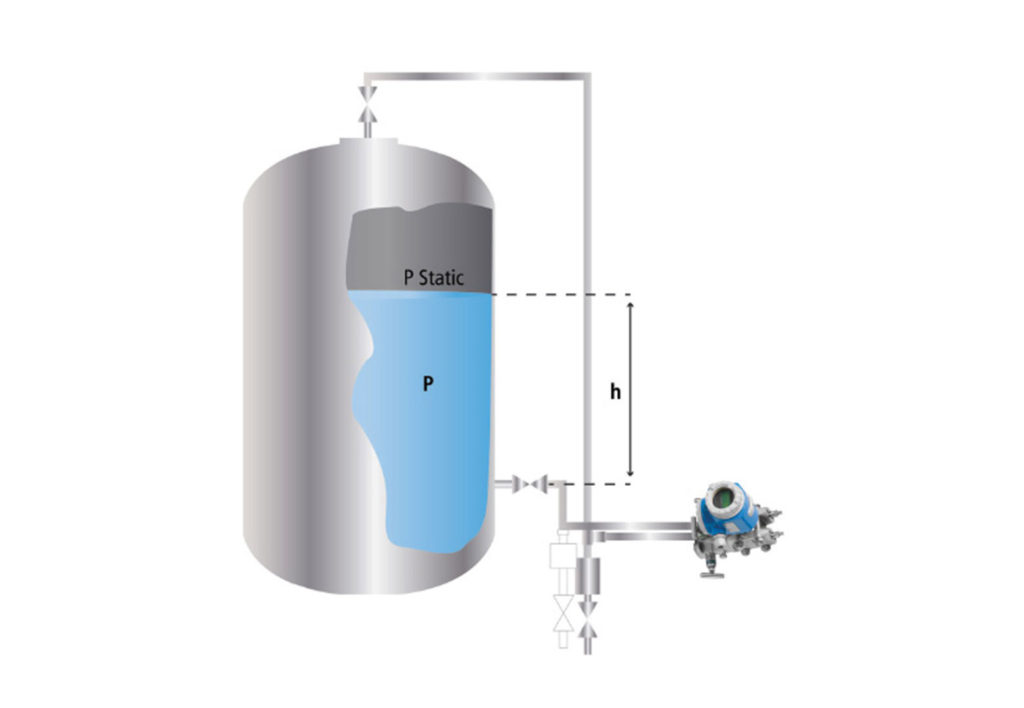
Let’s apply this to a differential pressure transmitter measuring the level of a tank. One side of the transmitter is vented to atmosphere, the other is measuring the head of liquid in the tank
The transmitter is mounted 24” below the tank empty. This tank has a 120” span. The LRV is 24”, the URV is 144. Where is real zero? It is below the LRV of 24” so we have a suppressed zero range. There you have it, very simple.