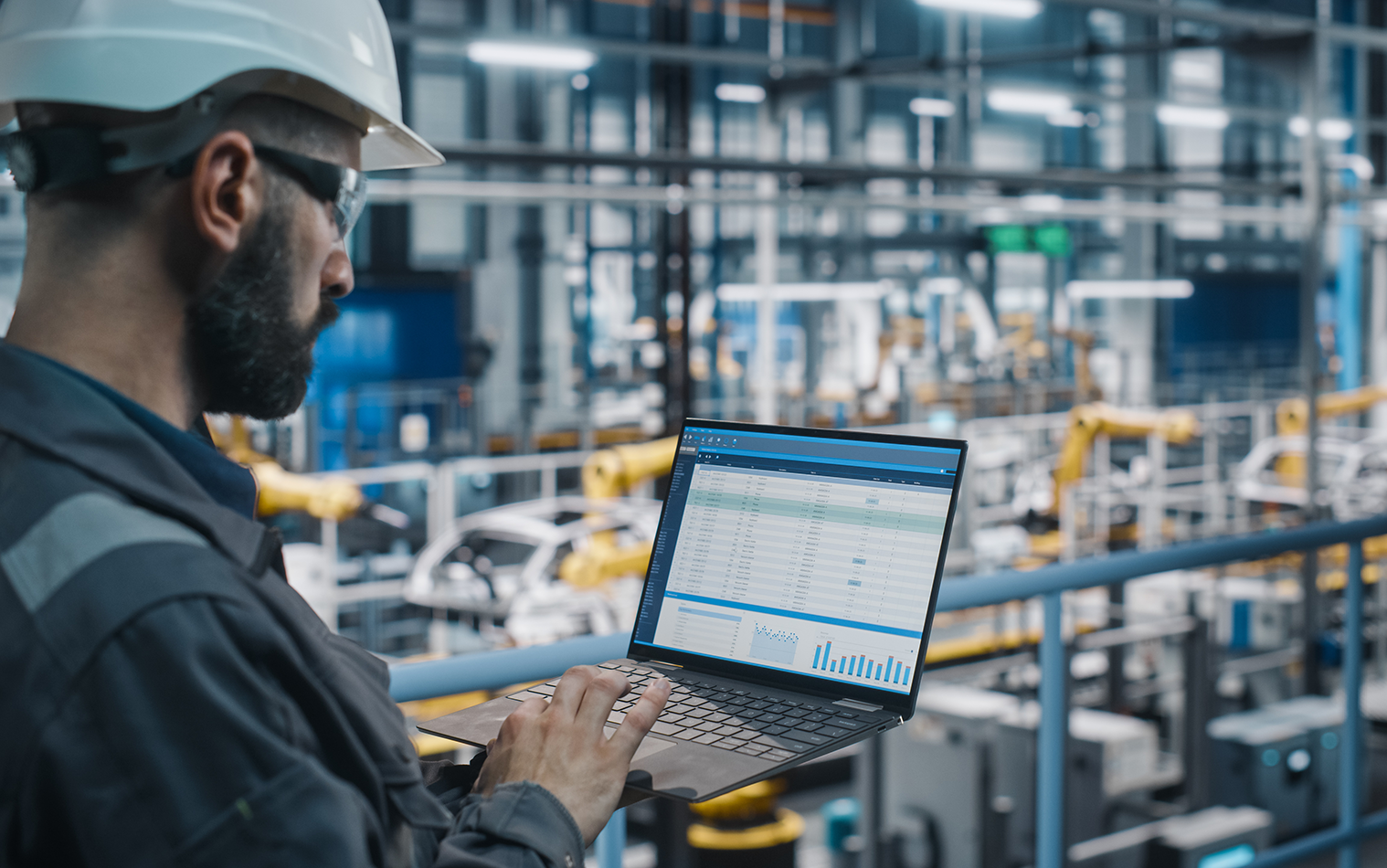
Manufacturing workers belong to the larger global community of frontline workers who provide healthcare, answer call center queries or staff retail stores. Often working in shifts, they are expected to meet management objectives of productivity and efficiency at a time in which AI, automation and real time data have dramatically changed how they work. The endpoint and the quality of devices they need to support their more tech-centric jobs have gained importance as a result.
To align the endpoint with current technology, enterprises are showing renewed interest in modern thin clients. They are uniquely suited to satisfying the needs of shift workers while offering management a more budget-friendly option than PCs or "thick clients" that come heavily loaded with applications.
Shift workers’ role in productivity
Whether working with AI-powered assembly instructions or looking at team communications, shift workers need reliable secure access to the software. They are the front-line players in fulfilling management’s goal of better operational efficiency, which is now closely tied to gauging the results of AI investments. A Cisco study of industrial AI finds nearly half of the IT, operations and executive leadership surveyed view increased productivity and cost reduction as top AI priorities. Process automation and automated quality inspection rank high on the list. They anticipate a positive ROI within two years.
Better networking infrastructure, more reliable wireless connectivity, and greater edge computing capacity are among the needs executives see as enabling more AI payoff. All this foundational technology can affect the day-to-day productivity of those on the manufacturing floor. If the communications backbone fails endpoint devices can’t connect with people, apps or data.
What the frontline expects at the endpoint
Frontline/shift workers expect their work site devices to perform consistently, regardless of time of day. No one wants to have an IT problem at 1 a.m. Manufacturing workers also need devices that can withstand a harsher industrial environment. Thin clients have become the preferred alternative to costly, less impervious PCs. They are battle hardened, compact and fan-less, able to withstand an environment in which vibration, dust and temperature would easily damage PCs. They generate less heat and consume less power, offering a safer, sustainable alternative to PCs.
Modern thin clients can also meet technology requirements of production floors. They have evolved from earlier "dumb" terminals with limited capability to energy-efficient devices that support VDI, DaaS, SaaS and web-based apps, including Microsoft Azure Virtual Desktop, Omnissa, Citrix and Windows 365 Cloud PC. They can deliver the real-time data to ensure production moves smoothly.
Cybersecurity on the floor
Manufacturers (98%) view cybersecurity as a foundational element in AI infrastructure, according to the Cisco study. Among general cyber threats they fear data breaches, supply chain or third-party attacks and ransomware. The cybersecurity landscape has become more complex as manufacturers want more AI integration while still having to contend with evergreen cyber threats like ransomware. In all these scenarios the endpoint device plays a key role in cyber defense.
The complex security posture is prompting a closer look at devices that can effectively stop a threat, whether AI generated or ransomware. Thin clients are being chosen for their ability to greatly limit the attack surface. Since they do not store any local data, they minimize the potential for a breach. When shift workers share devices it is important that each shift can begin with the assurance their devices are basically a clean slate.
In contrast, PCs store data and applications, even user IDs, and often are behind in security patches and updates. They are fertile ground for cyber threat entry.
Another security layer is limiting access privileges. Thin clients have centralized admin rights, reducing the risk of Shadow IT/AI when a shift worker tries to install a rogue app on their device.
The TCO and TLC of thin clients
Thin clients are the workhorses in industrial settings, requiring little maintenance and avoiding the performance issues typical of PCs. They offer TCO benefits from the worker’s perspective and from a management and investment viewpoint.
What shift workers want is trouble-free access. Unlike heavily loaded PCs, thin clients can boot up rapidly, eliminating frustrating waiting times. Shift changes occur quickly since each shift worker begins with their unique user profile and can leverage efficiency tools like Single Sign-On (SSO) for authentication.
Among management’s goals is freeing up IT time to work on AI strategic initiatives. In a typical PC environment, IT must manage various PCs with little to no commonality in stored applications, current patching updates or operating systems. This consumes valuable IT time. Thin clients offer IT and management a low maintenance alternative with a consistent user interface, uniform configuration and OS and centralized control over updates. The leaned-up efficiency helps reduce indirect TCO costs.
Thin clients also positively affect direct TCO costs, with hardware pricing as low as half that of PCs. While a manufacturer may need a VDI infrastructure to support thin clients, those costs are offset by a longer lifecycle, minimal power consumption and less failure points. PCs consume significantly more power during a time of rising energy costs. With so many tools and apps loaded on a PC, the opportunity for failure points and lost productivity escalates.
Scaling for the future
Manufacturers’ desire to deepen AI integration into all facets of production requires an endpoint environment that is not weighed down with high maintenance devices and can efficiently accommodate more AI-powered workflows. Thin clients provide this flexibility and can scale AI, people and production sites via central management. They bring all the gain to shift workers and none of the lost productivity of PC downtime. To scale for the future, thin clients are the smart move.