



This article is an excerpt from the May/June 2011 issue of InTech magazine, written by Maurizio Rovaglio and Tobias Scheele.
Utilizing the increased power of computers, virtual reality (VR) simulates real or imaginary environments and situations with a high degree of realism and interactivity. VR is particularly good for improving the multimedia aspects of training, process design, maintenance, and safety, which are currently based around conventional 2D equipment views.
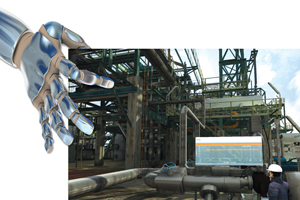 Real-time rendering of equipment views places demands on processor time, as high-fidelity simulators have become the standard in process understanding and training. For many past VR commercial projects, the results were unrealistically slow or over-simplified to the detriment of the solution effectiveness. Today’s technology, however, is addressing these performance issues in a new era of process simulation.
VR technology is primarily used for training applications in a variety of process industries. It offers the potential to expose personnel to simulated hazardous situations in a safe, highly visual, and interactive way. Customized simulations of chemical plant layouts, dynamic process operations, and comprehensive virtual environments can be set up to allow users to move within the virtual plants, make operational decisions, and investigate processes at a glance. Trainees see the consequences of correct and incorrect decisions immediately, giving them the opportunity to directly learn from their successes and mistakes.
Virtual reality has also been applied to a wide range of problems associated with manufacturing, industrial maintenance, post-production training, and customer services in areas such as visualization of complex data; robot control and remote operation of equipment; communication, training, and planning; and virtual prototyping and design. The success of those applications has relied heavily on a realistic virtual environment.
VR-based simulation addresses critical applications and functional areas, which translates into significant savings in operational time and money.