-

 ISA provides technical resources and standards to help industrial automation professionals advance their careers and the field. We enable automation professionals worldwide to solve problems and enhance their skills by bringing people together to create new technologies and share best practices with future automation professionals.
-
ISA Resources
-
Upcoming Events
-
Industry Insights
-
Consortia
-




Articles and News
5,272 Results Found
-
Putting the AI into Maintenance
By Sean Robinson, Novotek UK & Ireland Over the past five years, the industrial sector has begun to see the value in digitalisation and has invested more in adopting it. This article explains how plant managers can make proactive maintenance even more effective with machine learning. -
Digital Transformation for the Service Enterprise
By Vivek Joshi, Entytle The Digital Revolution has already disrupted media, finance, consumer products, healthcare, and other sectors. Manufacturing leaders can’t (and shouldn’t) escape it. -
Webinar Recording: Strange but True Process Control Stories
Listen to Greg McMillan's lessons learned the hard way during a 40-year career in process control industries. Many of the mistakes made in the field are still being made today, some posing safety risk -
Automating the Food and Drink Industry
By Nigel Smith, TM Robotics Many industries have already made the jump to automated processes. However, it’s only been in recent years that the food and beverage industry has begun to truly explore what automation and robotic technology has to offer. -
Digitalizing Your Business Ahead of 2030
By George Walker, Novotek Plans to integrate digitalization across the globe have led many governments to set-out initiatives to accelerate the rate of adoption over the next 10 to 20 years. This article explains why businesses should be looking to digitalize their systems sooner rather than later. -
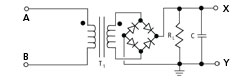
AutoQuiz: Characteristics of a Full-Wave Bridge Rectifier Circuit
A bridge rectifier consists of diodes in a bridge circuit configuration. It features the same output polarity for either input polarity, and is used for converting an alternating current (AC) input in -
![Self-Powered Wireless High Temperature Electrochemical Sensors [Technical]](/documents/d/acom/self-powered-wireless-high-temperature-electrochemical-sensors.jpg)
Self-Powered Wireless High Temperature Electrochemical Sensors [Technical]
Reliable wireless high temperature electrochemical sensor technology is needed to provide in situ corrosion information for optimal predictive maintenance to ensure a high level of operational effecti -
5 Tips for Choosing Tablet Computers for Industrial Environments
By Christopher Ealahan, Teguar Computers The factory floor can be an unforgiving place for equipment, especially when it comes to electronics. Very few of these devices make it out of the plant intact or have a long operational life. Here are five factors that any industrial user should look for in their search for the right tablet computer. -
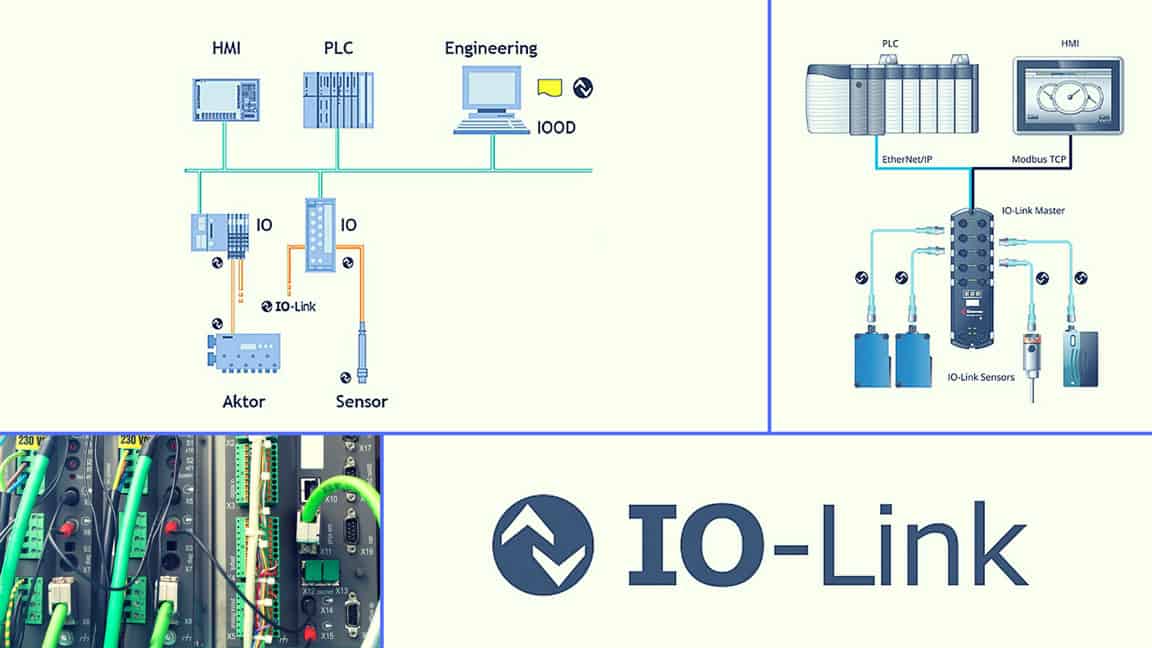
IO-Link Connects Intelligent Sensors and Actuators in the Process Industries
IO-Link is being used in a wide range of applications as an open standard for smart sensor I/O, primarily for discrete devices. IO-Link is a point-to-point network communications standard and protocol -
Retrofitting Cybersecurity
By Robin Whitehead, Boulting Technology Many systems that have been retrofitted for compatibility with the Industrial Internet of Things (IIoT) are not well protected. This article explains the top considerations to ensure cybersecurity when retrofitting a system. -
AutoQuiz: What Is the Cause of Cavitation in a Liquid Flow Stream?
When fluid drops below a liquid's vapor pressure, a gas is formed. As fluid moves downstream to where the fluid pressure is greater than the vapor pressure, it "collapses" back into a liquid. -
Cutting Out the Middleman: Will ERP remove the need for manufacturing execution systems?
By Jakob Björklund, IFS Manufacturers are beginning to see the value in integrating business software such as Enterprise Resource Planning (ERP). However specialist Manufacturing Execution Systems (MES) often do the same job as these supporting solutions, acting as an unnecessary middleman. This article asks the hard questions about whether MES is necessary in many industrial situations. -
Is the Medical Device Regulation a Threat to Additive Manufacturing?
By Bryan Austin, Renishaw the European Union’s (EU’s) new Medical Device Regulation (MDR) could drastically impact the way that medical devices are made in the EU, particularly those that are produced using additive manufacturing (AM). This article provides advice on how companies in the additive manufacturing industry should handle the MDR. -
Webinar Recording: How to Avoid the Most Common Mistakes in Field Calibration
Instrument calibration in the process industries requires the proper process, tools and parameters for each instrument application to ensure valid results. If one of the three are lacking, your result -
Questions Manufacturers Should Ask When Considering the “as a Service” Trend
By Jason Andersen, Stratus Even as the anything-as-a-service (XaaS) model for operational computing gains popularity, many manufacturers are hesitant to make the move. This article explains what manufacturers can do to make the right decision for their business -

Digital Factory Comes into Focus at Hannover Messe 2018
Resembling more a bustling city than a trade fair, the 71st Hannover Messe was very busy and chock full of energy and innovation this year, with over 200,000 attendees from 75 countries. Focusing on the theme 'Integrated Industry – Connect & Collaborate', the Digital Factory was front and center. -
The Kaspersky Report: It's Not Really About OPC UA
By Bob McIlvride, Skkynet Cloud Systems Kaspersky Labs used common exploit-discovery techniques to identify 17 critical security flaws in the OPC UA software they were testing. There is no reason to doubt their methodology, but we all need to be careful about the conclusions that we reach. -
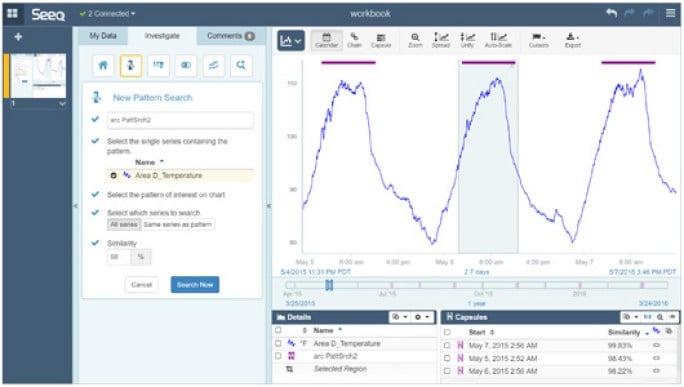
What Are the Obstacles to Commercial, Off-The-Shelf Systems for the Process Industries?
Industry sectors with critical real-time control requirements are constantly integrating commercial off-the-shelf technologies into their automation systems. Industrial automation end users are demand -
AutoQuiz: How to Read a Gauge Pressure Transmitter
At zero gauge pressure in the steam line, you are essentially suppressing (pushing) the transmitter output back down to zero after the system reaches equilibrium. The transmitter will read that impuls -

Can Risk Analysis Really Be Reduced to a Simple Procedure?
Geographically diverse systems using integrated technology are inherently complex. A structured way of analyzing them can be very helpful.


![Self-Powered Wireless High Temperature Electrochemical Sensors [Technical]](/o/adaptive-media/image/7928932/small-576/Self-Powered-Wireless-High-Temperature-Electrochemical-Sensors.jpg?t=1772474634271)


