-

 ISA provides technical resources and standards to help industrial automation professionals advance their careers and the field. We enable automation professionals worldwide to solve problems and enhance their skills by bringing people together to create new technologies and share best practices with future automation professionals.
-
ISA Resources
-
Upcoming Events
-
Industry Insights
-
Consortia
-




Articles and News
1,180 Results Found
-
Future Engineers Benefit from ISA Student Sections
Students benefit from active participation in ISA section activities. They can network with working professionals and learn about career opportunities. -
AutoQuiz: Level Reading with a Differential Pressure Cell
If a differential pressure cell is not at an elevation that corresponds to zero percent level in a tank, calibrate to account for difference in elevation. -
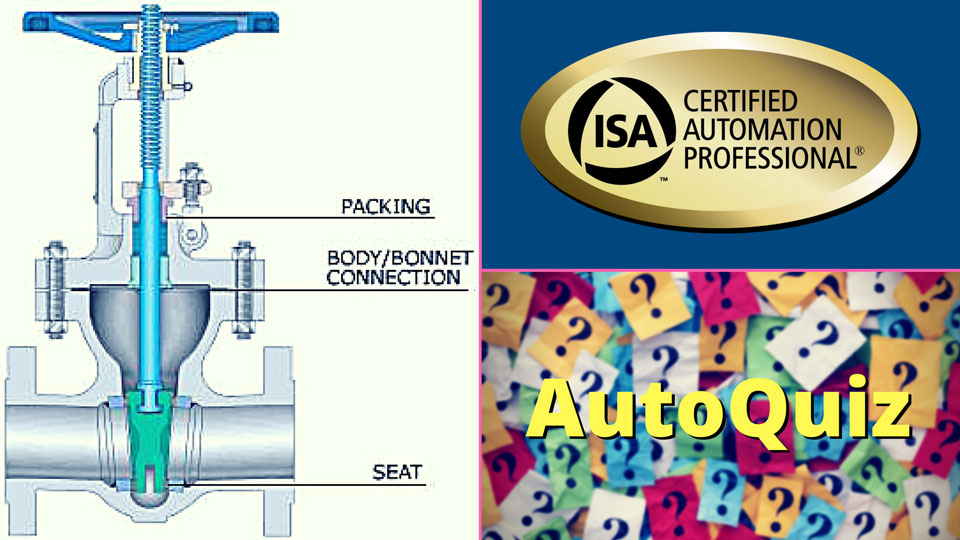
AutoQuiz: Which Control Valve Style Is More Likely to Develop a Blockage?
Ball, butterfly, and pinch valve body style have straight-through flow, and they are less likely to develop blockage. -
AutoQuiz: How to Calibrate a Magnetic Flowmeter
Magnetic flowmeters use Faraday's law of magnetic induction as the basis of their operation. -
AutoQuiz: What Are Acceptable Hazardous Location Protection Techniques for Industrial Areas?
Hazardous location protection techniques are defined by NEC 500.7 (NEC 2002 Code). -
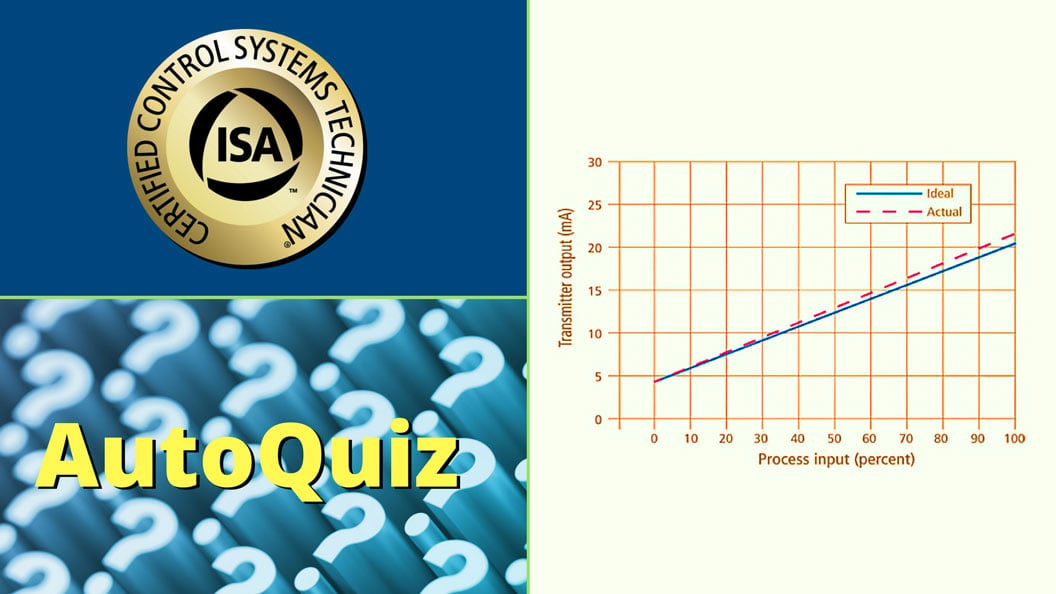
AutoQuiz: When Does an Instrument Need to Be Recalibrated?
Analysis of a calibration plot will help you determine when an industrial instrument needs to be recalibrated. -

AutoQuiz: What Is the Standard for Embedded Software for a SIL 3 Certified Safety System?
According to IEC 61511-1, embedded software, which is part of the safety device/ controller, should follow software guidelines in IEC 61508-3. -
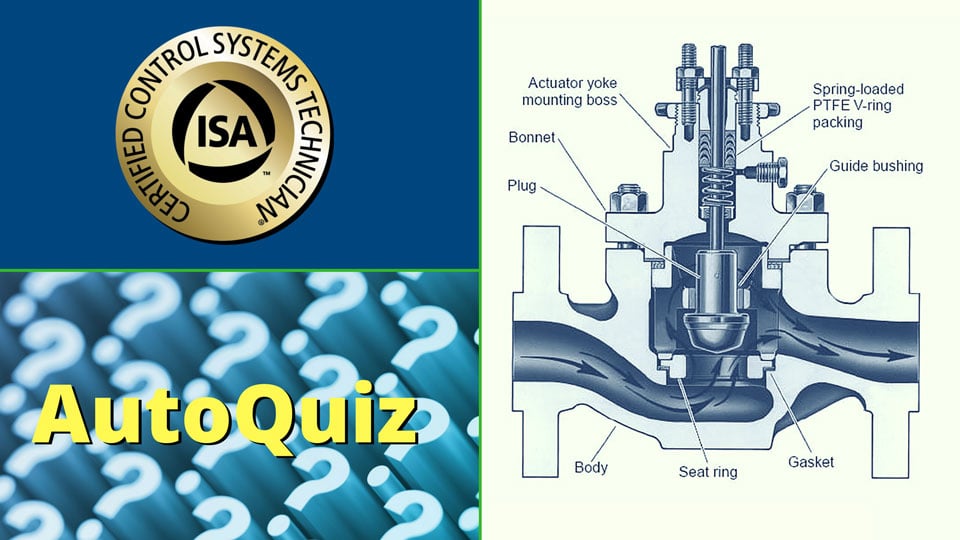
AutoQuiz: How to Calculate the Inherent Flow Characteristic of a Valve
The inherent flow characteristic is the relationship between valve capacity and valve travel, and it is usually expressed graphically. -
AutoQuiz: Industrial Electrical Standards for Emergency Operations
The reset of an emergency stop circuit will not initiate a restart. -

How the Connected Enterprise Can Help Close the Manufacturing Industry Skills Gap
The connected enterprise offers a number of opportunities to address or offset the productivity challenges of the evolving workforce. -
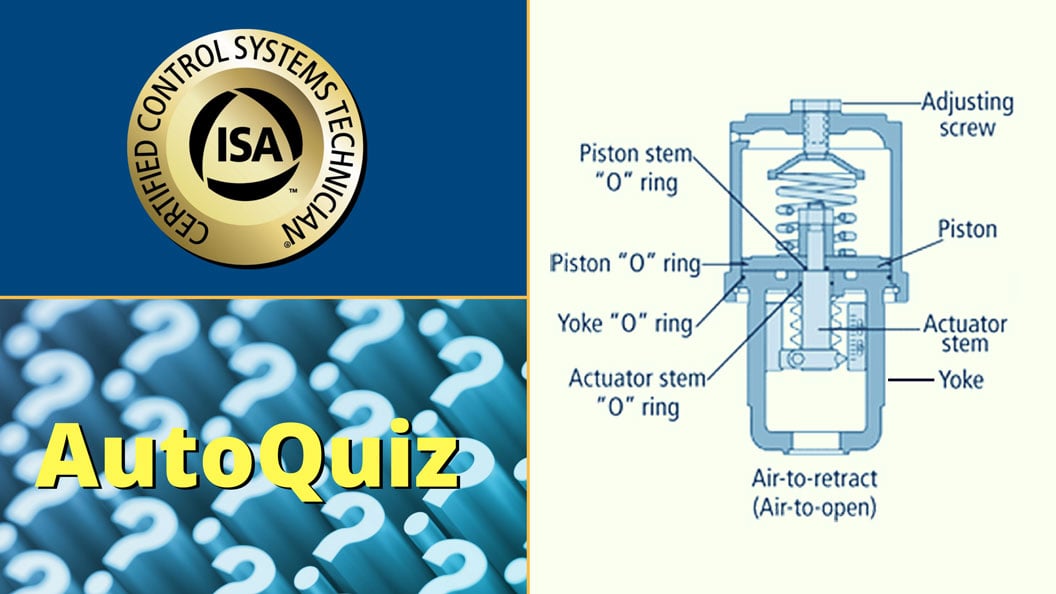
AutoQuiz: What Are the Characteristics of a Piston Actuator?
An actuator is a device that applies the force necessary to cause a valve's closure member to move. -

AutoQuiz: What Is the Length Limitation for Fast Ethernet Cable?
Because of the high speed of fast Ethernet, the use of twisted pair cable is limited to 100 meters (330 feet). -
AutoQuiz: How Is Fluid Velocity Affected When the Pressure Drop Across a Valve Increases?
The pressure drop refers to the change or drop in pressure from the upstream side of the valve to the downstream side. -
How IIoT Revolutionizes Real-Time Plant Maintenance and Analytics
Data from automation and monitoring systems, leveraged with analytics, monitoring, and reporting, creates the basis for a real-time maintenance program. -
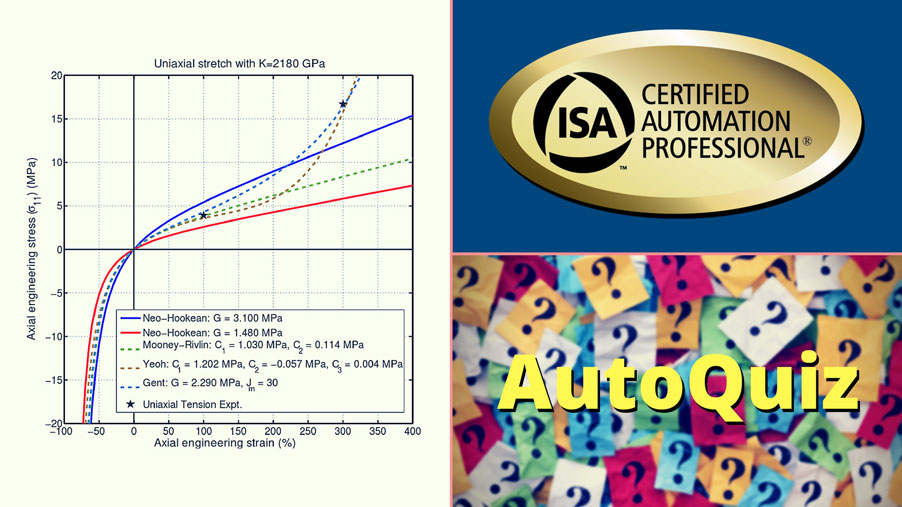
AutoQuiz: What Is the Most Appropriate Technique for Modeling Linear Relationships?
The multivariate statistical-process control excels at modeling unknown linear relationships for a large number of inputs that could be correlated. -
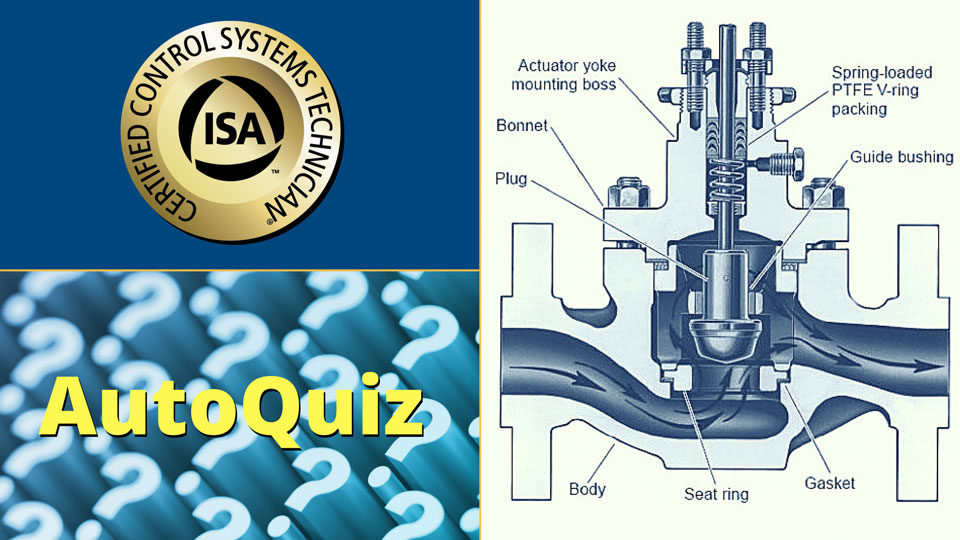
AutoQuiz: What is the Inherent Flow Characteristic of a Valve?
The "inherent flow characteristic" is the relationship between valve capacity and valve travel, and it is usually expressed graphically. -
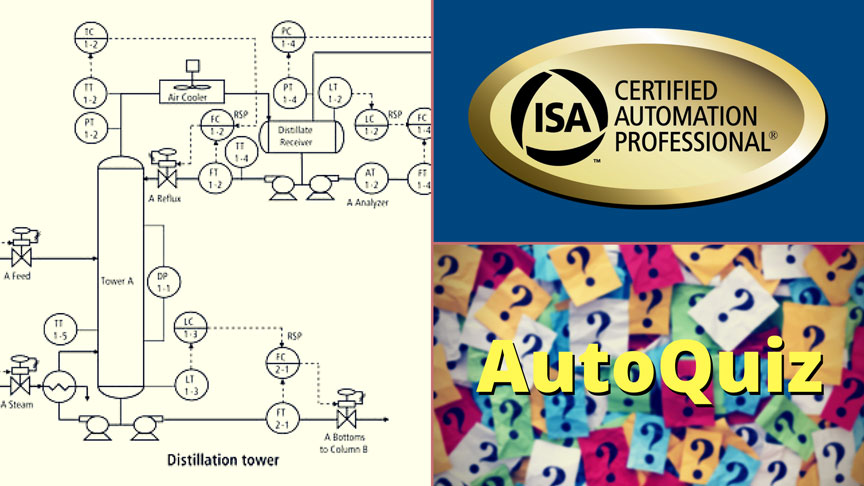
AutoQuiz: How to Minimize the Effect of Feed Upsets to the Top of a Distillation Column
A distillation tower has feed upsets that are measured and used to create a feed forward signal. -
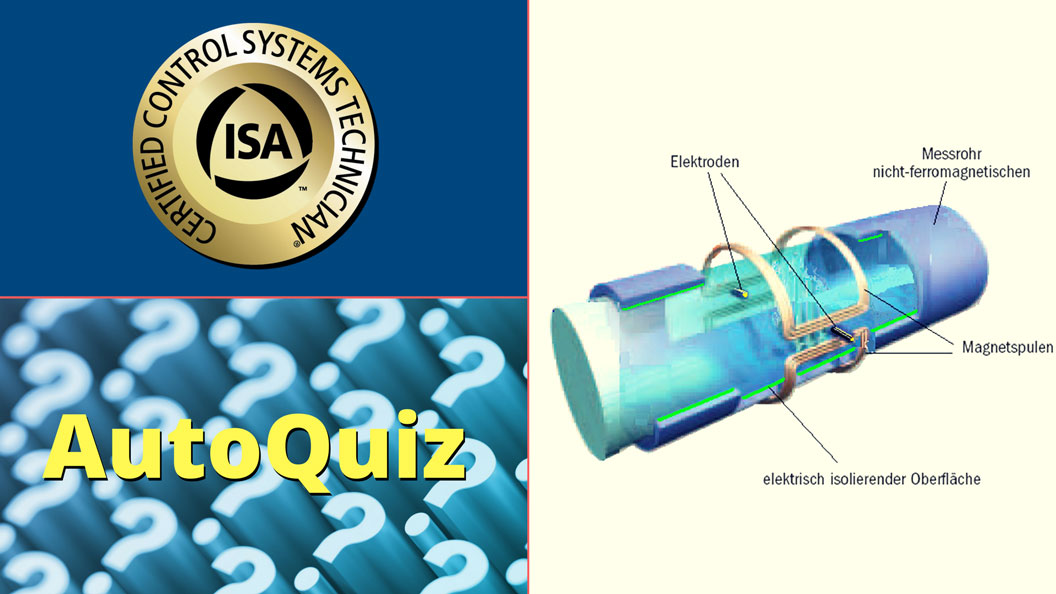
AutoQuiz: How to Install an Electromagnetic Flowmeter
The magnetic flowmeter conductor (fluid in pipe) moves through a magnetic field; a voltage is produced relative to speed of the conductor & magnetic field. -

AutoQuiz: How to Calculate the Transfer Function
A transfer function is a mathematical representation of the relationship between the input and output of a system. -

AutoQuiz: Which Orifice Plate Is Used to Eliminate Damming of Material at the Top or Bottom of a Pipe?
Orifice plates are in a straight run of smooth pipe away from valves and fittings so they do not interfere with the restrictor and readings.


