



©2026 Automation.com, a subsidiary of the International Society of Automation.
-

 ISA provides technical resources and standards to help industrial automation professionals advance their careers and the field. We enable automation professionals worldwide to solve problems and enhance their skills by bringing people together to create new technologies and share best practices with future automation professionals.
-
ISA Resources
-
Upcoming Events
-
Industry Insights
-
Consortia
-

Automation Quiz
Test your knowledge of the automation industry with questions from ISA certification programs.

250 Results Found
-
 Feature
AutoQuiz: How to Install Thermocouple Extension Wires
Proper installation of thermocouple extension wires requires special terminal blocks to prevent additional junctions from being formed. -
 Feature
AutoQuiz: How Are Errors Corrected in Industrial Network Data Communications?
Cyclic redundancy checking is a method of checking for errors in data that has been transmitted on a communications link. -
 Feature
AutoQuiz: How to Calibrate a High-Range Electronic Pressure Transmitter
A dead-weight tester apparatus uses known traceable weights to apply pressure to a fluid for checking the accuracy of readings from a pressure gauge or pressure transmitter. -
Feature
AutoQuiz: What Is Receipt Verification in Industrial Processes?
Receipt verification is an industrial systematic process by which a site verifies that what was specified and ordered is actually what is received. -
Feature
AutoQuiz: What Industrial Troubleshooting Technique Can Help Replace a Bad Component?
The substitution method may reveal the component that is the cause of the problem. -
Feature
AutoQuiz: What is a Database Record?
A database record is a single row of information in a table. -
 Feature
AutoQuiz: Characteristics of an Industrial Controller
For a direct-acting controller, the resulting output movement is in the same direction as the movement of the process variable. -
 Feature
AutoQuiz: When Does Cavitation Occur in Liquid Flow?
In cavitation, when the liquid drops below the vapor pressure around the vena cava, the liquid vaporizes. -
Feature
AutoQuiz: What Happens When a Reset Action Is Added to an Industrial Controller Tuned for a Fast Control Loop?
Both gain and reset (integral action) act upon the error in the same direction, per a simplified proportional, integral, derivative (PID) control algorithm. -
 Feature
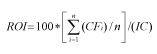
AutoQuiz: What is the Risk in Using Standard ROI Ratios to Invest in an Automation System?
ROI equations do not account for lost opportunity to collect investment interest on money diverted to fund an automation project or the time value of money. -
 Feature
AutoQuiz: How to Calculate Steady State Gain for a Standard Pneumatic Instrument Loop
Gain is defined in industrial control theory as the change in input divided by the change in output. -
Feature
AutoQuiz: What Are Common Terms Used to Quantify Dangerous Industrial Failures?
Spurious trips and nuisance trips are indicative of “safe” failure modes, not “dangerous” failures. -
 Feature
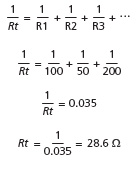
AutoQuiz: How to Measure the Resistance in a Circuit
Resistance is an electrical quantity that measures how a device or material reduces the electric current flow through it. -
 Feature
AutoQuiz: How to Calculate Uptime for an Automation System
The most important measure for production equipment support is operational availability, or “uptime.” -
 Feature
AutoQuiz: How to Troubleshoot a System Failure Due to a Bad Component
Troubleshooting is often an iterative process. If the proposed solution is not the correct one, further analysis and data collection are warranted. -
 Feature
AutoQuiz: What Is the Purpose of a Markov Model Computation?
Systems that exhibit a Markov property are ones in which the future does not depend on the past. -
Feature
AutoQuiz: Characteristics of a Loop Diagram
Instrument loop diagrams are very detailed depictions of an industrial control or process -
Feature
AutoQuiz: Characteristics of a Fuzzy Logic Controller
A PI controller is tuned by adjusting gain or proportional band & integral time settings. Fuzzy logic controller is tuned by adjusting scale factors. -
 Feature
AutoQuiz: What Is the Best Method for Measuring the Level of a Highly Corrosive Media?
Ultrasonic level detectors use the principle of reflection of an acoustic wave from liquid to vapor phase and vapor to liquid phase. -
 Feature
AutoQuiz: Which Signal Type Indicates Direction and Velocity in a Motion Control Application?
To indicate both direction & velocity, a signal with both positive and negative characteristics is required. Motion controls use either ±10 V or ±5 V signals to accomplish this.