-

 ISA provides technical resources and standards to help industrial automation professionals advance their careers and the field. We enable automation professionals worldwide to solve problems and enhance their skills by bringing people together to create new technologies and share best practices with future automation professionals.
-
ISA Resources
-
Upcoming Events
-
Industry Insights
-
Consortia
-




White Papers
117 White Papers
-
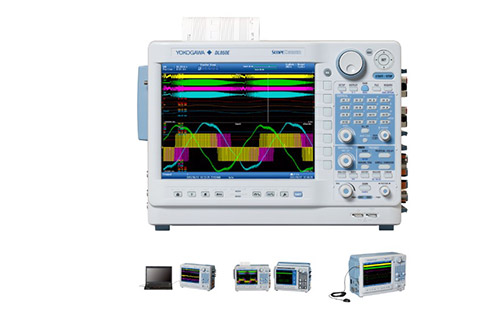
Choosing the Right Power Measurement Instrument
To empower development teams to fulfill their objectives across the development cycle, it is important to consider a whole solution approach toward instrument selection. -
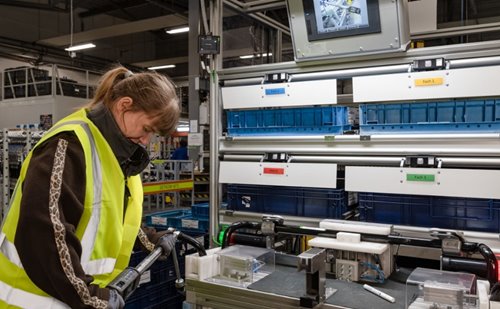
Manual Work Meets Modern Automation to Empower Workers with Handicaps
This paper explores how Martinshof Werkstatt Bremen is empowering workers with handicaps to excel operating manual workstations, which are indispensable, despite advancing digitalization. -

How Digital Transformation and IoT Can Contribute to the UN Sustainable Development Goals
This paper uses a modified version of the Golden Circle, changing the original sequence to Why-What-How to approximate how organizations currently operate and thereby increase the chances of achieving the relevant UN SDG. -
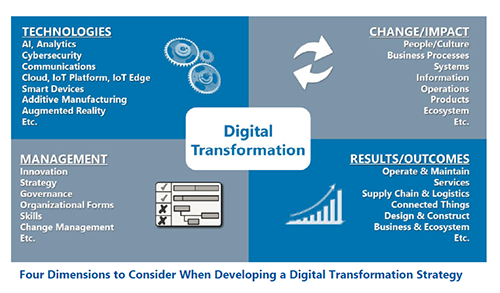
A Snapshot of Digital Transformation Progress
To develop insight about how organizations are keeping up with the changes and transformations taking place throughout the industrial sector, the Digital Transformation Council and ARC Advisory Group, in conjunction with ISA and Automation.com, conducted a survey of industrial companies. This white paper summarizes the results of the survey. -

How to Grow Your Business with Collaborative Automation
Collaborative automation has become a versatile,cost-effective, and user-friendly technology that allows businesses of almost any size (and any level of technical expertise) to increase productivity, improve quality, and respond more nimbly to changing customer demands. -

Enabling Digital Transformation with IoT Performance and Properties Measurement
Written for all IIoT stakeholders, the white paper explains why measuring the efficiency and efficacy of industrial digital transformation solutions across industries is essential. -

Improving the Efficiency and Reliability of Water Systems with Variable Speed Pumps and Pressure Sensors
Distributing water on a large scale has been a challenge that the world has tackled for decades. It is a particular challenge in high-rise buildings, and with a trend for designers to build up in urban areas, rather than out, it is a challenge that has become a new focus for design engineers. -

Hybrid Heuristics for High Speed Route Optimization
This paper discusses the challenges faced in route planning and how existing algorithms are largely insufficient. It also discusses how the use of a hybrid heuristic method derived from the combination of straight line heuristics and real road distance metrics presents the best solution to solving the challenge of planning efficient routes at high speed for last-mile deliveries today. -

How Robots Change The World: What automation really means for jobs and productivity
The robotics revolution is rapidly accelerating, as fast-paced technological advances in automation, engineering, energy storage, artificial intelligence, and machine learning converge. The result will transform the capabilities of robots and their ability to take over tasks once carried out by humans. -

80 GHz radar vs. ultrasonic: Non-contact Level Measurement Technology Comparison
When it comes to non-contact continuous level measurement, radar and ultrasonic are two of the most common technologies used. This paper will compare and contrast 80 GHz radar sensors with ultrasonic transmitters for liquid and solid level measurements. -

What is the Difference Between Frequency-Modulated Continuous-Wave (FMCW) and Pulsed Wave or Pulsed Width Radar?
The two types of non-contact level radar, Pulse Level Radar and Frequency Module Continuous Wave (FMCW) Level Radar have been widely used throughout the process industry. -

Open Industry 4.0 Alliance Technical Solution Design Principles
This white paper is focused on helping readers understand in detail the Open Industry 4.0 solution reference architecture framework for interoperability. It provides a dive deep into key design principles of its members defined and supported end to end solutions -
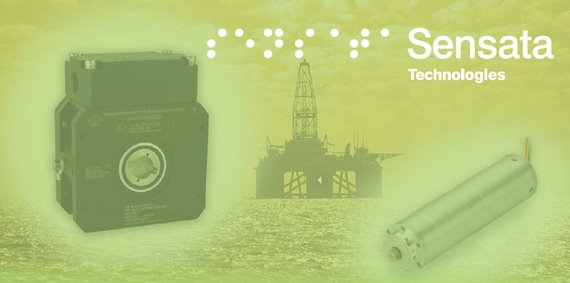
What Do Engineers Need to Know about Encoders and Motors for Oil & Gas?
Position sensors and motors are crucial components in oil and gas equipment and must operate day in and day out in some of the most challenging conditions. -
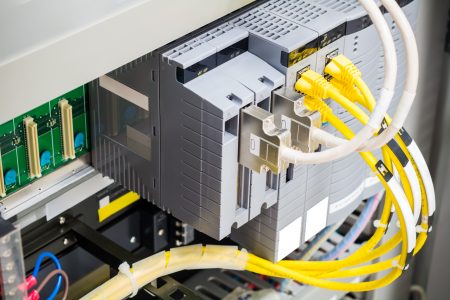
How Will the PLC Market be Impacted by the Manufacturing Slowdown?
With the manufacturing sector facing a bleak outlook in 2019, we thought it prudent to share our projections for the growth and development of the programmable logic controller (PLCs) market in key countries and industries, calling out specific bright spots and those set to suffer more deeply. -

The Trillion-Dollar Question for Advanced Industries: How to extract full value from technology?
As data, connectivity, and processing power expand, so do opportunities for industrial companies to extract value through innovative products, services, and business models. This McKinsey study delves further into how technology delivers value to today's industry. -
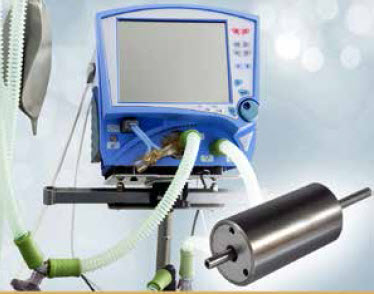
What Design Engineers Need to Know About Voice Coil Actuator Technology
Originally developed for audio speakers, voice coil actuation technology is now being used to provide precise and reliable motion control for a wide range of medical, industrial process and space applications. -

What Do Industrial Engineers Need to Know About Functional Safety?
Engineers designing systems for industrial and factory applications are adopting functional safety design practices to reduce the risk of system failures that could result in costly damage or injury. -

A Case for an Internet Code of Conduct
Self-regulation or legislation does not stifle innovation at all. It steers the internet in the right direction. It is just an example, albeit a very important example, of market feedback for engineers and innovators to develop the right products. -
Extending Connectivity to the Bottom of the Ocean
If you have a ControlLogix PLC being used as the MCS, how can you make use of the OPC UA MDIS spec and bypass the old Modbus integration to the DCS? Softing has developed an OPC UA MDIS compliant server module that inserts into the ControlLogix chassis and creates the OPC UA provides a framework that can be used to represent field devices, for example. -
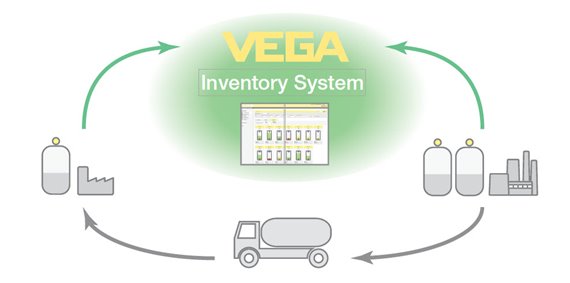
A Case for IIoT’s Future in Supply Chain Management
This paper will explore how one construction materials hauling company used level measurement sensors and IIoT networks to better manage their operation.


