-

 ISA provides technical resources and standards to help industrial automation professionals advance their careers and the field. We enable automation professionals worldwide to solve problems and enhance their skills by bringing people together to create new technologies and share best practices with future automation professionals.
-
ISA Resources
-
Upcoming Events
-
Industry Insights
-
Consortia
-




Articles and News
421 Results Found
-

What Are the Benefits of Connected Manufacturing?
Connected manufacturing gives everyone in the organization a voice, from the shop-floor employees to the CEO. -

AutoQuiz: Which Orifice Plate Is Used to Eliminate Damming of Material at the Top or Bottom of a Pipe?
Orifice plates are in a straight run of smooth pipe away from valves and fittings so they do not interfere with the restrictor and readings. -
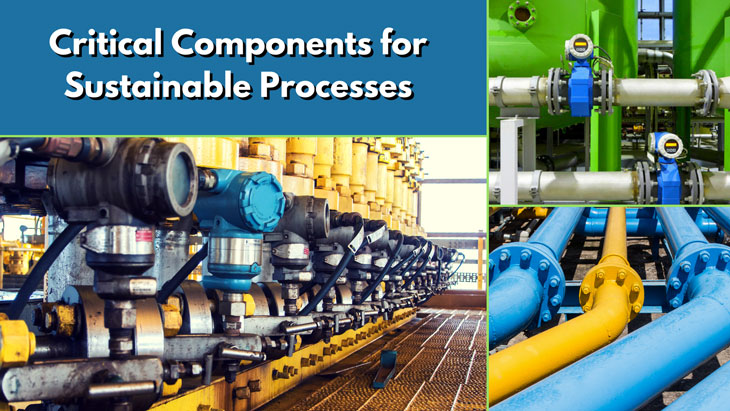
Flow Measurement and Instrumentation: Critical Components for Sustainable Processes
Flow measurement and instrumentation are critical components for making usage visible to manage sustainable processes and operations. -

AutoQuiz: Which Fuse Has the Quickest Response to Over Currents?
Certain types of fuses have a very high speed of response to over currents. They provide excellent short-circuit component protection. -
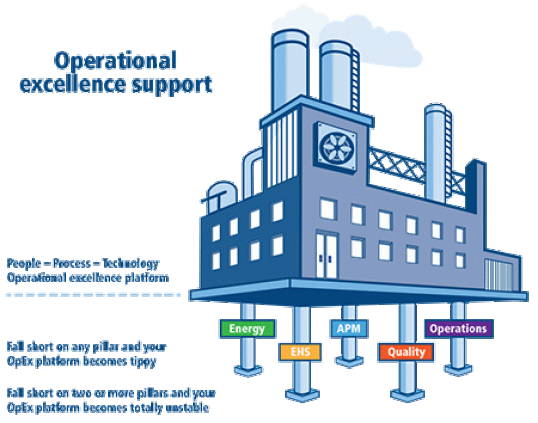
Separating Hype from the True Value of Industrial Big Data Analytics
Perhaps no other new technology comes with more promise to manufacturing executives than big data analytics for manufacturing and the process industries. -
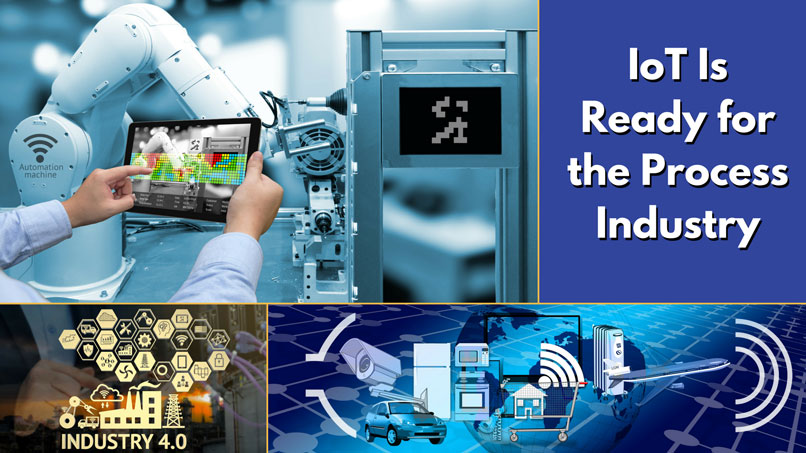
IoT Is Ready for the Process Industries
For on-site & off-site analysis, industrial IoT delivers data to the right personnel without requiring connection to the plant’s real-time control system. -
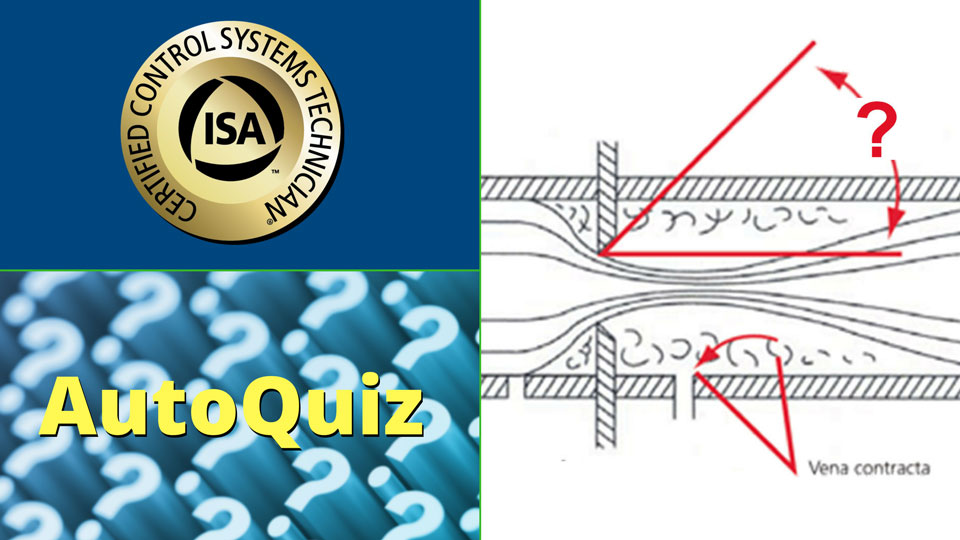
AutoQuiz: Optimal Beveled Orifice Angle for Flow
An orifice plate inserted in the line causes an increase in flow velocity and a corresponding decrease in pressure. -

Automation Professionals Are Catalysts for Change in Manufacturing
As manufacturing marches on, automation professionals find themselves in the best position to improve the industry. -
Bilateral Control of Master-Slave Manipulators with Constant Time Delay
Study of a novel teleoperation controller for a nonlinear master-slave robotic system with constant time delay in communication channel. -

AutoQuiz: Standard NFPA Wire Colors
NFPA's mission is to reduce fire and other hazards via scientifically based consensus codes and standards, research, training, and education. -
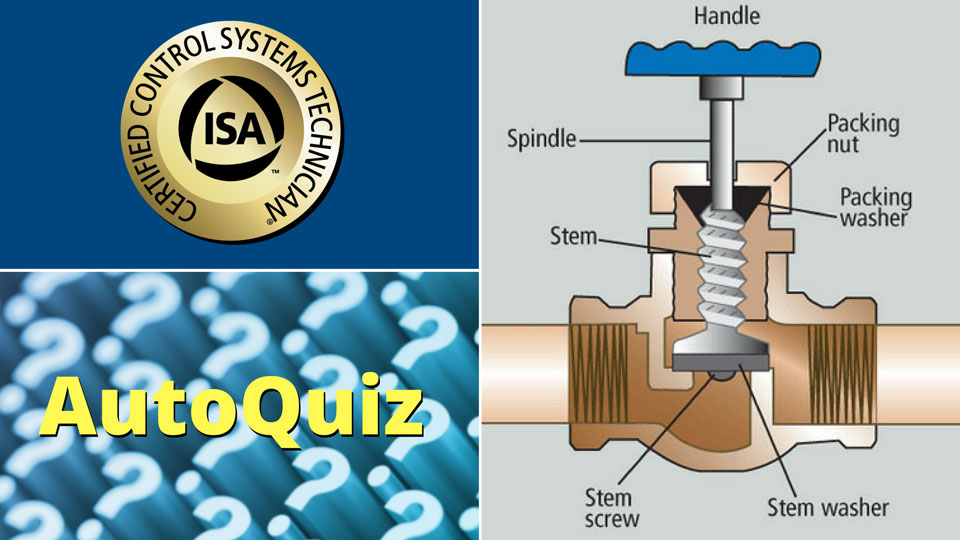
AutoQuiz: Characteristics of a Control Valve
A rotary valve has a flow closure member that rotates in the flow stream to modify the amount of fluid passing through the valve. -

AutoQuiz: Best Strategy for Finding Efficient Operating Points with Complex Shifting Process Conditions
Real-time optimization with a detailed process model is the best approach to fining the most efficient operating points. -
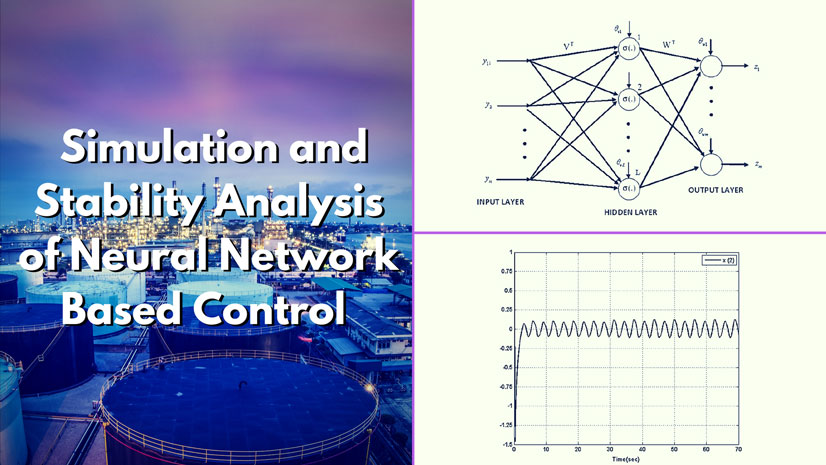
Simulation and Stability Analysis of Neural Network Based Control Scheme for Switched Linear Systems
Researchers propose a new adaptive neural network based control scheme for switched linear systems with parametric uncertainty and external disturbance. -
Book Excerpt + Author Q&A: Driving Business Value in Industrial Innovation
The emerging frontier for industrial innovation points at exciting changes likely to revolutionize the business of manufacturing. -
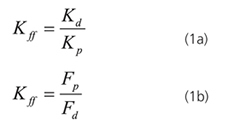
Feedforward Control Enables Flexible, Sustainable Manufacturing
Feedforward provides preemptive corrective action for production rate and grade changes enabling key PID controllers to provide consistent product quality. -

AutoQuiz: Why Are Gathering Requirements Critical to the Success of an Automation Project?
Gathering requirements are important because they define the objectives, purpose, scope, needs, and other key meters. -

AutoQuiz: What Is the Process for a Continuity Check of a Field Transmitter?
A continuity check is performed on a length of finished wire or cable to determine if the electrical current flows continuously throughout the length. -
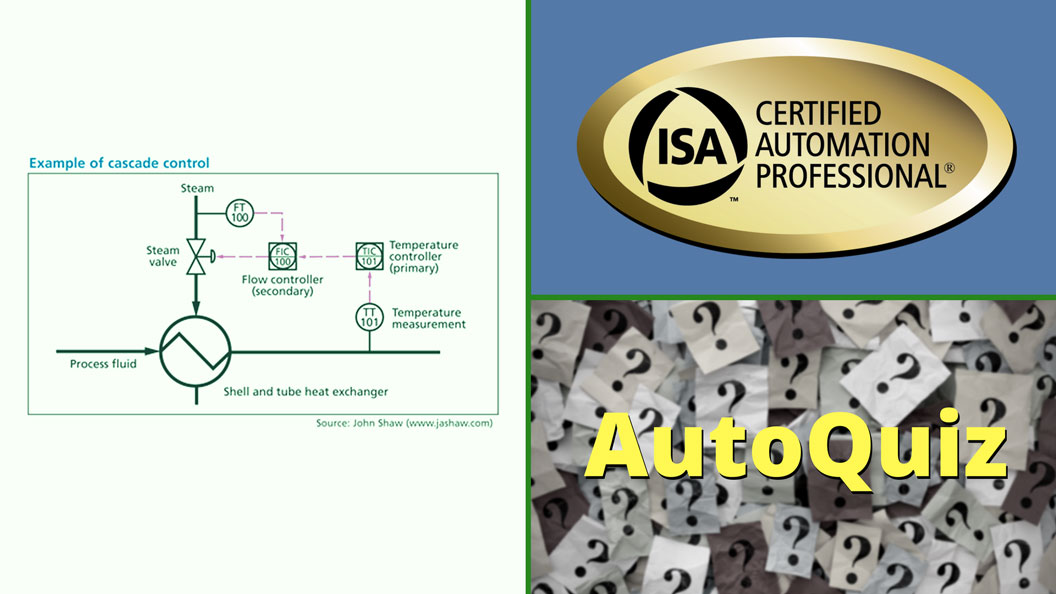
AutoQuiz: How to Measure and Compensate for Disturbances to Prevent Set Point Deviance
The objective of feedforward control is to measure disturbances and compensate for them before the controlled variable deviates from set point. -
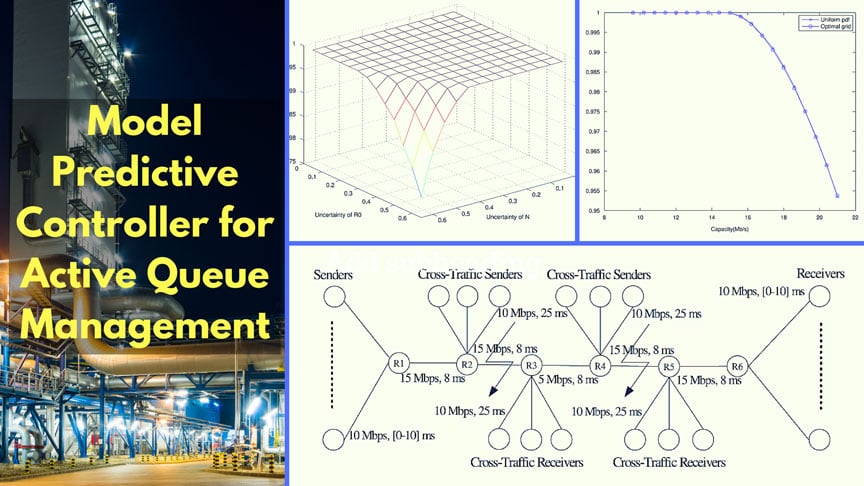
Design and Analysis of a Model Predictive Controller for Active Queue Management
An ISA technical paper proposes a model predictive control as a novel active queue management algorithm in dynamic computer networks. -

AutoQuiz: What Is the Dead Band of an Instrument?
The dead band is the range through which an input signal may vary, upon reversal of direction, without initiating an observable change in output signal.


