AutoQuiz is edited by Joel Don, ISA's social media community manager.
This automation industry quiz question comes from the ISA Certified Automation Professional (CAP) certification program . ISA CAP certification provides a non-biased, third-party, objective assessment and confirmation of an automation professional's skills. The CAP exam is focused on direction, definition, design, development/application, deployment, documentation, and support of systems, software, and equipment used in control systems, manufacturing information systems, systems integration, and operational consulting. Click this link for more information about the CAP program.
Which of the following temperature measuring elements/devices measures temperature as the result of an electromotive force being generated that is proportional to a temperature difference (Seebeck effect) between two dissimilar, joined metals?
a) RTD b) bimetallic expansion thermometer c) thermocouple d) IR thermometer e) none of the above
Answer A is not correct: An RTD measures temperature by correlating the resistance of the RTD element with temperature. As the temperature increases, the resistance increases.
Answer B is not correct: Bimetallic expansion thermometer converts a temperature change into mechanical displacement. The strip consists of two strips of different metals, which expand at different rates as they are heated.
Answer D is not correct: IR Thermometers infer temperature using a portion of the thermal radiation sometimes called blackbody radiation emitted by the object of measurement.
The correct answer is C , thermocouple. A thermocouple is a device consisting of two different conductors (usually metal alloys) that produce a voltage proportional to a temperature difference between the ends of the pair of conductors according to the equation:
V = a(Th-Tc)
The voltage difference, V , produced across the terminals of an open circuit made from a pair of dissimilar metals, A and B, whose two junctions are held at different temperatures, is directly proportional to the difference between the hot and cold junction temperatures, T h − T c. A voltage or current is produced across the junctions of two different metals, caused by the diffusion of electrons from high electron density region to low electron density region. This diffusion of electrons occurs because the density of electrons is different in different metals.
Reference
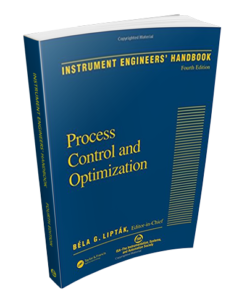
: Bela Liptak, Instrument Engineers' Handbook , Fourth Edition
About the Editor
Joel Don is the community manager for ISA and is an independent content marketing, social media and public relations consultant. Prior to his work in marketing and PR, Joel served as an editor for regional newspapers and national magazines throughout the U.S. He earned a master's degree from the Medill School at Northwestern University with a focus on science, engineering and biomedical marketing communications, and a bachelor of science degree from UC San Diego .
Connect with Joel