



©2026 Automation.com, a subsidiary of the International Society of Automation.
-

 ISA provides technical resources and standards to help industrial automation professionals advance their careers and the field. We enable automation professionals worldwide to solve problems and enhance their skills by bringing people together to create new technologies and share best practices with future automation professionals.
-
ISA Resources
-
Upcoming Events
-
Industry Insights
-
Consortia
-

Automation Quiz
Test your knowledge of the automation industry with questions from ISA certification programs.

250 Results Found
-
 Feature
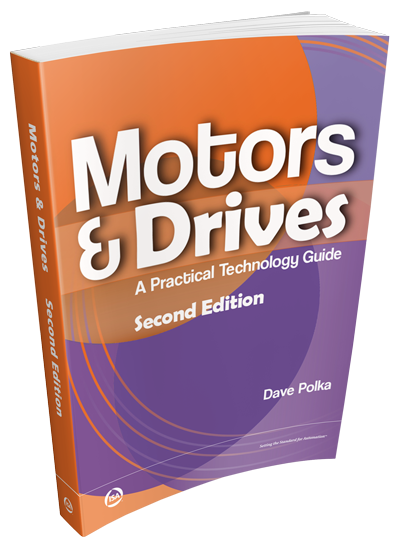
AutoQuiz: Motor Shaft Speed Relationship to Frequency and Number of Poles
The shaft speed of a motor is directly proportional to the frequency and is inversely proportional to the number of poles. -
 Feature
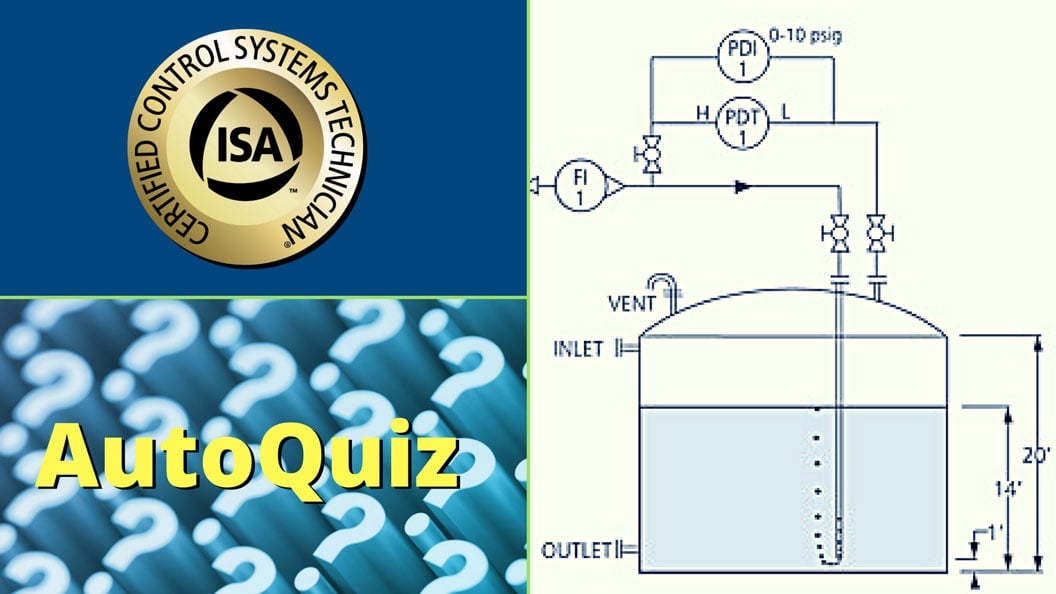
AutoQuiz: How to Measure Tank Differential Pressure
A tank level is measured using a differential pressure transmitter (DPT-1) and a bubbler tube. The tank is vented to atmosphere. -
 Feature
AutoQuiz: Nonhazardous Pressurization Systems
A Type X pressurization system reduces the classification within the enclosure from Division 1 to nonhazardous and, therefore, permits the use of ignition-capable equipment inside the enclosure. -
 Feature
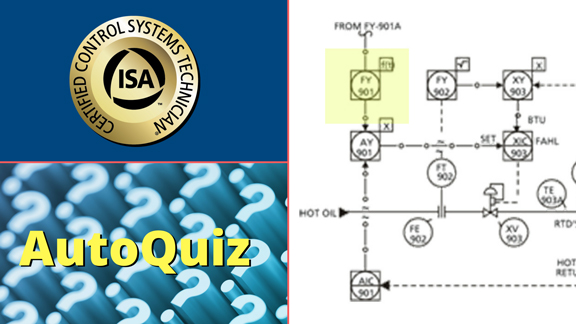
AutoQuiz: Identify the Function of a P&ID Symbol
In a P7ID diagram, a "circle" enclosed in a "square" indicates it is an instrument that has a shared display or a shared control. -
 Feature
AutoQuiz: What Is the Best Location in an HMI for the Graphic Display of a Distillation Column?
A distillation column refers to one piece of equipment in the distillation process, which will contain several loops. -
 Feature
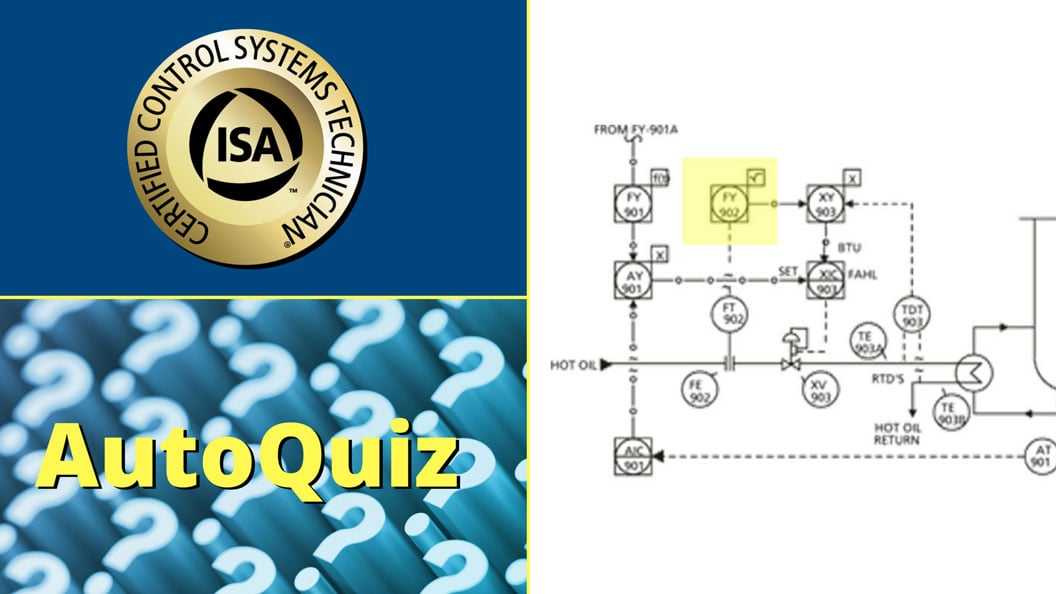
AutoQuiz: Can You Identify the P&ID Symbol?
A "circle" enclosed in a "square," which indicates it is an instrument with a shared display or a shared control. -
 Feature
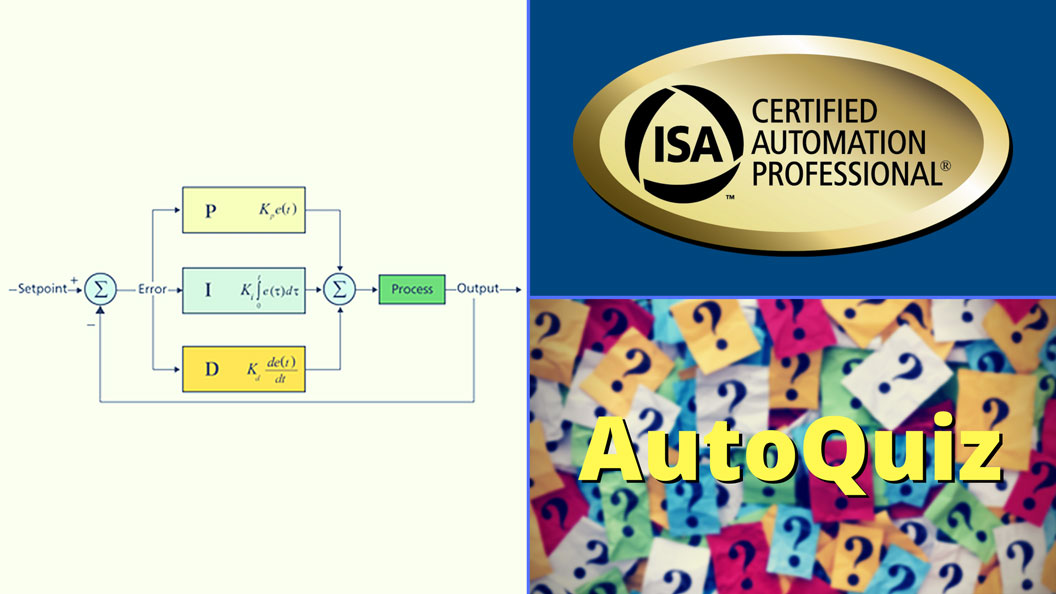
AutoQuiz: What Is PID in a Control Loop?
The PID term as described refers to the loop control technique used in controllers. A PID control loop includes proportional, integral, and derivative functions to control the process. -
-
 Feature
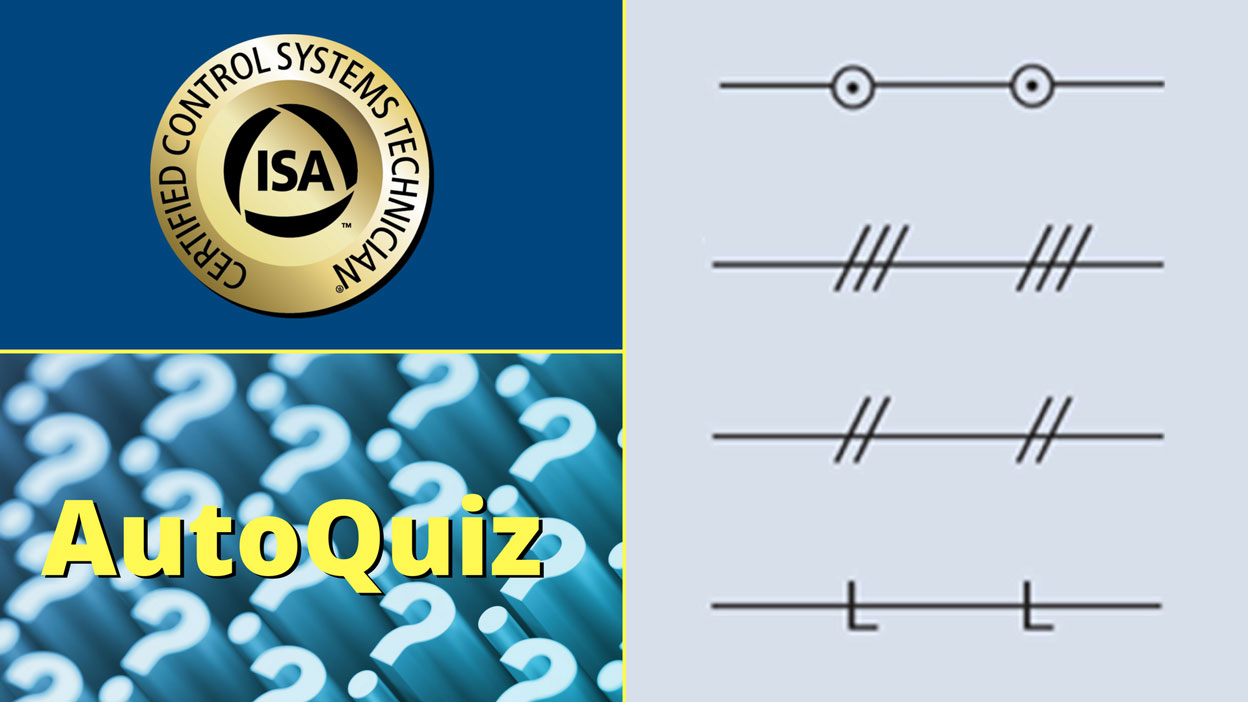
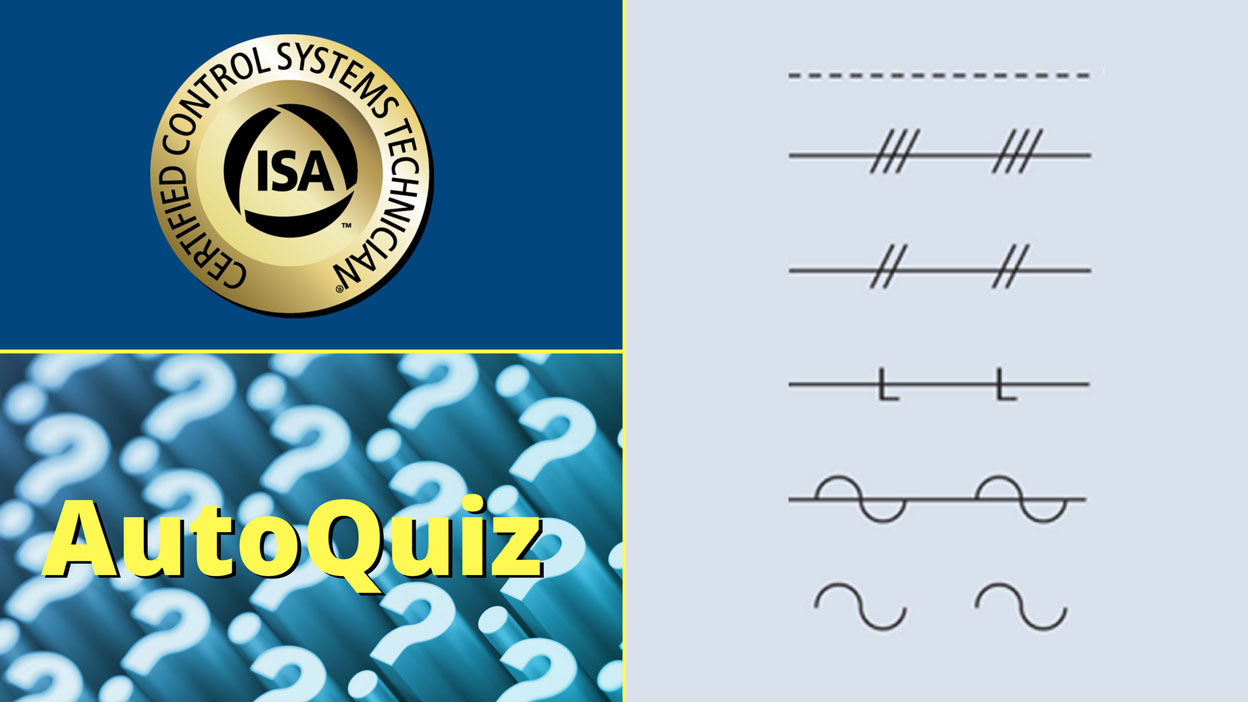
AutoQuiz: Can You Identify Instrument Line Symbols?
ISA-5.1-1984 (Revised 1992) - Instrument Symbols and Identification. -
 Feature
AutoQuiz: How to Minimize Electrical Interference with AC Power and DC Signal Wiring in a Control Panel
Crossing the wires at 90 degrees will minimize the exposure of the wires to each other and therefore minimize the effects of interference. -
 Feature
AutoQuiz: What Is an Industrial Process Variable?
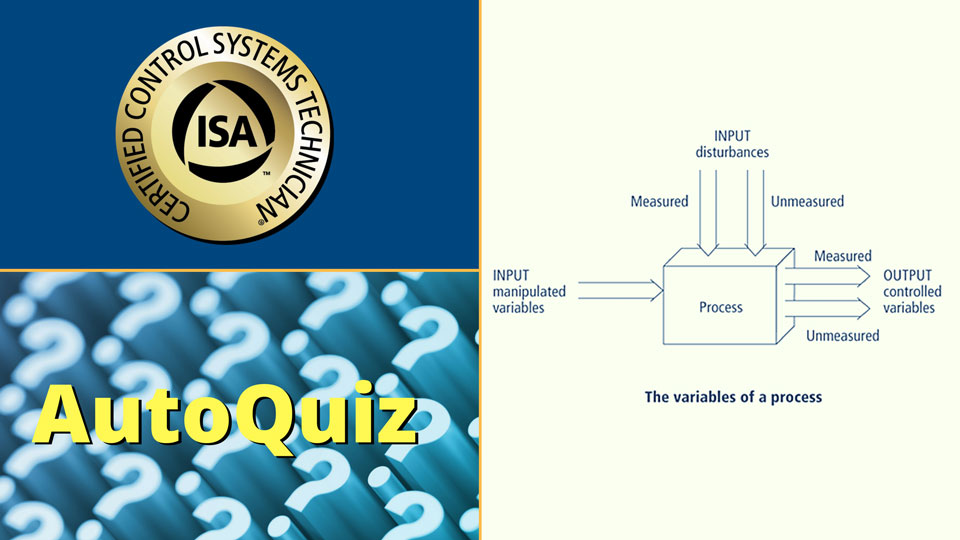
The controlled variable by definition is the variable that the control system attempts to keep at a "set point" value. -
 Feature
AutoQuiz: How to Choose Best Method for Level Measurement
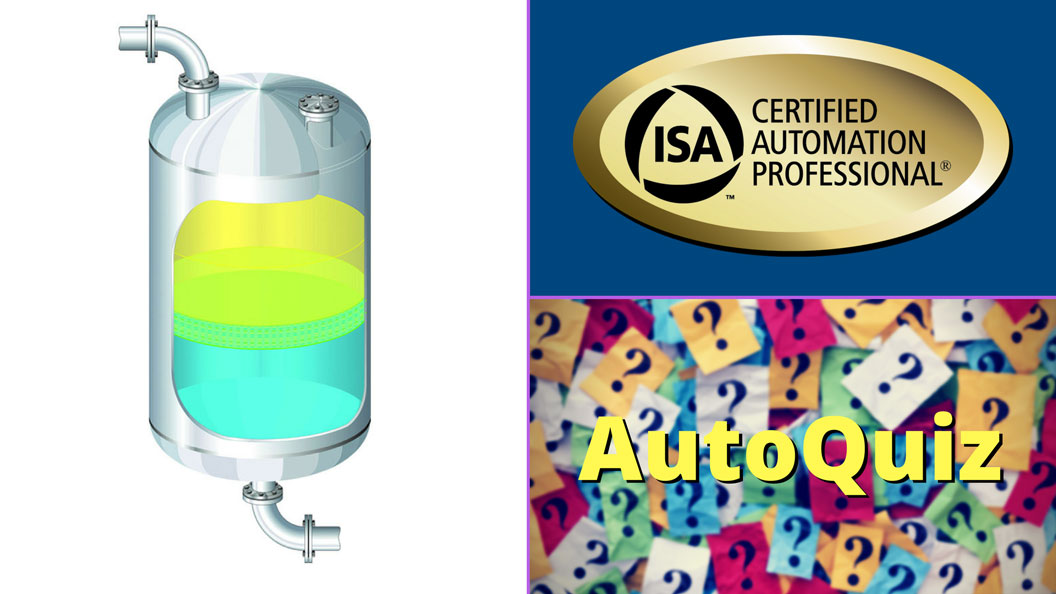
Radar does not depend on temperature or composition of a fluid as long as the beam is narrow and the dielectric constant of the fluid is greater than two. -
 Feature
AutoQuiz: How to Measure Pressure in a Tank
Perform the calculation using dimensional analysis from conversion tables 33.9 ft water equals one atmosphere equals 14.696 lbf /in2 (psi). -
 Feature
AutoQuiz: How to Calculate the Rated Torque for a Motor
The volts-per-hertz ratio (V/Hz) controls the torque of a motor. -
 Feature
AutoQuiz: Standard Range for Pneumatically Transmitted Signals
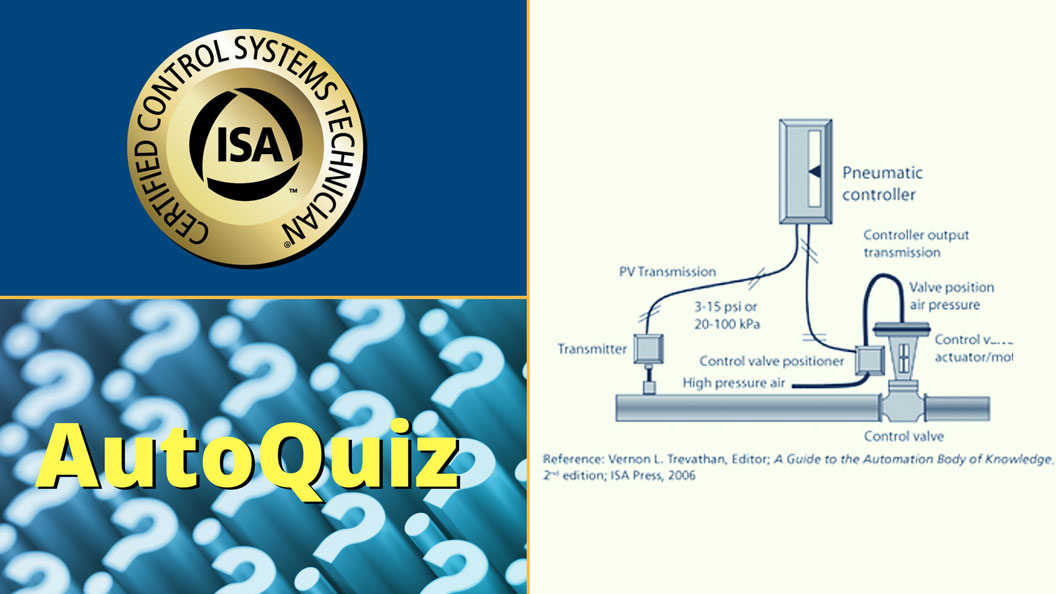
For the sake of ease and safety, Industry recognized it is better for an operator to monitor and control processes in a more convenient and protected place -
 Feature
AutoQuiz: How to Measure the Resistance of a Conductor
The resistance of a length of a conductor can be determined using the specific resistance and the cross-sectional area by using the equation R = r L/A -
 Feature
AutoQuiz: Level Reading with a Differential Pressure Cell
If a differential pressure cell is not at an elevation that corresponds to zero percent level in a tank, calibrate to account for difference in elevation. -
 Feature
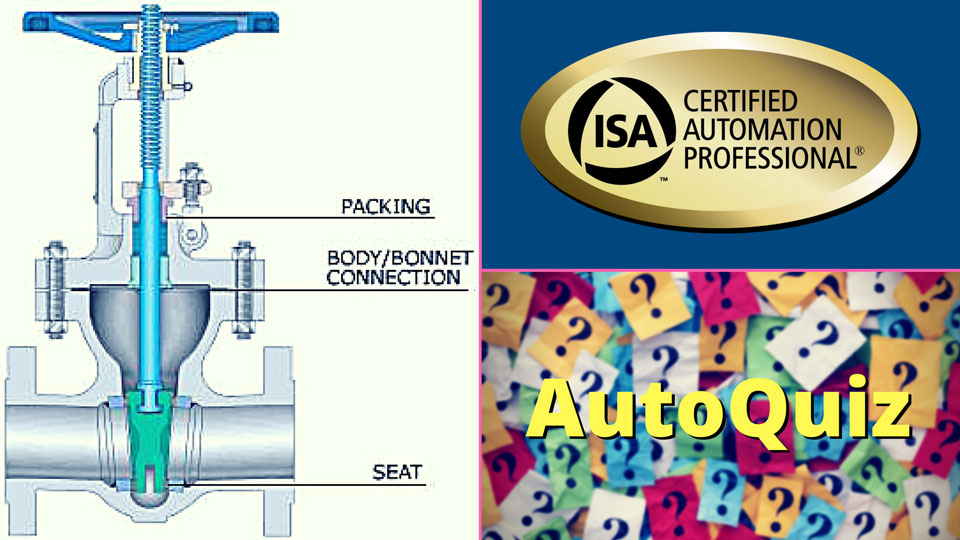
AutoQuiz: Which Control Valve Style Is More Likely to Develop a Blockage?
Ball, butterfly, and pinch valve body style have straight-through flow, and they are less likely to develop blockage. -
 Feature
AutoQuiz: How to Calibrate a Magnetic Flowmeter
Magnetic flowmeters use Faraday's law of magnetic induction as the basis of their operation. -
 Feature
AutoQuiz: What Are Acceptable Hazardous Location Protection Techniques for Industrial Areas?
Hazardous location protection techniques are defined by NEC 500.7 (NEC 2002 Code).